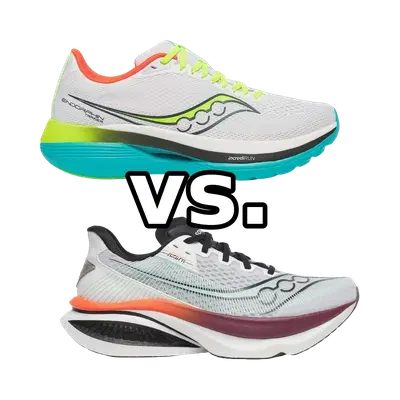
Saucony Endorphin Trainer vs Saucony Endorphin Speed 5:
Which to Choose
Verdict
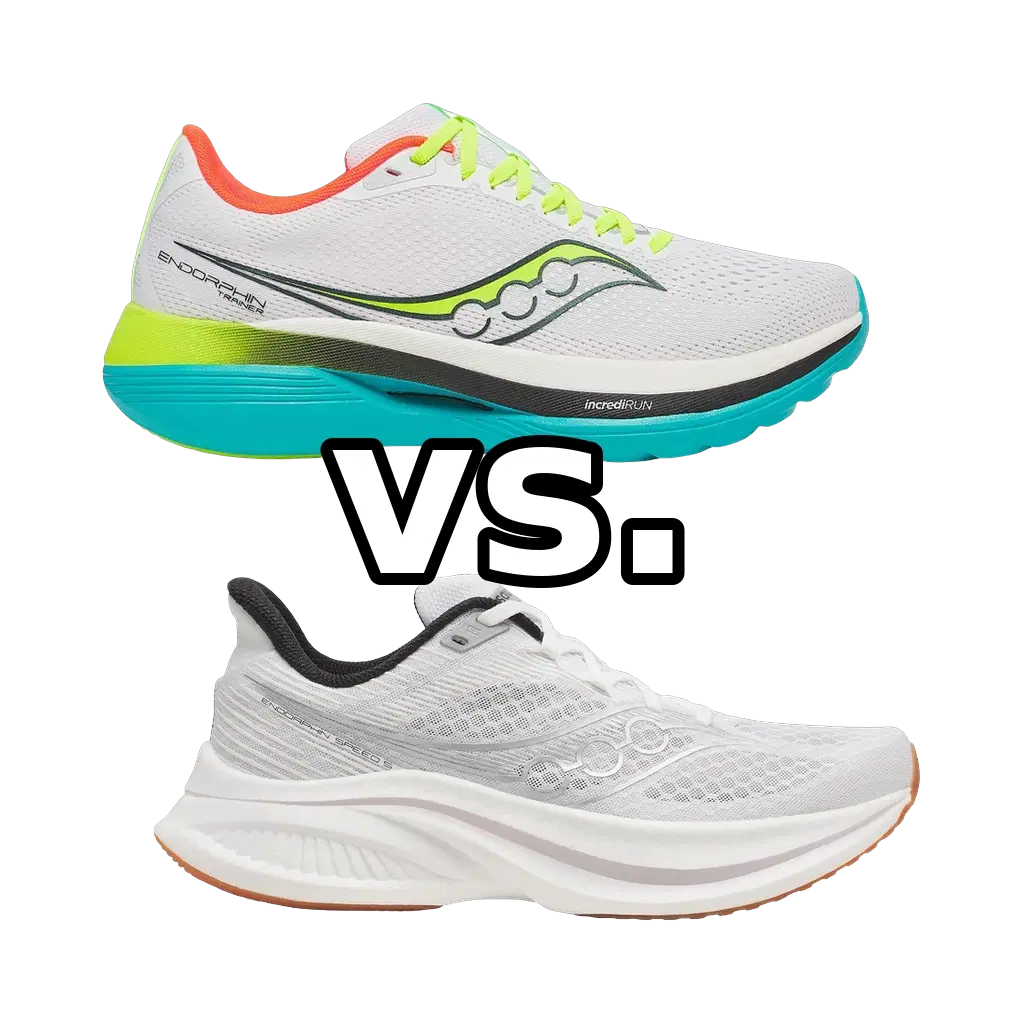
These aren't rivals so much as two answers to different questions, so let your typical pace decide. If the bulk of your running is easy-to-moderate and you prioritize soft, stable, high-mileage comfort, the Endorphin Trainer is the better buy; if you want a lighter, plated shoe that handles tempo work and doubles as a racer while still managing long runs, take the Endorphin Speed 5. Runners who split the difference — mostly steady miles but with regular faster sessions — will get more range from the Speed 5, since it stretches down into daily-mileage duty more gracefully than the Trainer stretches up into speed.
Pace
3 of 6
Cushioning
5 of 6
Responsiveness
5 of 6
Stability
4 of 6
Drop
8 mm
Support
Stable Neutral
Plate
None
Distances
10KHalfMarathon
Pace
5 of 6
Cushioning
5 of 6
Responsiveness
5 of 6
Stability
3 of 6
Drop
8 mm
Support
Neutral
Plate
Composite
Distances
10KHalfMarathon
At a Glance
Saucony Endorphin TrainerSaucony Endorphin Speed 5
Who Should Choose Each Shoe
Choose
Saucony Endorphin Trainer
Choose the Endorphin Trainer if most of your week is easy and long — base-building, recovery-adjacent daily runs, and steady marathon-training miles where comfort and a secure, stable landing matter more than pop. It's ideal for recreational runners who want max cushioning and a touch of bounce without the harshness of a firm trainer, and who value the wider, more planted platform for confidence over long efforts. If you already reach for soft, high-stack shoes and rarely run intervals, this is the more forgiving pick.
Choose
Saucony Endorphin Speed 5
Choose the Endorphin Speed 5 if you want one shoe to cover tempo sessions, uptempo long runs, and even race day without buying a separate carbon racer. It rewards intermediate-to-experienced runners who like a lively, propulsive, plate-driven feel and will actually spend time at faster paces — its sweet spot is the half marathon and the 4:00–4:45 min/km zone. Its lighter weight and lower, snappier stack make it the better tool if your training has real intensity in it, not just steady cruising.
Head-to-Head
Start with the shared DNA: both ride on PWRRUN PB, both list an 8mm heel-to-toe drop, and both score 5/6 for cushioning and responsiveness in our metrics, so neither is a firm or dead-feeling shoe. Where they split is weight and stack. The Speed 5 comes in around 241g in a men's US 9 on a 37mm heel / 27mm forefoot platform, while the Trainer is a noticeably burlier build at roughly 286g on a taller stack — about 39mm heel and 32mm forefoot — so it sits higher underfoot, especially at the front of the shoe, and carries meaningfully more weight. That extra foam and mass is the point of the Trainer: it grades 4/6 for stability with a wide, winged, stable-neutral base that makes landings secure and forgiving at a relaxed cadence, and its foam is voiced for soft, pillowy comfort rather than snap. The Speed 5 trades a little of that planted feel (3/6 stability, fully neutral) for a semi-rigid winged nylon plate that guides transitions and drives a springier, more directed toe-off. You feel that in the pace windows: the Trainer scores 3/6 for pace and comes alive in a comfortable 5:15–6:00 min/km daily-mileage zone, getting vague and slappy when you genuinely push, whereas the Speed 5 scores 5/6 and only truly clicks when you drop into a 4:00–4:45 min/km tempo-and-marathon rhythm, feeling a touch busy and tall when jogging slowly. In short: same foam and drop, opposite personalities — the Trainer is a cushioned, stable cruiser; the Speed 5 is a plated, pace-hungry all-rounder that can also handle long miles and race day.
Similar Comparisons
Saucony Endorphin Speed 4 vs Saucony Endorphin Speed 5

Adidas Adizero Evo SL vs Saucony Endorphin Speed 5

Adidas Adizero Boston 13 vs Saucony Endorphin Speed 5
Nike Pegasus Plus vs Saucony Endorphin Speed 5
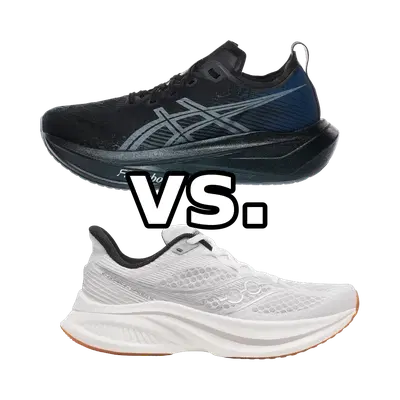
Asics Megablast vs Saucony Endorphin Speed 5
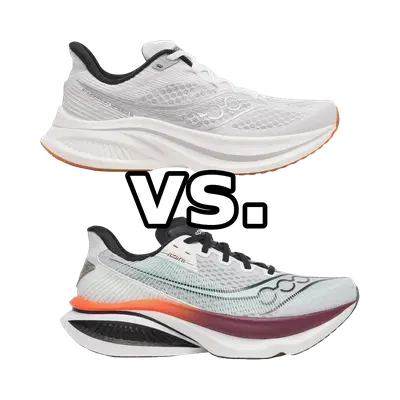
Saucony Endorphin Speed 5 vs Saucony Endorphin Azura
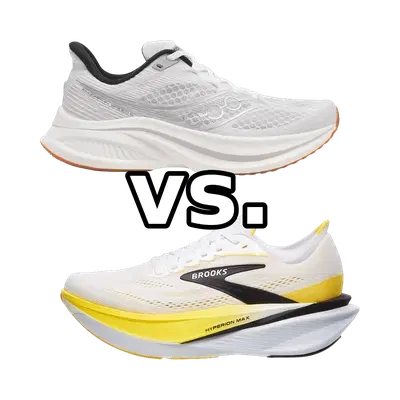
Saucony Endorphin Speed 5 vs Brooks Hyperion Max 4
© 2026 longrunshoes.ai | All rights reserved.
Use of materials from this site is permitted only with proper attribution and a link to longrunshoes.ai.