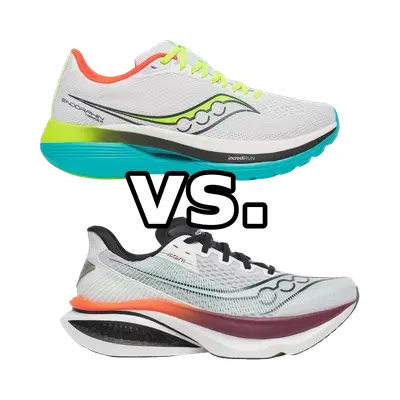
Saucony Endorphin Trainer vs Asics Gel-Cumulus 27:
Which to Choose
Verdict
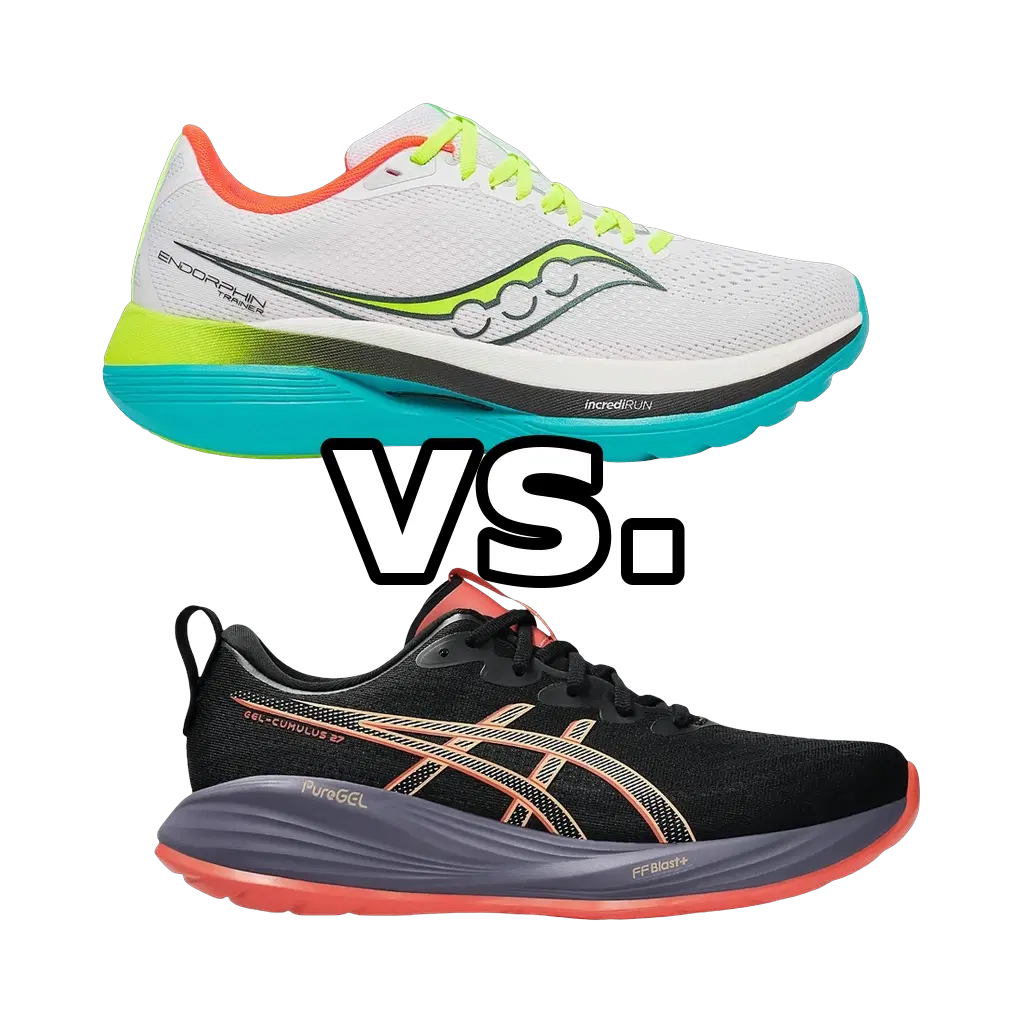
These two cover the same ground — soft, neutral, unplated daily trainers best from 10K to an easy marathon — so it comes down to ride feel, not purpose. Go Endorphin Trainer if you want the taller, bouncier, more energetic PEBA ride and don't mind a touch more shoe; go Gel-Cumulus 27 if you prefer a lighter, lower, calmer and more grounded trainer with proven outsole durability for piling on easy volume. Neither is the shoe for genuine speedwork, so let the foam character and the height under your foot make the call.
Pace
3 of 6
Cushioning
5 of 6
Responsiveness
5 of 6
Stability
4 of 6
Drop
8 mm
Support
Stable Neutral
Plate
None
Distances
10KHalfMarathon
Pace
3 of 6
Cushioning
5 of 6
Responsiveness
4 of 6
Stability
4 of 6
Drop
8 mm
Support
Neutral
Plate
None
Distances
10KHalfMarathon
At a Glance
Saucony Endorphin TrainerAsics Gel-Cumulus 27
Who Should Choose Each Shoe
Choose
Saucony Endorphin Trainer
Choose the Endorphin Trainer if you want maximum cushioning with a lively, bouncy character — a recreational or intermediate runner stacking steady base and long miles who still wants some energy return and a touch of pop underfoot rather than a flat, calm ride. The tall PEBA platform and wide winged base make it the better pick for runners who love a protective, cruise-all-day feel on half and full-marathon long runs and don't mind a slightly heavier, taller shoe to get it.
Choose
Asics Gel-Cumulus 27
Choose the Gel-Cumulus 27 if you're a beginner-to-intermediate runner who wants a dependable, lower-slung, no-surprises daily trainer for easy and moderate mileage — something softly cushioned and planted rather than tall and bouncy. Its lighter weight, grounded platform, and hard-wearing AHAR outsole make it ideal for building weekly volume on a shoe you can trust to log lots of calm, conversational miles and hold up over time.
Head-to-Head
The headline difference is stack and foam. The Endorphin Trainer is a genuinely max-stacked trainer at roughly 43mm heel / 35mm forefoot, riding on PWRRUN PB — Saucony's nitrogen-infused PEBA superfoam — which gives it a soft but distinctly lively, rebounding feel that keeps long efforts from ever going dead. The Cumulus 27 sits lower and more grounded at about 38.5mm / 30.5mm on FF Blast+ ECO over a PureGEL heel unit; it's plush and forgiving but calmer and more muted, cushioning landings without the springback the Saucony's PEBA provides — hence the Saucony's higher 5/6 responsiveness versus the Asics' 4/6. Weight tracks the foam story: the Cumulus is the lighter shoe at around 264g (9.3 oz) for a men's pair against roughly 278g (9.8 oz) for the taller Endorphin Trainer, a modest gap you'll notice more as a difference in how planted versus how tall each feels than as raw heft. On stability both are rated 4/6 and neither uses posting, but they get there differently — the Endorphin Trainer leans on a wide, winged base to steady its taller platform (Saucony calls it stable-neutral), while the Cumulus stays secure simply by sitting lower and broad to the ground. Both roll through transitions smoothly at conversational cadence and both top out in the same place — comfortably effective to roughly 5:00–5:15 min/km before the soft, plateless midsole feels vague — so if your priority is race-pace snap, neither is the answer. Where the Asics quietly pulls ahead is durability hardware: its AHAR outsole armors the high-wear zones for dependable high-volume mileage, a more traditional daily-trainer build than the Saucony's performance-foam focus.
Similar Comparisons
Asics Gel-Nimbus 27 vs Asics Gel-Cumulus 27
Saucony Endorphin Trainer vs Saucony Endorphin Speed 5
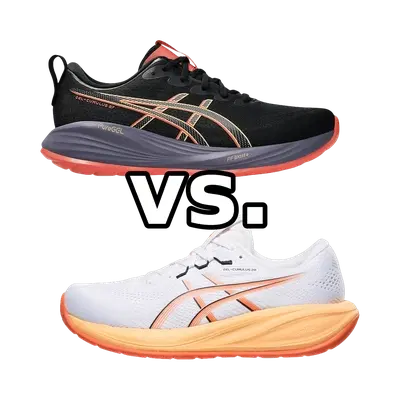
Asics Gel-Cumulus 27 vs Asics Gel-Cumulus 28
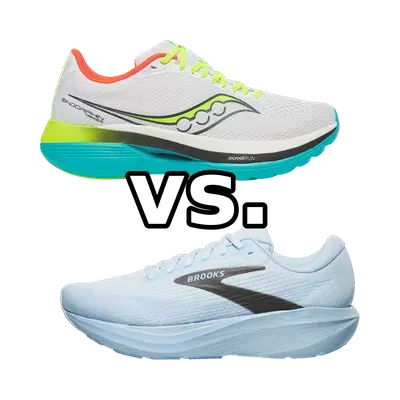
Saucony Endorphin Trainer vs Brooks Ghost AMP
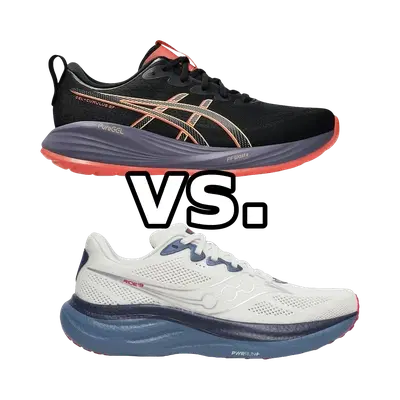
Asics Gel-Cumulus 27 vs Saucony Ride 19
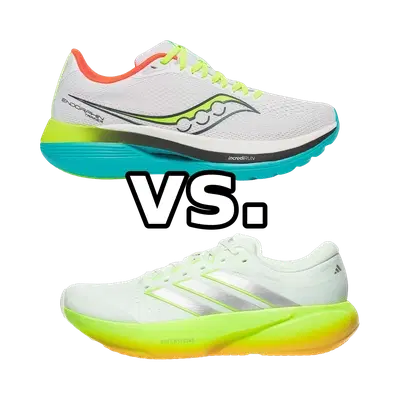
Saucony Endorphin Trainer vs Adidas Supernova Rise 3
Asics Gel-Cumulus 27 vs Mizuno Wave Sky 8
Asics Gel-Cumulus 27 vs Brooks Glycerin 22
© 2026 longrunshoes.ai | All rights reserved.
Use of materials from this site is permitted only with proper attribution and a link to longrunshoes.ai.