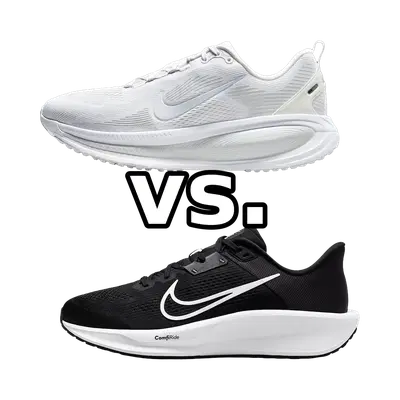
Nike Quest 6 vs Nike Revolution 8:
Which to Choose
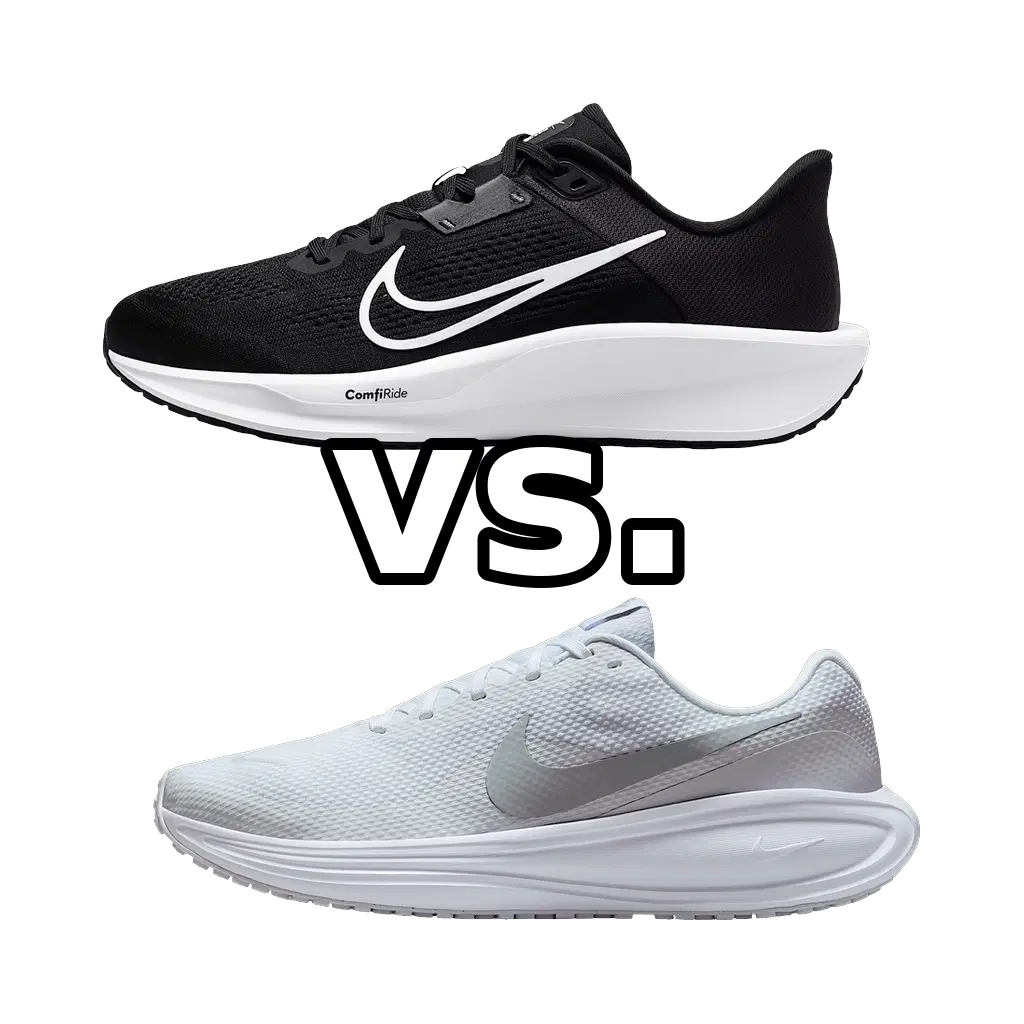
Verdict
It genuinely depends — but on ride feel, not much else, since these are closely matched budget beginner trainers. Pick the Quest 6 for a firmer, more stable, higher-drop platform that can also stretch to slightly quicker easy runs; pick the Revolution 8 for a softer, lighter, lower ride built purely for relaxed jogging. If you want one shoe that does a bit more, the Quest 6 is the more versatile buy; if you only ever run easy and prefer a cushier, lower feel, the Revolution 8 is the one.
Pace
3 of 6
Cushioning
3 of 6
Responsiveness
2 of 6
Stability
4 of 6
Drop
12 mm
Support
Neutral
Plate
None
Distances
5K10K
Pace
1 of 6
Cushioning
3 of 6
Responsiveness
2 of 6
Stability
3 of 6
Drop
9 mm
Support
Neutral
Plate
None
Distances
5K10K
At a Glance
Nike Quest 6Nike Revolution 8
Who Should Choose Each Shoe
Choose
Nike Quest 6
Choose the Quest 6 if you're a heel striker who wants the most stable, planted feel of the two and benefits from that tall 12 mm drop easing the calves — a reassuring pick for someone just building a running base who values security over softness. It's also the better choice if you occasionally want to pick up the pace on an easy run or throw in a light stride, since it tolerates faster turnover than the Revolution before the foam gives out. Go here if a firm, predictable workhorse appeals more than a plush one.
Choose
Nike Revolution 8
Choose the Revolution 8 if your running is strictly gentle jogging and easy neighborhood loops, and you'd rather have a softer initial landing and a slightly lighter, lower-to-the-ground shoe than a tall, firm one. The shallower ~9 mm drop and calm, unfussy ride suit a true first-timer easing into the sport at relaxed effort with no ambition to run fast. Pick it if comfort on slow miles matters more to you than stability or any ability to speed up.
Head-to-Head
These two share the same mission — protective, inexpensive, no-frills miles for new or casual runners — and the same core recipe: single-density EVA foam (ComfiRide in the Quest, plain EVA replacing the old Phylon in the Revolution), no plate, and the same low responsiveness, so neither gives much energy return and neither wants to run fast. The differences are modest but real. The Quest 6 sits taller and firmer, with a 35 mm heel / 23 mm forefoot stack and a steep 12 mm drop, while the Revolution 8 is a touch lower and softer at 32 mm heel / 23 mm forefoot with a shallower ~9 mm drop (Nike lists 10 mm). That higher Quest ramp and firmer ComfiRide foam give it a more planted, stable platform (it rates above-average for stability where the Revolution is just ordinary neutral), and it's the more versatile of the two on pace — comfortable through easy-run territory and willing to stride out to roughly 5:15 min/km, whereas the Revolution's softer, deader foam runs out of pop around 6:30 min/km and really only wants relaxed jogging. The trade-off is weight: the Quest 6 is the heavier shoe at 283 g (men's US 9) versus roughly 264 g for the Revolution 8, so the Revolution feels a little lighter and lower to the ground, with a soft-but-plain landing, while the Quest feels firmer, steadier, and slightly more substantial. Both are built to be durable workhorses rather than exciting rides, and both leave forefoot cushioning on the thin side — you'll feel toe-off on longer efforts in either.
Similar Comparisons
Nike Downshifter 14 vs Nike Revolution 8
Asics Gel-Pulse 16 vs Nike Quest 6
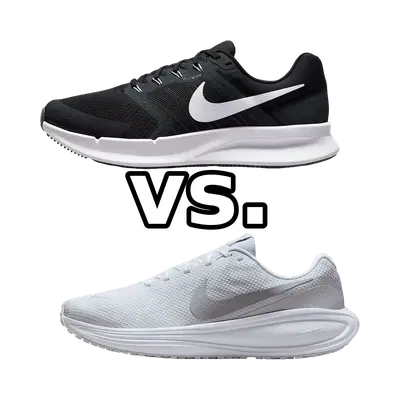
Nike Run Swift 3 vs Nike Revolution 8
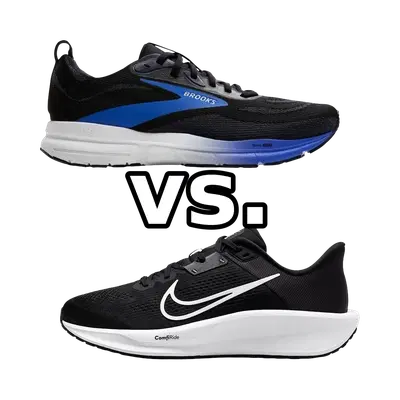
Brooks Trace 4 vs Nike Quest 6
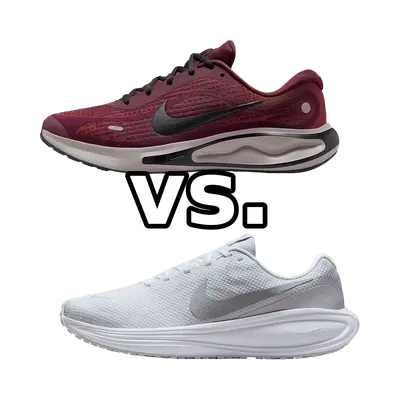
Nike Journey Run vs Nike Revolution 8
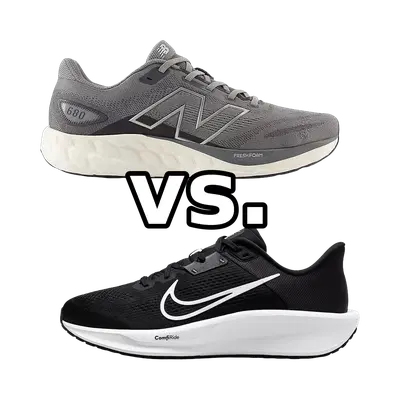
New Balance Fresh Foam 680v8 vs Nike Quest 6
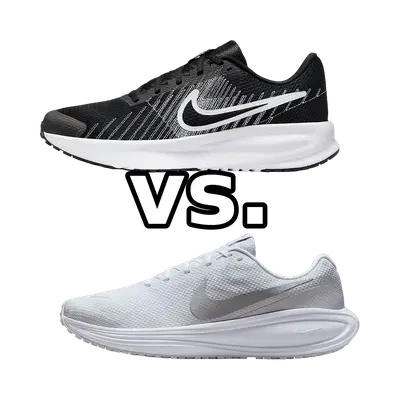
Nike Run Defy vs Nike Revolution 8
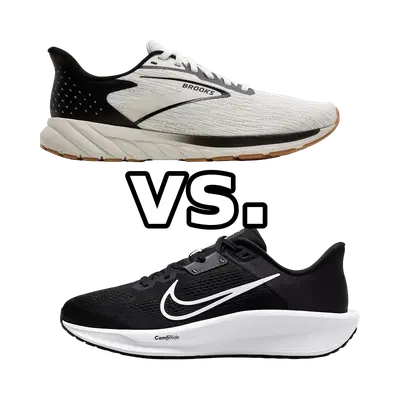
Brooks Anthem 7 vs Nike Quest 6
© 2026 longrunshoes.ai | All rights reserved.
Use of materials from this site is permitted only with proper attribution and a link to longrunshoes.ai.