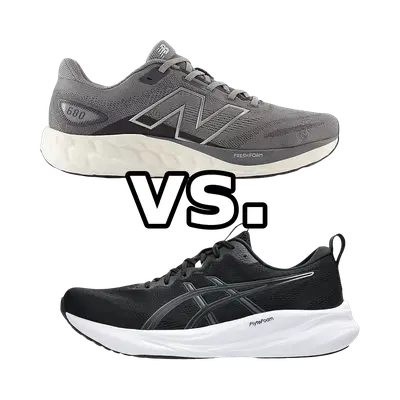
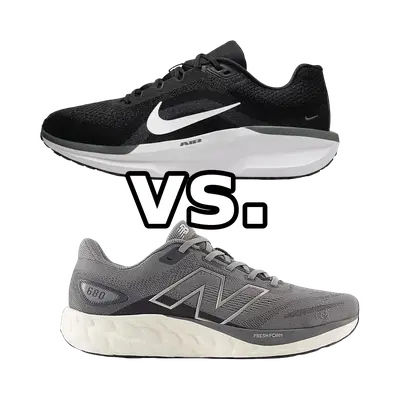
New Balance Fresh Foam 680v8 vs Nike Quest 6:
Which to Choose
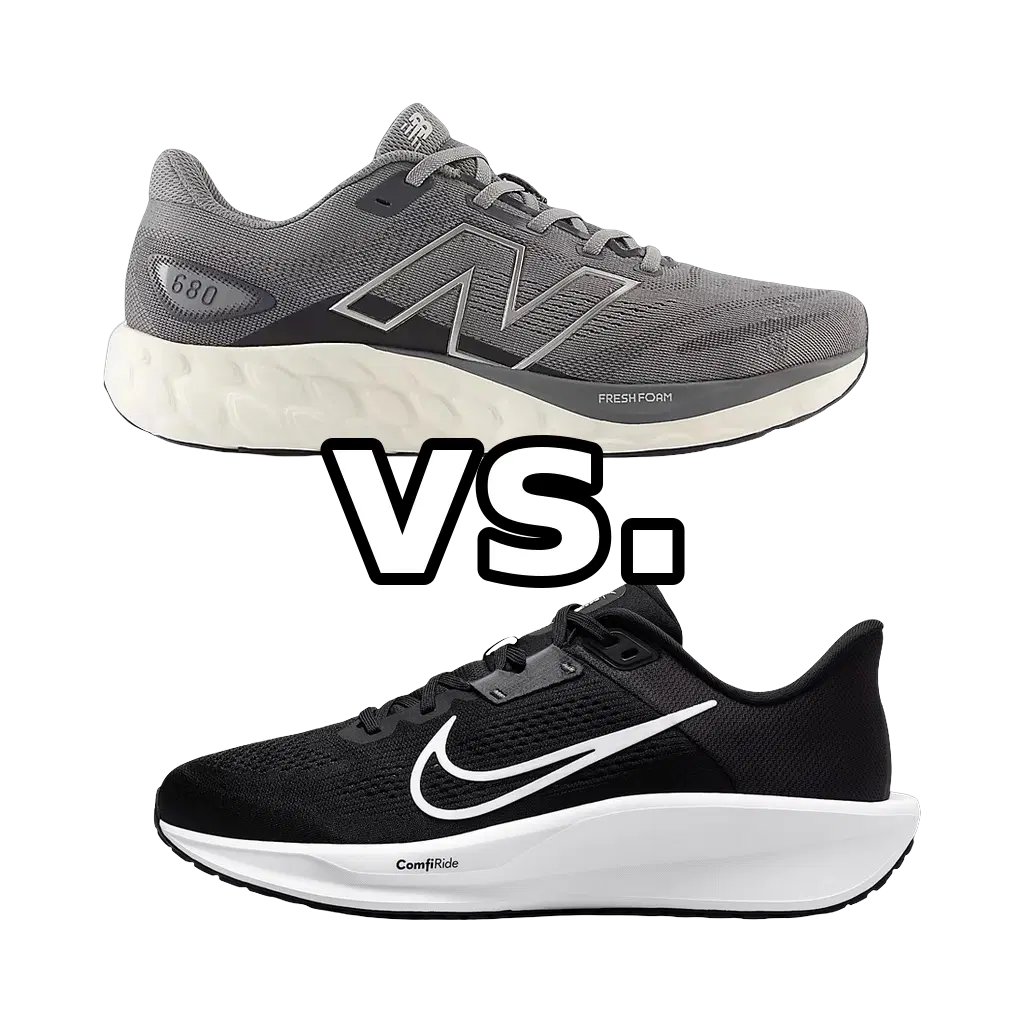
Verdict
These are genuine peers, so let your stride and your mileage decide. The 680v8 is the more versatile and even-riding of the two — lighter, fuller in the forefoot, with a mild stability lean, and comfortable from easy miles up to the half marathon. The Quest 6 is the more specialized heel striker's shoe, with a steep 12 mm drop that suits shorter 5K–10K training but a thinner forefoot that gets harsh on longer or faster runs. Most runners wanting one do-everything easy trainer will be happier in the 680v8; dedicated heel strikers sticking to shorter distances who prefer that tall-drop feel have a good reason to take the Quest 6.
Pace
3 of 6
Cushioning
3 of 6
Responsiveness
2 of 6
Stability
4 of 6
Drop
8 mm
Support
Stable Neutral
Plate
None
Distances
10KHalf
Pace
3 of 6
Cushioning
3 of 6
Responsiveness
2 of 6
Stability
4 of 6
Drop
12 mm
Support
Neutral
Plate
None
Distances
5K10K
At a Glance
New Balance Fresh Foam 680v8Nike Quest 6
Who Should Choose Each Shoe
Choose
New Balance Fresh Foam 680v8
Choose the Fresh Foam 680v8 if your easy runs sometimes stretch past 10K toward the half marathon, or if you want a trainer with a more even heel-to-toe feel and a slightly lighter foot. Its fuller forefoot and 8 mm drop make longer steady efforts more comfortable, and the stable-neutral platform suits runners with neutral-to-mildly-overpronating feet who want a little quiet support without a dedicated stability shoe.
Choose
Nike Quest 6
Choose the Quest 6 if you're a committed heel striker who likes a steep, traditional 12 mm drop that loads the heel and eases the calves, and your running lives mostly in the 5K–10K window. It's the pick for someone building a base a few times a week who wants a firm, secure, protective-at-the-heel ride and isn't planning to push distance much beyond 10K, where its thinner forefoot matters less.
Head-to-Head
Start with what they share: both ride on a firm, durable, single-piece EVA-style midsole (New Balance's Fresh Foam, Nike's ComfiRide) that feels planted and grounded rather than bouncy, and both give back little energy when you try to push the pace — they top out usefully around 5:15 min/km and reward a relaxed, steady rhythm. The meaningful split is in the stack geometry. Both shoes sit on essentially the same heel height — about 35 mm — but they handle the forefoot very differently: the 680v8 keeps a fuller forefoot at roughly 28 mm for an 8 mm drop, while the Quest 6 thins the forefoot to 23 mm for a steep 12 mm drop. That extra forefoot foam is why the 680v8 transitions more evenly and the Quest 6 can feel a touch harsh at toe-off, and it's the main reason New Balance rates the 680v8 out to the half marathon while the Quest 6 is happiest in the 5K–10K range. The 680v8 is also the lighter shoe, around 268 g versus 283 g for the Quest 6, and it's tuned as a stable-neutral platform with a hint of support for mild overpronators, whereas the Quest 6 is a straight neutral trainer. The steep 12 mm drop of the Quest 6 does one thing well — it rolls a committed heel striker forward and takes some load off the calves — so the decision is less "which is better" and more "which geometry fits your stride and your distance."
© 2026 longrunshoes.ai | All rights reserved.
Use of materials from this site is permitted only with proper attribution and a link to longrunshoes.ai.