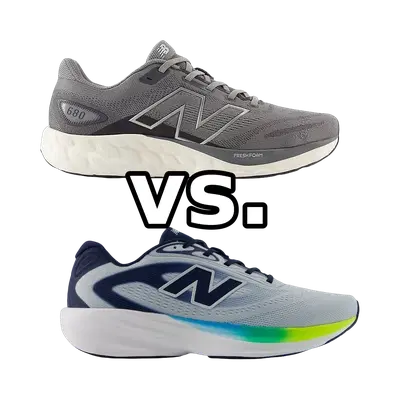
New Balance Fresh Foam 680v8 vs Asics Gel-Pulse 16:
Which to Choose
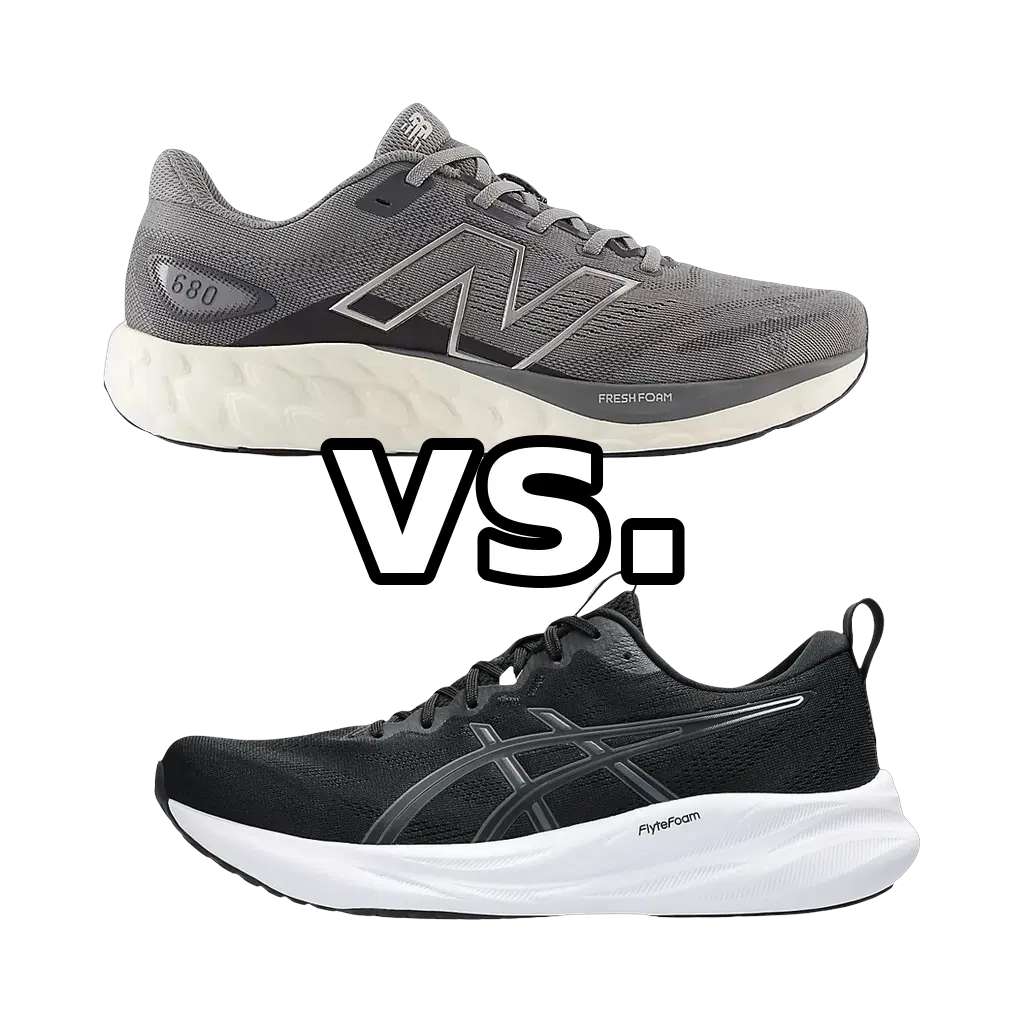
Verdict
These are genuinely close shoes serving the same job, so the decision hinges on fit and foot type, not quality. Go with the New Balance Fresh Foam 680v8 if you want mild stability and a firmer, planted ride; pick the Asics Gel-Pulse 16 if you're a neutral runner who wants a lighter shoe with a slightly softer landing. Neither will reward speed work — if that's what you're after, look elsewhere — but for honest, durable everyday mileage, both deliver.
Pace
3 of 6
Cushioning
3 of 6
Responsiveness
2 of 6
Stability
4 of 6
Drop
8 mm
Support
Stable Neutral
Plate
None
Distances
10KHalf
Pace
3 of 6
Cushioning
3 of 6
Responsiveness
2 of 6
Stability
4 of 6
Drop
8 mm
Support
Neutral
Plate
None
Distances
10KHalf
At a Glance
New Balance Fresh Foam 680v8Asics Gel-Pulse 16
Who Should Choose Each Shoe
Choose
New Balance Fresh Foam 680v8
Choose the Fresh Foam 680v8 if you have neutral-to-mildly-overpronating feet and want that extra bit of built-in stability from a broad, planted platform — it's the safer pick for newer runners who like feeling grounded and anchored underfoot. Its firmer single-density foam and durability-first tuning suit someone who prizes predictability and long-term wear over lightness or softness, and who logs steady easy miles and 10Ks without worrying about pace.
Choose
Asics Gel-Pulse 16
Choose the Gel-Pulse 16 if you're a neutral runner who doesn't need pronation help and would rather have the lighter shoe — at around 240g it's the more agile of the two for easy long runs and steady halves. Its FF Blast+ Eco foam gives a slightly softer, more forgiving landing than the 680v8's firm ride, making it the better fit for runners who want daily comfort and a lower-drama feel without chasing responsiveness.
Head-to-Head
On paper these shoes are near twins: both share an 8mm drop, moderate cushioning, low responsiveness, no plate, and a heel stack in the mid-30s (35.4mm on the 680v8, 36.5mm on the Gel-Pulse 16), and both top out as relaxed daily cruisers rather than tempo tools. The real separators are weight and foam. The Gel-Pulse 16 is the lighter shoe at roughly 240g, while the 680v8 sits around 261g — a difference you notice on longer easy runs, where the Asics feels a bit nimbler underfoot. The foams also have distinct personalities: New Balance uses a single-density Fresh Foam tuned for durability and a planted, firm, connected-to-the-road feel, whereas Asics' FF Blast+ Eco is a lighter, partly bio-based compound that reads a touch softer with a hint more give on landing. Neither delivers real spring back — both go flat when you push the pace — so this isn't a bounce contest. The other meaningful split is support: the 680v8 is a stable-neutral shoe with a broad platform that offers mild pronation help, while the Gel-Pulse 16 is a true neutral shoe whose wide base keeps you steady without actively correcting your gait. Both use breathable engineered mesh uppers with secure everyday fits and durable rubber at the wear zones, so day-to-day reliability is a wash.
© 2026 longrunshoes.ai | All rights reserved.
Use of materials from this site is permitted only with proper attribution and a link to longrunshoes.ai.