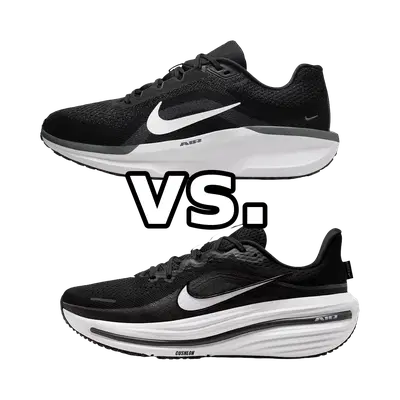
Nike Winflo 11 vs Asics Gel-Pulse 16:
Which to Choose
Verdict
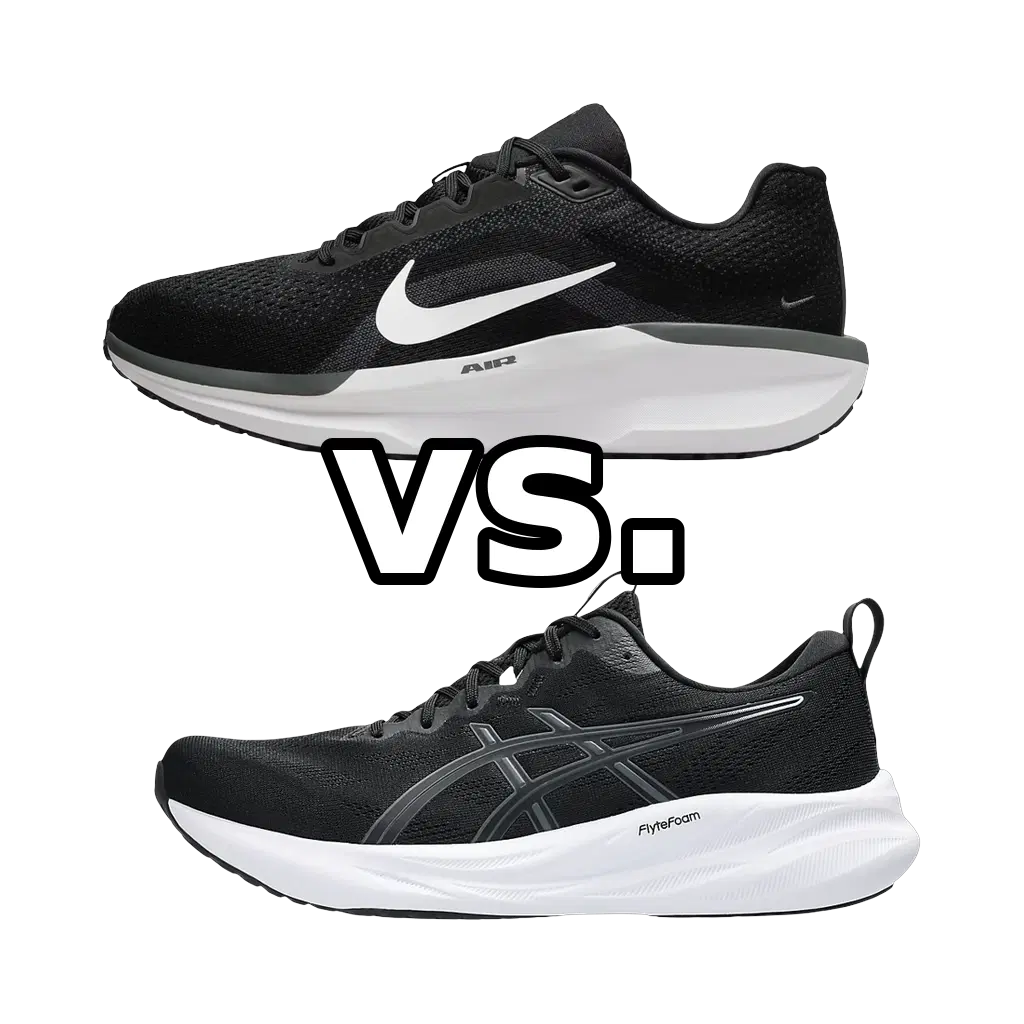
These are genuinely close cousins doing the same job, so it comes down to feel, not capability. Go with the Asics Gel-Pulse 16 if you want the lighter, softer, more relaxed daily trainer; go with the Nike Winflo 11 if you prefer a firmer, more grounded ride with a higher 10mm drop and a little more forefoot responsiveness when you push. Neither is a fast shoe — if speed or propulsion is the goal, look elsewhere — but for steady 10K-to-half training, let weight and drop preference make the call.
Pace
3 of 6
Cushioning
3 of 6
Responsiveness
3 of 6
Stability
4 of 6
Drop
10 mm
Support
Neutral
Plate
None
Distances
10KHalf
Pace
3 of 6
Cushioning
3 of 6
Responsiveness
2 of 6
Stability
4 of 6
Drop
8 mm
Support
Neutral
Plate
None
Distances
10KHalf
At a Glance
Nike Winflo 11Asics Gel-Pulse 16
Who Should Choose Each Shoe
Choose
Nike Winflo 11
Pick the Winflo 11 if you're a newer runner or heel striker who wants a firm, planted, predictable platform and the familiar, heel-friendly feel of a 10mm drop as your form develops. It's the better choice if you occasionally want to roll into a controlled tempo and value that touch of forefoot Zoom Air pop, and if you don't mind carrying a bit more shoe in exchange for a grounded, stable ride that holds a steady rhythm well.
Choose
Asics Gel-Pulse 16
Choose the Gel-Pulse 16 if you want the lighter, more effortless-feeling trainer for easy miles and relaxed long runs, and if a softer landing with a slightly flatter 8mm drop appeals more than firmness and forefoot pop. It's the pick for the recreational runner logging calm, conversational mileage who prioritizes a nimble, no-drama ride and a durable outsole over any pretense of speed or spring.
Head-to-Head
On paper these two sit almost on top of each other — both score 3/6 for pace and cushioning, 4/6 for stability, run neutral with no plate, and both call 10K and the half their home. The gap shows up underfoot and on the scale. The Winflo 11 weighs about 295g (10.4 oz) against roughly 241g (8.5 oz) for the Gel-Pulse 16, so the Asics is the clearly lighter, nimbler-feeling shoe for the same mileage — close to two ounces off each foot, which you notice over a long run. Stack heights are near-identical (Winflo ~37.6mm heel / 25.3mm forefoot; Gel-Pulse ~36.5mm / 26.3mm), so neither is more protective than the other; the Asics just carries a hair more foam up front under less weight. Drop is where the geometry splits: the Winflo's 10mm, heel-biased offset suits developing form and committed heel strikers, while the Gel-Pulse's 8mm sits a touch flatter. The foam tells the real story — the Winflo's Cushlon 3.0 is firm and honest, and its forefoot Zoom Air unit gives a genuine (if modest) hint of pop when you roll onto your toes, which is why it rates a notch higher for responsiveness (3/6 vs 2/6). The Gel-Pulse's FF Blast+ Eco is lighter and feels moderately softer on landing but flatter on rebound; it's a calm, do-the-work-yourself ride that asks for a relaxed cadence. Neither wants to go fast — the Winflo tops out around a controlled 5:15–5:45 min/km tempo, the Gel-Pulse closer to 5:30 before the flat rebound reins it in — but the Winflo has slightly more in reserve when you lean on it, while the Gel-Pulse answers back with lighter weight and a durable AHAR-type outsole built to grind out the long haul.
Similar Comparisons
New Balance Fresh Foam 680v8 vs Asics Gel-Pulse 16
Nike Winflo 11 vs Brooks Revel 8
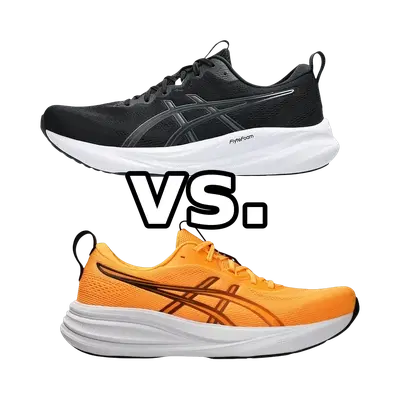
Asics Gel-Pulse 16 vs Asics Gel-Pulse 17
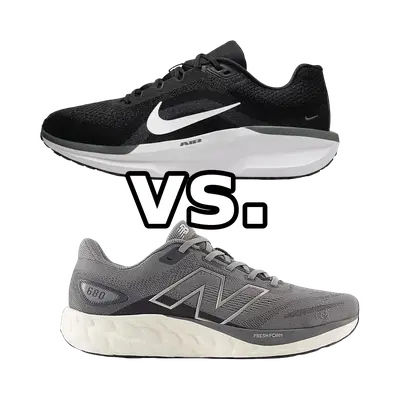
Nike Winflo 11 vs New Balance Fresh Foam 680v8
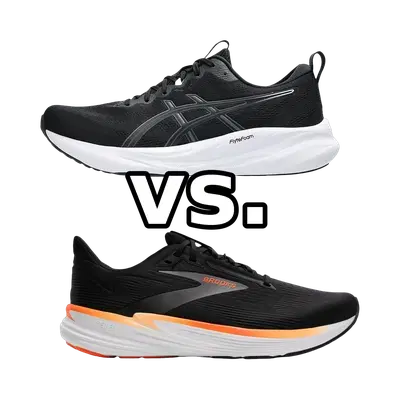
Asics Gel-Pulse 16 vs Brooks Revel 8
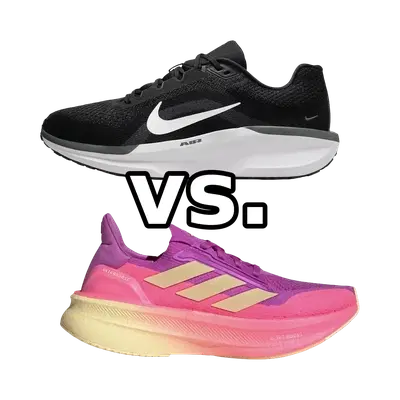
Nike Winflo 11 vs Adidas Ultraboost 5X
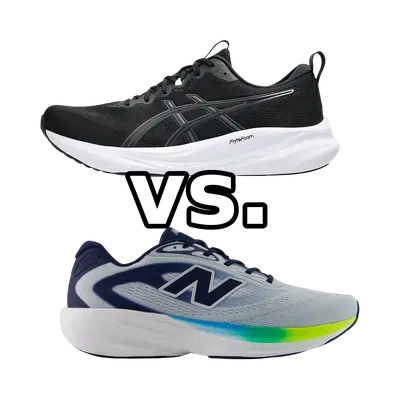
Asics Gel-Pulse 16 vs New Balance Fresh Foam 680v9
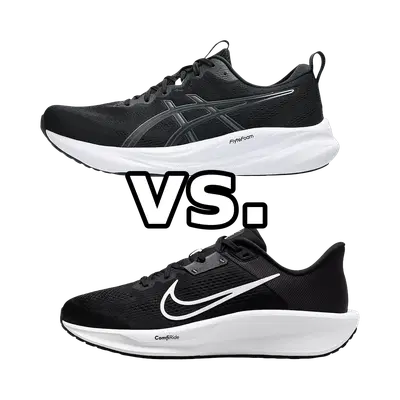
Asics Gel-Pulse 16 vs Nike Quest 6
© 2026 longrunshoes.ai | All rights reserved.
Use of materials from this site is permitted only with proper attribution and a link to longrunshoes.ai.