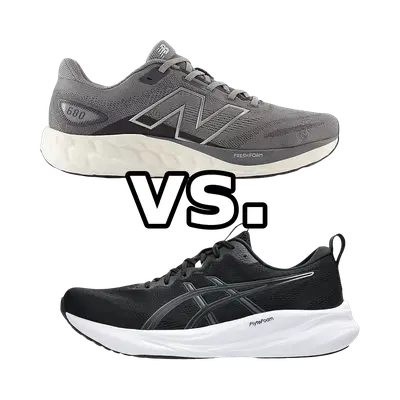
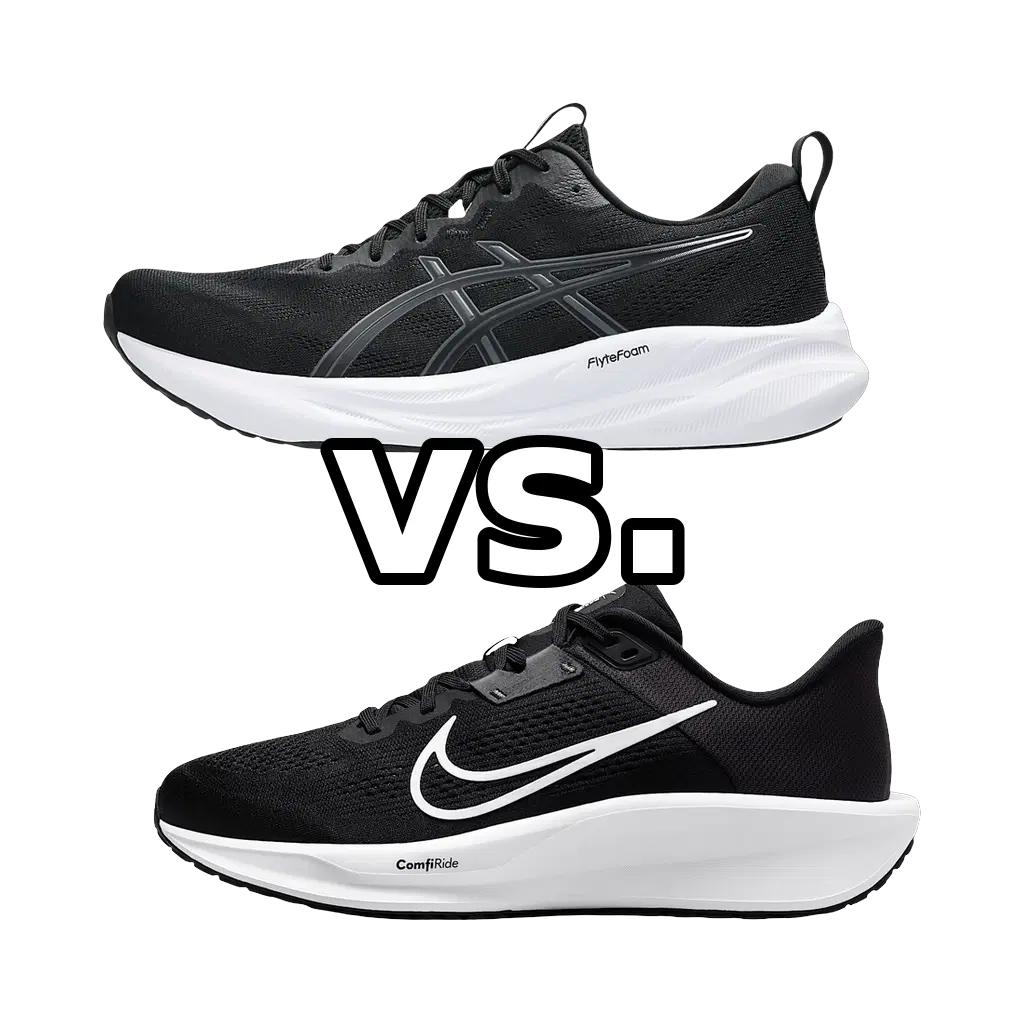
Asics Gel-Pulse 16 vs Nike Quest 6:
Which to Choose
Verdict
For most runners choosing between these two, the Gel-Pulse 16 is the more versatile pick — it's lighter, a touch softer underfoot, and comfortable over a wider distance range up to the half marathon. Go with the Quest 6 specifically if you're a heel striker who wants the higher 12mm drop and keeps your runs in the 5K–10K range; otherwise the Asics does the daily-trainer job with less weight and more cushion to spare.
Pace
3 of 6
Cushioning
3 of 6
Responsiveness
2 of 6
Stability
4 of 6
Drop
8 mm
Support
Neutral
Plate
None
Distances
10KHalf
Pace
3 of 6
Cushioning
3 of 6
Responsiveness
2 of 6
Stability
4 of 6
Drop
12 mm
Support
Neutral
Plate
None
Distances
5K10K
At a Glance
Asics Gel-Pulse 16Nike Quest 6
Who Should Choose Each Shoe
Choose
Asics Gel-Pulse 16
Choose the Gel-Pulse 16 if your easy runs regularly stretch past 10K toward half-marathon distance and you want the lighter, more forgiving shoe for those miles. Its 8mm drop and extra forefoot foam make it the better pick for runners who don't want an exaggerated heel bias and who notice firm forefoots on longer efforts. It's the stronger all-around daily workhorse of the two.
Choose
Nike Quest 6
Choose the Quest 6 if you're a dedicated heel striker building a base with shorter, easy 5K–10K runs and want a steep 12mm drop that takes load off the calves. Its firm, planted ComfiRide platform reassures brand-new runners who value stability and a tough, long-lasting outsole over cushioning or liveliness. It's the right call if most of your running stays short and steady rather than long.
Head-to-Head
Start with the common ground: neither shoe has a plate, both use basic cushioning tuned for comfort and longevity rather than rebound, and both ride firm, planted and predictable with above-average stability for neutral shoes. You won't get meaningful energy return from either — both ask you to supply the pace yourself, and both top out around a light stride-out (roughly 5:15–5:30 min/km) before the flat foam starts holding you back. The differences, though, are concrete. Weight is the biggest: the Gel-Pulse 16 comes in around 241g versus roughly 283g for the Quest 6, so the Asics feels noticeably lighter and less of a chore to turn over on longer efforts. Drop is the next: the Asics sits at 8mm while the Quest 6 runs a steep 12mm, meaning the Nike is more aggressively heel-biased — easier on the calves and better suited to committed heel strikers, while the Asics feels a bit more neutral and even underfoot. Stack is similar at the heel (about 36.5mm Asics vs 35mm Nike), but the Asics carries more foam under the forefoot (about 26.3mm vs 23mm), which shows up in the ride: the Quest 6 can feel harsh on toe-off during longer runs, whereas the Gel-Pulse's FF Blast+ Eco is a slightly softer, more forgiving foam than Nike's firm, basic ComfiRide EVA. That all lines up with their intended range — the Asics is comfortable stretching out to 10K and half-marathon distance, while the Quest 6 is happiest in the 5K–10K zone and starts to feel short on protection beyond that.
Similar Comparisons
Nike Vomero 18 vs Nike Quest 6
Asics Gel-Pulse 16 vs Asics Gel-Pulse 17
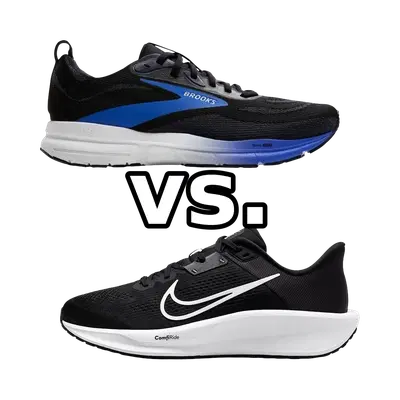
Brooks Trace 4 vs Nike Quest 6
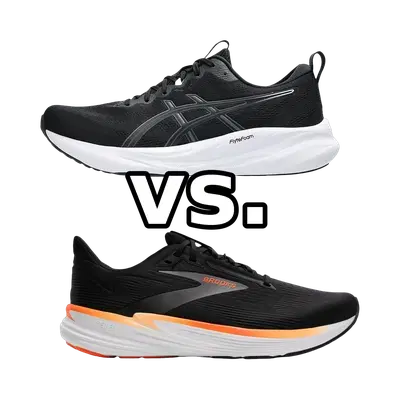
Asics Gel-Pulse 16 vs Brooks Revel 8
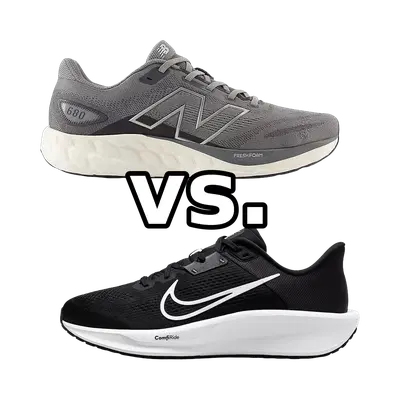
New Balance Fresh Foam 680v8 vs Nike Quest 6
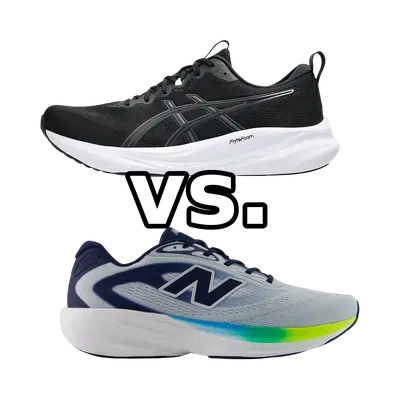
Asics Gel-Pulse 16 vs New Balance Fresh Foam 680v9
Brooks Anthem 7 vs Nike Quest 6
Nike Winflo 11 vs Asics Gel-Pulse 16
© 2026 longrunshoes.ai | All rights reserved.
Use of materials from this site is permitted only with proper attribution and a link to longrunshoes.ai.