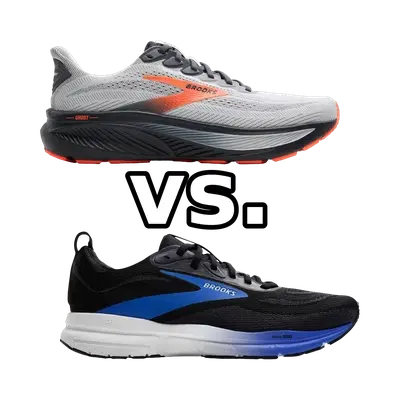
Brooks Trace 4 vs Nike Quest 6:
Which to Choose
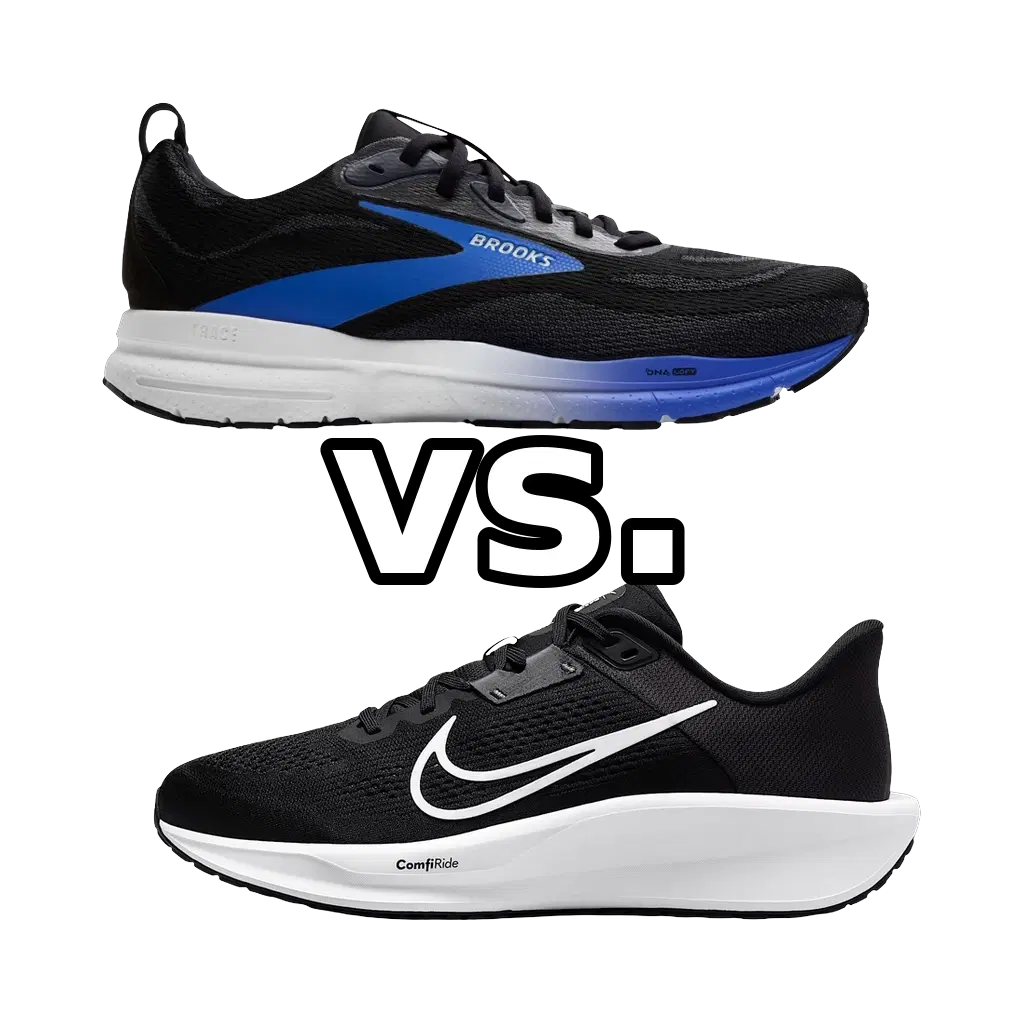
Verdict
These are two honest, firm-riding, no-plate beginner trainers that do the same job, so it comes down to fit and intent rather than one being clearly better. Choose the Trace 4 if you want the lighter shoe with a slightly softer ride and the flexibility to run the occasional half marathon; choose the Quest 6 if you're a heel striker who wants the most stable, planted platform and plans to stay in the 5K–10K range. Try both on if you can — with specs this close, how the upper wraps your foot is the tiebreaker.
Pace
3 of 6
Cushioning
3 of 6
Responsiveness
2 of 6
Stability
3 of 6
Drop
12 mm
Support
Neutral
Plate
None
Distances
5K10KHalf
Pace
3 of 6
Cushioning
3 of 6
Responsiveness
2 of 6
Stability
4 of 6
Drop
12 mm
Support
Neutral
Plate
None
Distances
5K10K
At a Glance
Brooks Trace 4Nike Quest 6
Who Should Choose Each Shoe
Choose
Brooks Trace 4
Pick the Brooks Trace 4 if you want the slightly more versatile, lighter-feeling of the two — a beginner or base-building runner who wants one shoe that can handle easy 5Ks and 10Ks but also stretch to the occasional relaxed half marathon without the forefoot going harsh. Its smoother, marginally softer transitions suit runners who value an easygoing, forgiving ride over a maximally planted one, and the lower weight rewards anyone who occasionally wants to pick up the pace for a stride-out.
Choose
Nike Quest 6
Pick the Nike Quest 6 if you're a newer runner — especially a heel striker — who prioritizes a firm, wide, reassuringly stable platform over long-distance comfort. Its above-average stability makes it the steadier, more locked-down feel of the two for short easy runs and everyday base miles in the 5K–10K range, and the 12mm drop takes pressure off the calves. Just go in knowing the firm forefoot isn't built for stretching much past 10K or for pushing the pace.
Head-to-Head
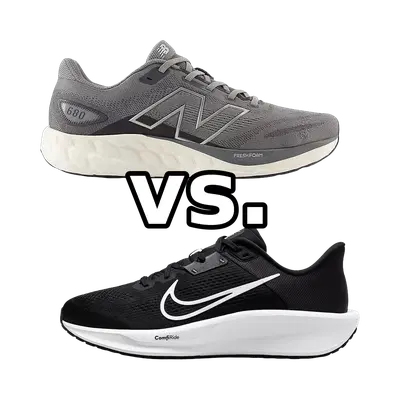
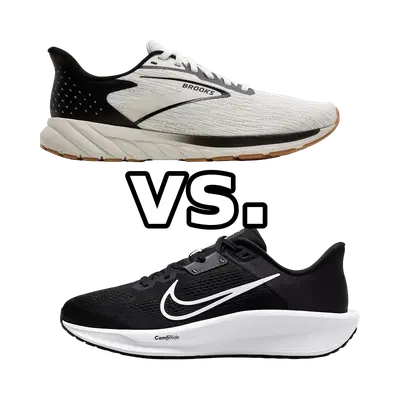
On paper these two are close to twins. Both carry a 12mm heel-to-toe drop, moderate cushioning (3/6), low responsiveness (2/6), and a neutral stance with no pronation correction, and their stacks sit within a millimeter of each other — the Trace 4 at roughly 34mm heel / 22mm forefoot, the Quest 6 at 35mm heel / 23mm forefoot. Neither is a launcher: the Trace 4's dense DNA Loft foam absorbs more than it returns, and the Quest 6's firm ComfiRide EVA is planted but short on rebound, so quick turnover feels flat in both. The clearest hard difference is weight — the Trace 4 comes in around 266g (men's US 9) versus the Quest 6's 283g, so the Brooks feels a touch lighter and more willing underfoot. The second difference is platform character: the Quest 6 runs the firmer, wider, more stability-oriented base (4/6 stability), which reassures nervous heel strikers but makes the forefoot feel harsh on longer or faster efforts. The Trace 4 is a hair softer and more rounded in its transitions (3/6 stability) and, tellingly, is rated for the occasional half marathon, whereas the Quest 6 really tops out at the 5K–10K range before its flat forefoot runs out of patience. Both share breathable engineered-mesh uppers and durable rubber outsoles, so expect similar longevity; the ride feel and distance ceiling, not the construction, are what separate them.
© 2026 longrunshoes.ai | All rights reserved.
Use of materials from this site is permitted only with proper attribution and a link to longrunshoes.ai.