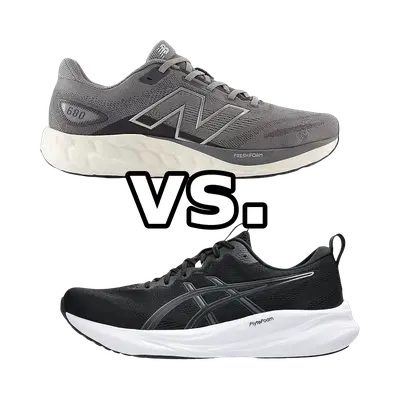
New Balance Fresh Foam 680v8 vs New Balance Fresh Foam 680v9:
Which to Choose
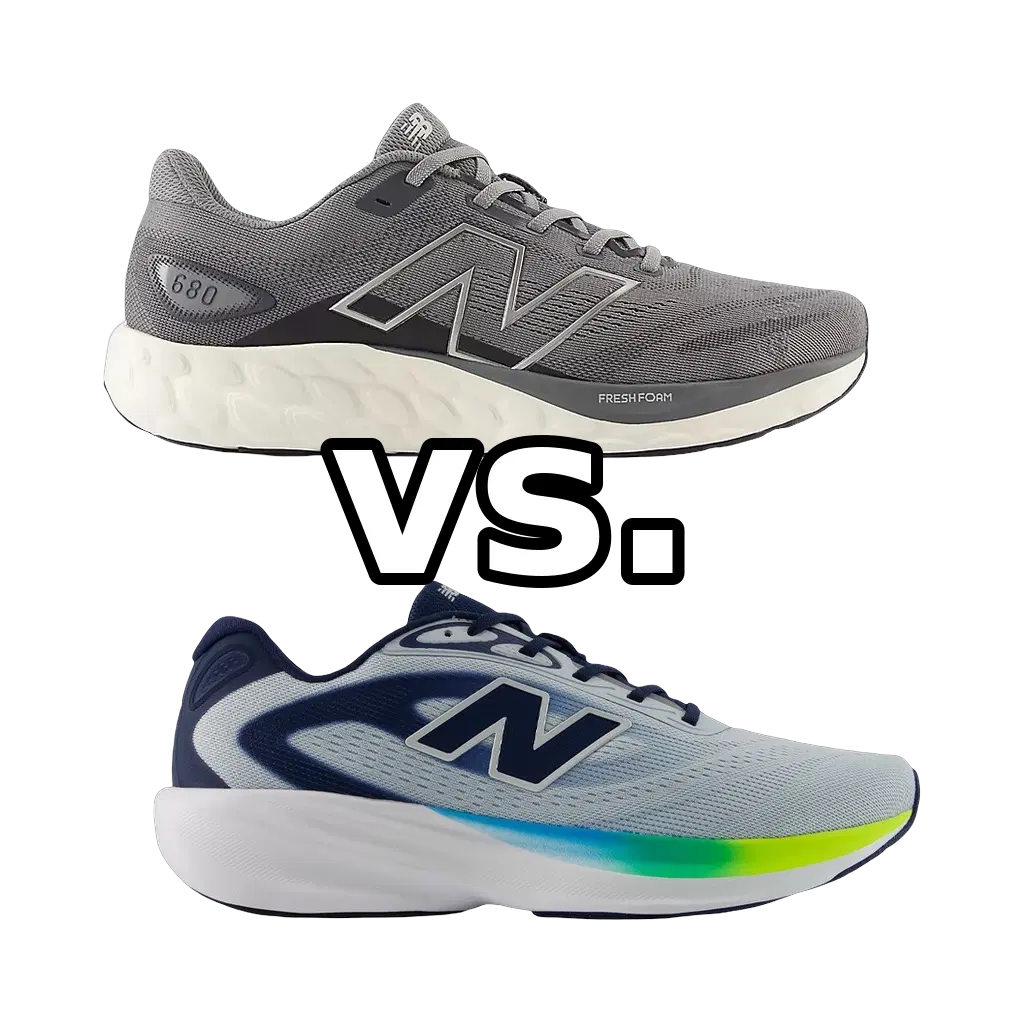
Verdict
These are close siblings, not rivals: identical drop, near-identical weight and stack, same low-energy ride, same use cases. The entire decision comes down to foam feel — the v8 is firmer and more connected, the v9 is softer and more cushioned. If your current 680v8 is still in good shape, the v9 isn't a must-have leap; upgrade when you're due for new shoes, and go to the v9 if you want more plushness, or hunt down the v8 if you preferred the firmer, more grounded ride.
Pace
3 of 6
Cushioning
3 of 6
Responsiveness
2 of 6
Stability
4 of 6
Drop
8 mm
Support
Stable Neutral
Plate
None
Distances
10KHalf
Pace
3 of 6
Cushioning
4 of 6
Responsiveness
2 of 6
Stability
4 of 6
Drop
8 mm
Support
Neutral
Plate
None
Distances
10KHalf
At a Glance
New Balance Fresh Foam 680v8New Balance Fresh Foam 680v9
Who Should Choose Each Shoe
Choose
New Balance Fresh Foam 680v8
Choose the 680v8 if you prefer a firmer, more grounded ride and like actually feeling the road underfoot rather than sinking into cushioning. It's the better pick for runners who want the slightly more supportive, stability-leaning setup and don't mind a foam that stays controlled and connected rather than soft. If you already own a pair you're happy with, there's little here pushing you to replace it until it wears out.
Choose
New Balance Fresh Foam 680v9
Choose the 680v9 if you want the same reliable, planted daily trainer but with a softer, more forgiving feel underfoot — it's the friendlier option for easy base-building miles and for runners who found the v8 a bit firm or flat on longer efforts. It suits neutral runners who value calm comfort over road feel, and it keeps the wide, steady platform so you don't give up the planted stability. For a 680v8 owner, this is the upgrade that matters only if you specifically want more cushioning.
Head-to-Head
On the big structural numbers, these two are nearly identical: both run an 8mm drop, both land right around 258–261g in a men's US 9, both sit on roughly the same amount of foam (a heel stack in the low-to-mid 30s of millimeters), and neither uses a plate, so responsiveness stays low on both — you won't get spring back when you push either one. They share the same wide, planted platform, the same breathable engineered mesh upper, and the same sweet spot: relaxed aerobic mileage at roughly 5:30–6:30 min/km, topping out somewhere in the low-5s per km before the flat foam becomes the limit. The one meaningful change is the foam itself. The v8's single-density Fresh Foam reads firm and grounded — you feel connected to the road, and it can feel a touch lifeless once your legs tire on longer outings. The v9 retunes that same foam to be measurably softer and more forgiving, which is why its cushioning rates a notch higher; it's calmer and more cushioned underfoot at easy paces, trading a little of the v8's road feel for comfort. Stability stays strong on both, though the v8 is tuned slightly more toward support (its stable-neutral bias) while the v9 is a cleaner neutral shoe that leans on a broadened heel base to stay steady. The upper also gets a tidier, more modern look on the v9, though breathability is about the same.
© 2026 longrunshoes.ai | All rights reserved.
Use of materials from this site is permitted only with proper attribution and a link to longrunshoes.ai.