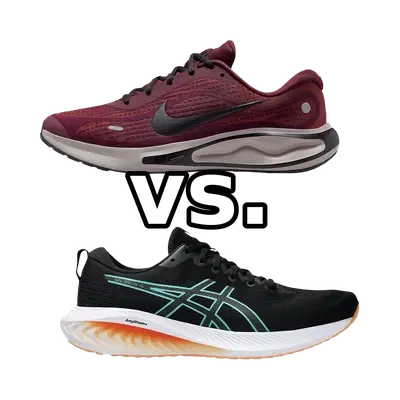
Nike Journey Run vs Nike Revolution 8:
Which to Choose
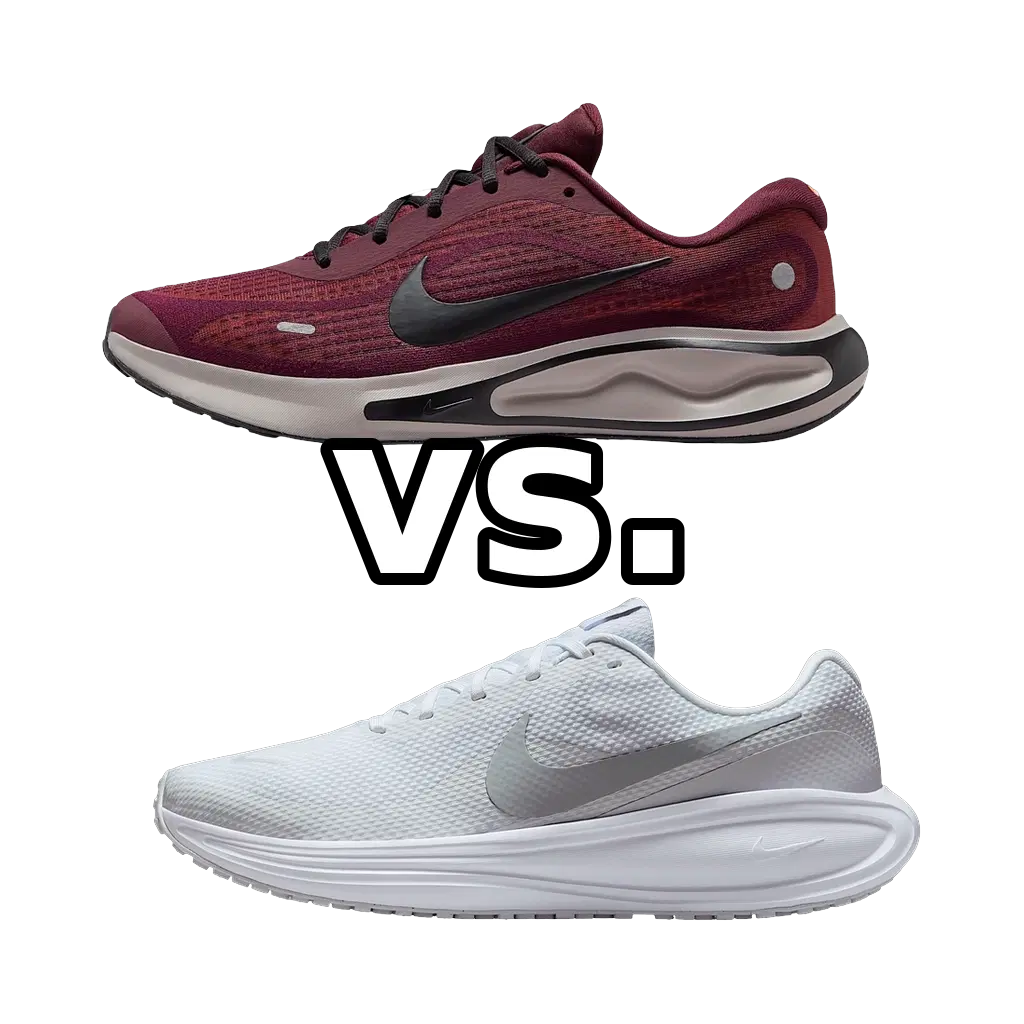
Verdict
These are two takes on the same idea — a forgiving, low-rebound beginner trainer for easy 5K–10K running — so you won't go wrong either way. It comes down to priorities: pick the Journey Run if you want more cushioning, a wider and more stable platform, and a more durable, protective build, and accept the extra ~40g that comes with it; pick the Revolution 8 if you'd rather have the lighter, lower, more minimal shoe for genuinely easy jogging and don't mind trading some stability and longevity for that nimbler feel.
Pace
2 of 6
Cushioning
3 of 6
Responsiveness
2 of 6
Stability
4 of 6
Drop
10 mm
Support
Neutral
Plate
None
Distances
5K10K
Pace
1 of 6
Cushioning
3 of 6
Responsiveness
2 of 6
Stability
3 of 6
Drop
9 mm
Support
Neutral
Plate
None
Distances
5K10K
At a Glance
Nike Journey RunNike Revolution 8
Who Should Choose Each Shoe
Choose
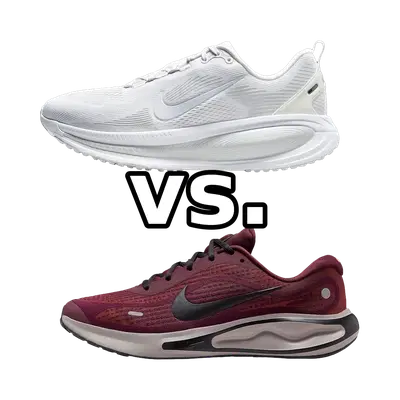
Nike Journey Run
Choose the Journey Run if you want the more planted, protective of the two and plan to actually log repeat easy miles in it. Its wider, more stable base, slightly deeper cushioning, cushier upper, and full rubber outsole make it the better pick for newer or heavier runners who prioritize a secure, reassuring ride and want a shoe that holds up, and its marginally broader pace range gives you a little more room to pick things up on a good day.
Choose
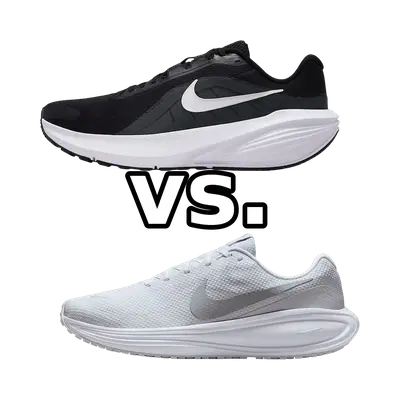
Nike Revolution 8
Choose the Revolution 8 if you want the lightest, simplest easy-day jogger and value a lower, less bulky feel over maximum cushioning or durability. At roughly 264g it's the nimbler shoe on foot, and its gentle, unfussy EVA ride suits a beginner doing short neighborhood loops and relaxed 5K–10K runs at a truly easy, conversational pace who doesn't need extra stability or a tall stack.
Head-to-Head
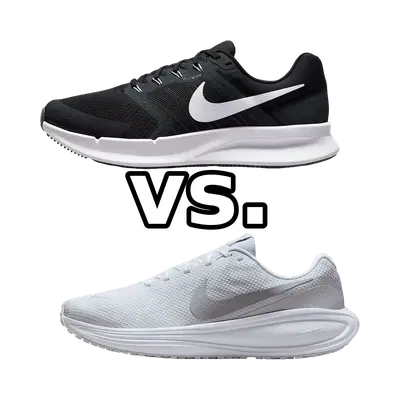
On ride character the two are close cousins: both use a basic, single-density foam (Cushlon-class in the Journey Run, EVA in the Revolution 8), both have no plate, and both score low for responsiveness, so neither gives much energy back when you press the pace — expect a calm, slightly "dead" feel that rewards easy jogging. The clearest split is weight and build. The Journey Run is the heavier shoe at around 305g in a men's US 9 versus roughly 264g for the Revolution 8 — a noticeable ~40g gap that you feel as more shoe underfoot. Some of that weight buys you a fuller, more protective package: the Journey Run carries a slightly taller stack (about 33mm heel / 24mm forefoot versus 32mm / 23mm on the Revolution 8), a plusher, more padded upper, and full rubber outsole coverage that should hold up better over miles, whereas durability is the Revolution 8's acknowledged weak point. Stability also tips toward the Journey Run: it rides on a broad, forgiving base that keeps slower runners planted (stability 4/6) compared with the Revolution 8's more ordinary platform (3/6), though both are neutral shoes with no corrective posting. Drop is a near-wash — a moderate, heel-friendly 8mm on the Journey Run and 9mm on the Revolution 8 — so neither feels dramatically more or less ramped than the other. Finally, the Journey Run is marginally the more versatile of the two on pace: it's comfortable in a 6:00–7:00 min/km band and still effective down toward 5:45, while the Revolution 8 is tuned a notch slower and more relaxed, happiest around 6:30–8:00 and running out of pop by about 6:30 min/km.
© 2026 longrunshoes.ai | All rights reserved.
Use of materials from this site is permitted only with proper attribution and a link to longrunshoes.ai.