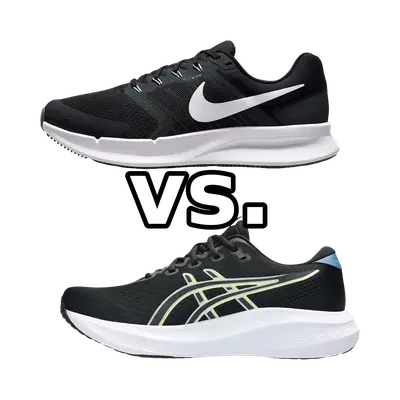
Nike Run Swift 3 vs Nike Revolution 8:
Which to Choose
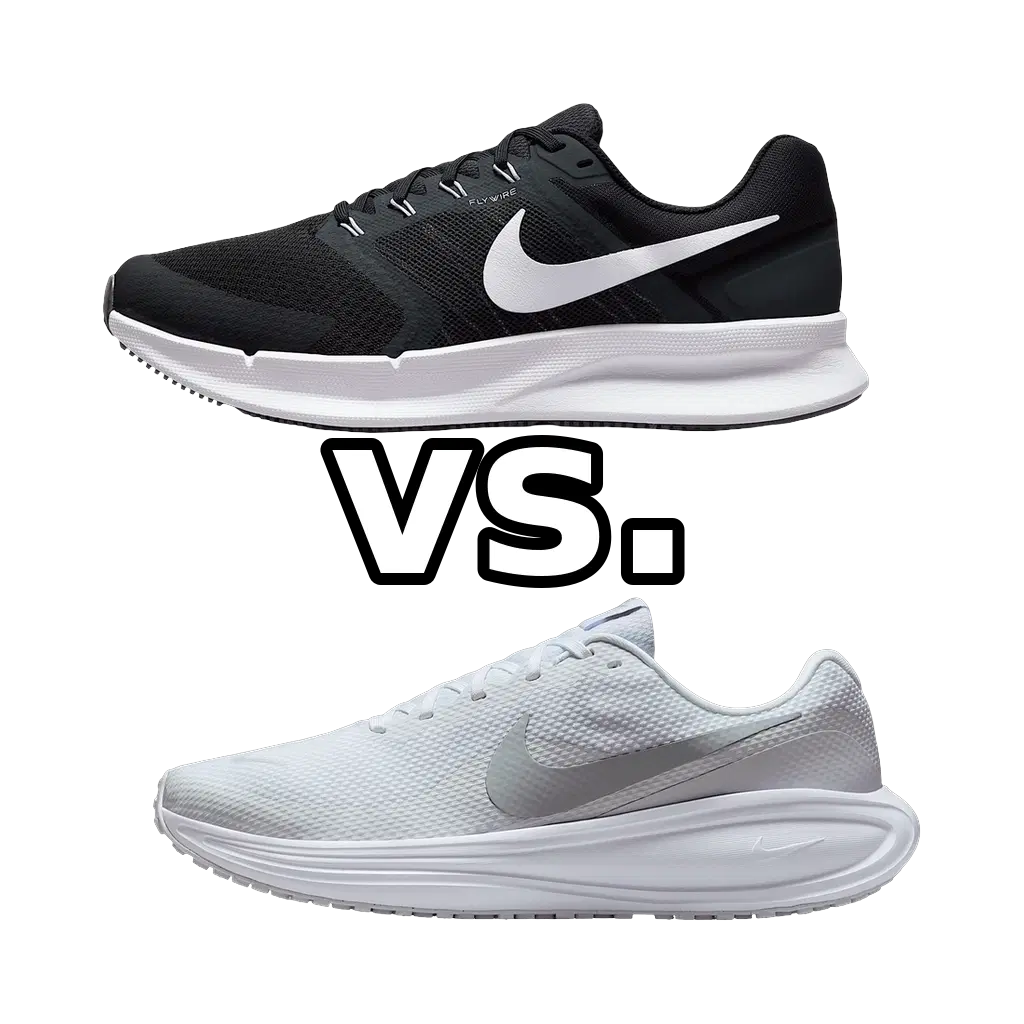
Verdict
It genuinely depends on the ride you want, since these shoes share the same job and nearly the same weight, stack, and drop. Pick the Run Swift 3 for a firmer, more stable, more durable platform that stays planted and tolerates a slightly quicker easy pace; pick the Revolution 8 for a softer, gentler cushioned feel on strictly relaxed runs. For most beginners the deciding factor is simply firm-and-stable versus soft-and-plush — and the Run Swift 3's steadier base and better durability make it the safer all-round choice.
Pace
2 of 6
Cushioning
3 of 6
Responsiveness
2 of 6
Stability
4 of 6
Drop
10 mm
Support
Neutral
Plate
None
Distances
5K10K
Pace
1 of 6
Cushioning
3 of 6
Responsiveness
2 of 6
Stability
3 of 6
Drop
9 mm
Support
Neutral
Plate
None
Distances
5K10K
At a Glance
Nike Run Swift 3Nike Revolution 8
Who Should Choose Each Shoe
Choose
Nike Run Swift 3
Choose the Run Swift 3 if you want a firmer, more stable, planted ride and value feeling connected and secure over plush softness — it's the better pick for heavier runners or anyone who wants a wide, confidence-inspiring base for easy 5Ks and 10Ks. It also has a slight edge if you occasionally nudge the pace a bit faster or want a shoe that holds up longer. Its 10mm drop suits heel-strikers who like a traditional ramp that eases the calves and Achilles.
Choose
Nike Revolution 8
Choose the Revolution 8 if you prioritize a softer, gentler landing underfoot for first-steps-into-running easy jogs and neighborhood loops, and you run strictly at relaxed, conversational effort. It's the more forgiving-feeling of the two for pure easy mileage at slower paces, as long as you accept the slightly less stable platform and shorter expected lifespan. Beginners who want cushioned comfort over road feel will prefer it.
Head-to-Head
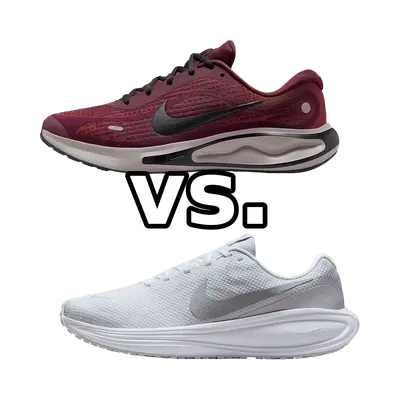
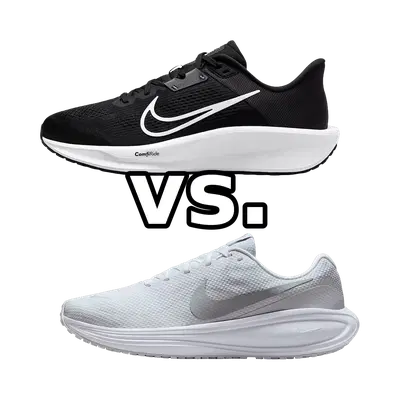
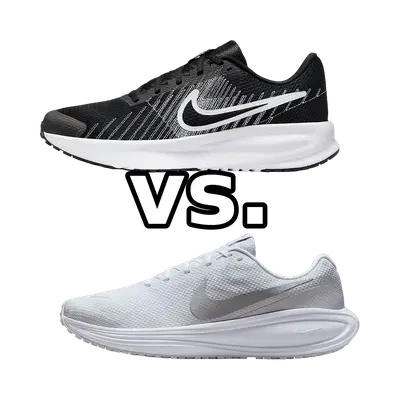
These two are close siblings: both are medium-cushioned (3/6), low-responsiveness (2/6) neutral shoes with no plate, built for easy pacing on the 5K and 10K, and they weigh almost the same — 269g for the Run Swift 3 versus 264g for the Revolution 8 in a men's US 9. Stack heights are nearly identical too: the Run Swift 3 sits at 33mm heel / 23mm forefoot for a 10mm drop, while the Revolution 8 measures 32mm / 23mm for a drop of about 9mm (Nike lists it as 10mm). The meaningful split is in how the foam behaves. The Run Swift 3 is firm and grounded, with a wide, planted platform that earns a higher stability rating (4/6) and keeps you connected to the road — the trade-off being modest impact protection, so the heel can feel harsh on longer efforts. The Revolution 8 goes the other direction with soft-but-plain single-density EVA: it cushions the landing more pleasantly but feels a touch dead, gives little back, and rides on a slightly less stable platform (3/6). Neither rewards speed — both go flat the moment you push the pace — but the Run Swift 3 holds a marginally quicker easy zone (comfortable down to about 5:45 min/km) than the Revolution 8 (best around 6:30 min/km and slower). The Revolution 8's other honest limitation is durability, where the simpler build gives up some ground to the firmer, more planted Run Swift 3.
© 2026 longrunshoes.ai | All rights reserved.
Use of materials from this site is permitted only with proper attribution and a link to longrunshoes.ai.