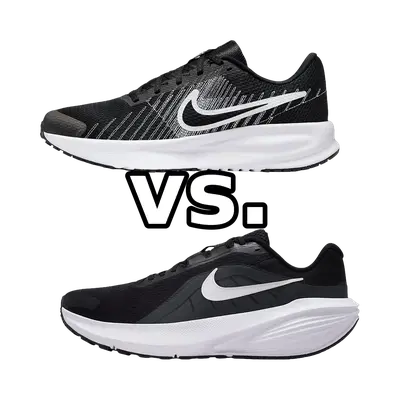
Nike Run Defy vs Nike Run Swift 3:
Which to Choose
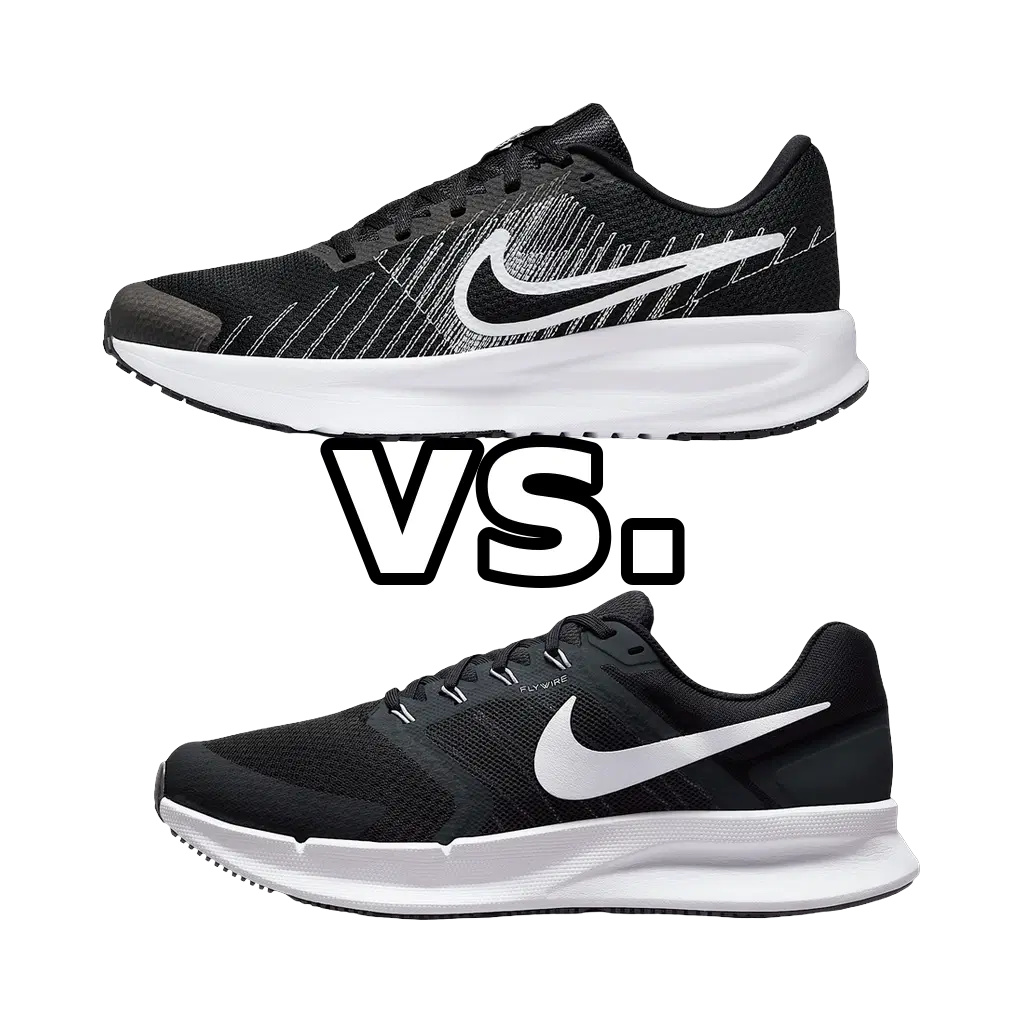
Verdict
These two are close cousins, not opposites, so there's no wrong answer — but it comes down to ride and distance. Go Run Defy for a softer, more damped feel, a touch less weight, and comfort that holds up toward the 10K; go Run Swift 3 for a firmer, more stable, locked-down platform best suited to the 5K and double duty as a walking shoe. If you can't decide, let your typical run length settle it: longer easy miles favor the Defy, shorter jogs and all-day wear favor the Swift 3.
Pace
2 of 6
Cushioning
3 of 6
Responsiveness
2 of 6
Stability
3 of 6
Drop
10 mm
Support
Neutral
Plate
None
Distances
5K10K
Pace
2 of 6
Cushioning
3 of 6
Responsiveness
2 of 6
Stability
4 of 6
Drop
10 mm
Support
Neutral
Plate
None
Distances
5K10K
At a Glance
Nike Run DefyNike Run Swift 3
Who Should Choose Each Shoe
Choose
Nike Run Defy
Choose the Run Defy if your easy runs regularly stretch toward the 10K and you want the slightly softer-on-contact, more cushioned-feeling of the two, plus the marginally lighter shoe on foot. It's the better pick for a new runner building fitness who values a damped, forgiving ride over a firm, connected one, and who wants a bit more comfort headroom when the distance creeps up.
Choose
Nike Run Swift 3
Choose the Run Swift 3 if you mostly run shorter — 5K and easy jogs — and want a firm, planted, stable platform that keeps you connected to the ground, with the Flywire midfoot lockdown giving a more secure fit. It's also the stronger all-rounder for someone who wants one affordable shoe that doubles as an everyday walking and casual-wear shoe, as long as you don't mind firmer, more modest impact protection.
Head-to-Head
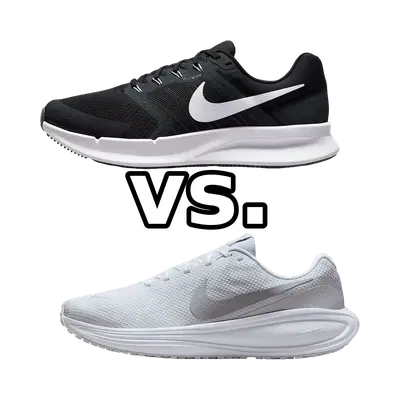
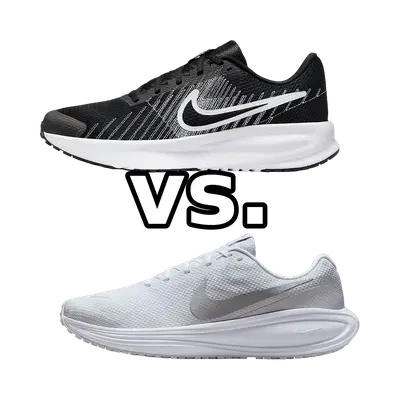
Start with what's identical: both run a 10mm drop on a 33mm/23mm stack, both are neutral with no pronation support, and both use an unnamed basic Nike foam with no plate, so neither gives back much energy — these are protective, grounded trainers, not propulsive ones. The differences are in character. The Run Defy's foam feels soft on first contact but dense underneath, producing a damped, settled ride that cushions impacts without bounce; the Swift 3 is firmer and more planted from the first step, keeping you closer to the road but offering more modest impact protection, so longer efforts start to feel harsh under the heel sooner. That firmness pays off in stability — the Swift 3's wide, firm platform is the more locked-down, secure-feeling of the two, further helped by Flywire cables through the midfoot for a tighter hold, whereas the Defy relies on a plain mesh upper and a merely adequate, stable-enough base. On weight, the Defy is the lighter shoe at 259g versus the Swift 3's 269g in a men's US 9 — a small gap, but it tracks with their intended ranges: the Defy stretches most comfortably out to the 10K and holds an easy pace down toward 6:00 min/km, while the Swift 3 is happiest at the 5K and doubles more readily as an all-day walking and casual-wear shoe. One honest note: despite different model names, these are siblings from the same brand rather than rivals from competing labels, so you're really choosing between two takes on the same beginner-trainer idea.
© 2026 longrunshoes.ai | All rights reserved.
Use of materials from this site is permitted only with proper attribution and a link to longrunshoes.ai.