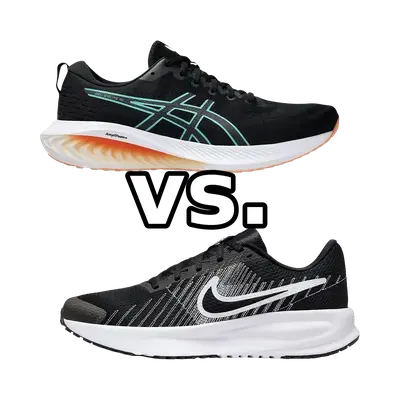
Nike Run Defy vs Nike Downshifter 14:
Which to Choose
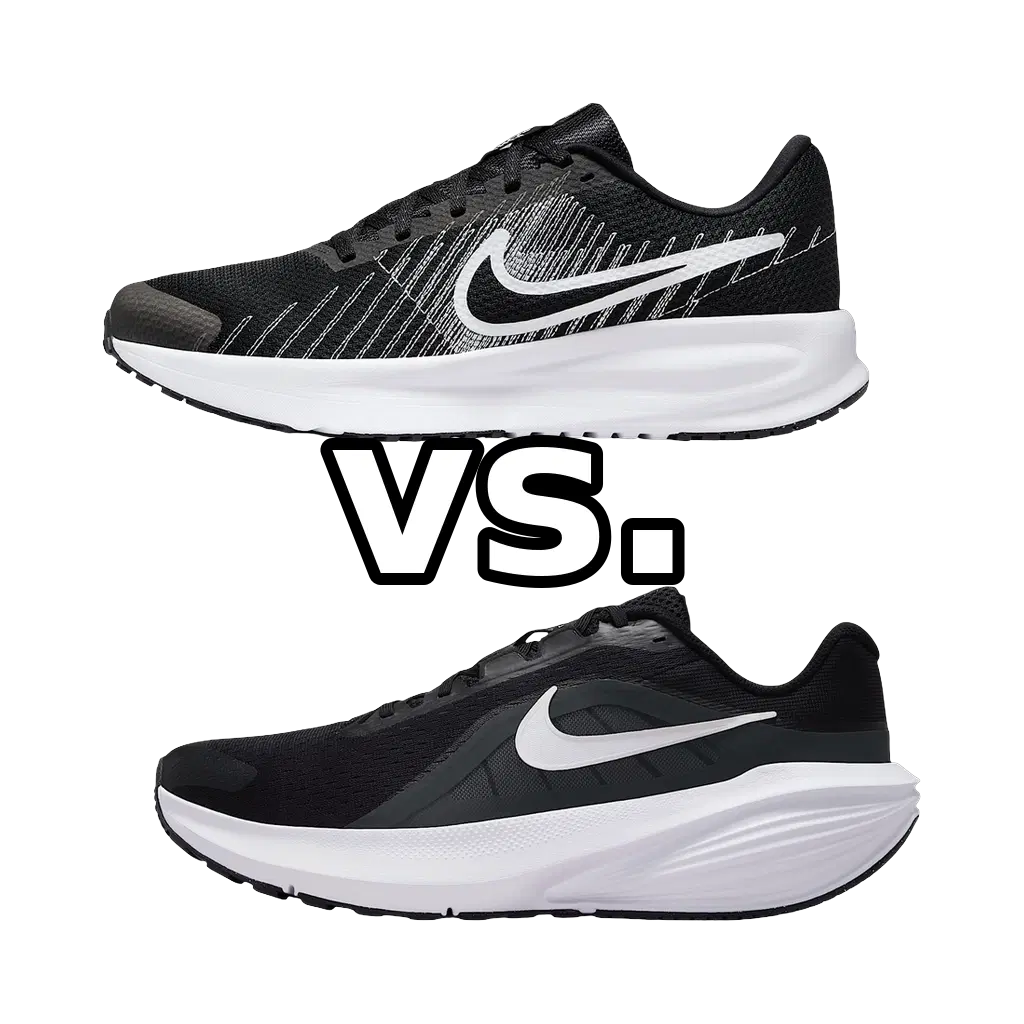
Verdict
These are close cousins built for the same job, so it comes down to weight versus stability. If you want the lighter, freer-feeling trainer with a bit more cushioning height for easy 10Ks, take the Run Defy; if you want the more planted, steadier ride for short, slow jogs and don't mind the extra 56g, take the Downshifter 14. Either way, treat it as an easy-day beginner shoe — neither has the rebound to be your speed or race option.
Pace
2 of 6
Cushioning
3 of 6
Responsiveness
2 of 6
Stability
3 of 6
Drop
10 mm
Support
Neutral
Plate
None
Distances
5K10K
Pace
2 of 6
Cushioning
3 of 6
Responsiveness
2 of 6
Stability
4 of 6
Drop
7 mm
Support
Neutral
Plate
None
Distances
5K10K
At a Glance
Nike Run DefyNike Downshifter 14
Who Should Choose Each Shoe
Choose
Nike Run Defy
Choose the Nike Run Defy if you want the lighter, less tiring option for easy daily miles and your comfortable distance tends toward the 10K. The taller 10mm drop and soft-on-contact foam suit newer runners who want a cushioned, heel-led stride and a shoe that doesn't feel like dead weight on longer easy efforts. It's the better everyday fitness-builder of the two for runners who prioritize a damped, protective ride over maximum ground-feel stability.
Choose
Nike Downshifter 14
Choose the Nike Downshifter 14 if steadiness matters more to you than weight — its firmer, lower platform and 7mm drop deliver the more planted, level ride, with a stability edge that reassures beginners still finding their footing on short, slow jogs. It's best for runners whose sweet spot is the 5K and who don't mind the extra heft in exchange for a grounded, predictable feel. If you want a dependable, hard-wearing shoe for first easy miles and value stability over nimbleness, this is the pick.
Head-to-Head
On paper these two overlap heavily: both are neutral, plateless, low-responsiveness trainers with a 3/6 cushioning rating, a firm-riding single-foam midsole, and the same 5K–10K comfort window. The real separation is weight and geometry. The Run Defy comes in at 259g in a men's US 9 against the Downshifter 14's 315g — a 56g gap that's immediately noticeable, making the Downshifter feel distinctly heavier and more grounded while the Run Defy moves a touch more freely at easy pace. Their stacks are close but tuned differently: the Run Defy runs 33mm heel / 23mm forefoot for a steeper 10mm drop, while the Downshifter sits at 31mm heel / 24mm forefoot for a flatter 7mm drop that eases weight toward the midfoot. That geometry, plus a firmer platform, earns the Downshifter the edge in stability (4/6 vs 3/6) — it stays steady and level, where the Run Defy's slightly taller, softer-on-contact heel is composed but not quite as locked-down. Ride character tracks that split too: the Run Defy's foam is soft on initial contact but dense underneath, giving a damped, protective feel, while the Downshifter is firm and planted from the first step. Both go flat and lifeless the moment you push the pace, and neither returns much energy — their effective ceilings are modest (around 6:00 min/km for the Run Defy, roughly 5:30 min/km for the Downshifter), with the Run Defy leaning toward the 10K as its sweet spot and the Downshifter happiest at 5K.
© 2026 longrunshoes.ai | All rights reserved.
Use of materials from this site is permitted only with proper attribution and a link to longrunshoes.ai.