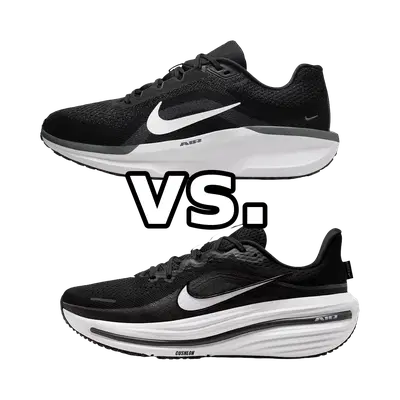
Nike Winflo 12 vs Nike Downshifter 14:
Which to Choose
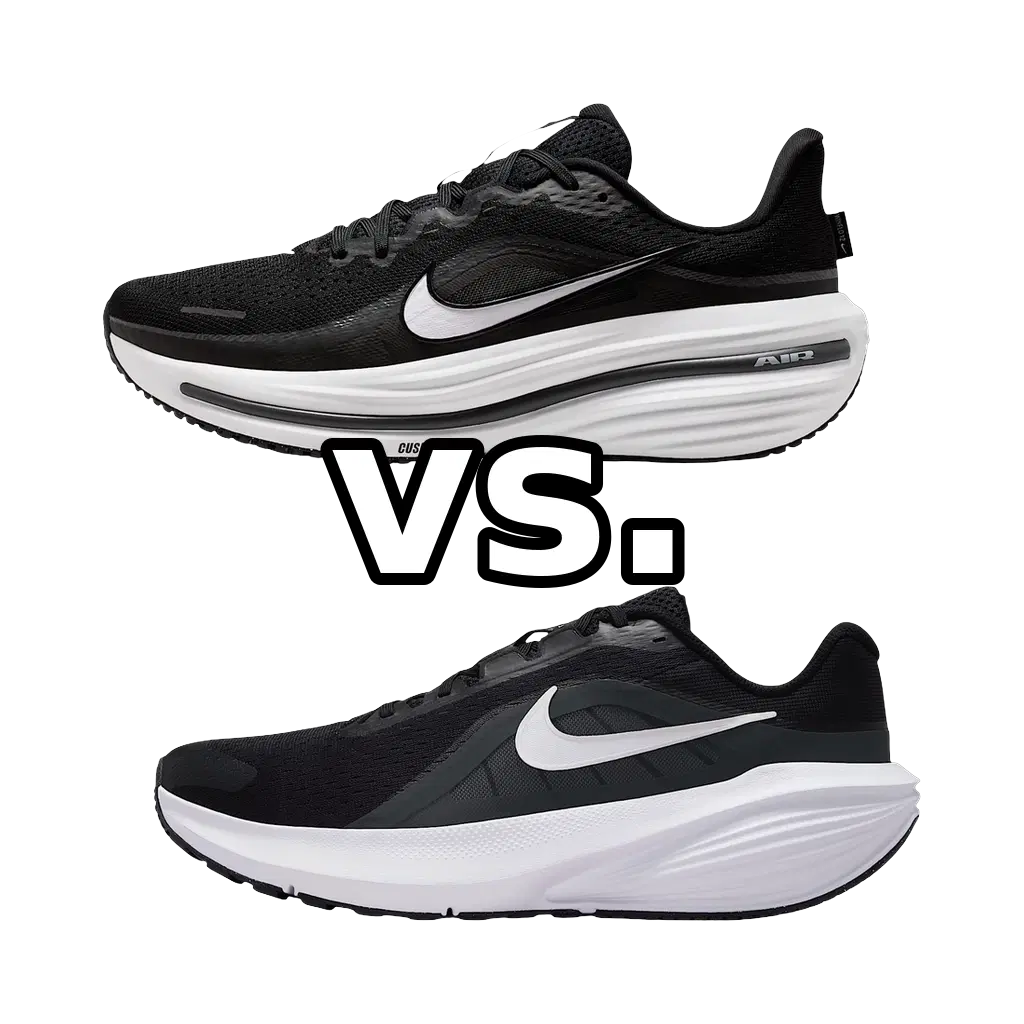
Verdict
For most runners weighing these two, the Winflo 12 is the more versatile buy: more cushion, a taller and smoother ride, a higher drop for heel strikers, and it's even a touch lighter, which lets it handle longer runs the Downshifter can't. Pick the Downshifter 14 only if you specifically want a lower, firmer, more grounded shoe for short easy jogs and prefer the 7 mm drop — it depends on how far you run and how much stack and softness you want underfoot, not on which shoe is "better" outright.
Pace
3 of 6
Cushioning
5 of 6
Responsiveness
3 of 6
Stability
4 of 6
Drop
11 mm
Support
Neutral
Plate
None
Distances
10KHalf
Pace
2 of 6
Cushioning
3 of 6
Responsiveness
2 of 6
Stability
4 of 6
Drop
7 mm
Support
Neutral
Plate
None
Distances
5K10K
At a Glance
Nike Winflo 12Nike Downshifter 14
Who Should Choose Each Shoe
Choose
Nike Winflo 12
Choose the Winflo 12 if you're a heel striker who wants more shoe underfoot for easy and steady mileage that stretches into 10K, half-marathon, and long training runs. Its taller stack, higher cushioning, and 11 mm drop give more protection and a slightly softer, more forgiving ride over time, and it's the better pick if you value comfort on longer efforts and don't mind a tall platform.
Choose
Nike Downshifter 14
Choose the Downshifter 14 if you're a beginner logging your first easy miles over shorter distances — 5K and 10K jogs — and prefer a simple, low-profile, firm shoe that keeps you close to the ground. Its lower 7 mm drop and modest stack suit runners who want a steady, predictable, no-frills trainer and don't need or want a tall, heavily cushioned platform.
Head-to-Head
The clearest split is stack height and cushioning. The Winflo 12 rides on a tall 40.9 mm heel / 30.3 mm forefoot platform with Cushlon 3.0 foam plus a heel Air unit, and it carries a high cushioning rating (5/6); the Downshifter 14 sits far lower at a 31 mm heel / 24 mm forefoot stack with a single unnamed firm foam and only moderate cushioning (3/6). That translates to a genuinely different feel: the Winflo is tall and moderately soft with a gentle bit of rebound off the Air unit on landing, while the Downshifter is grounded, flat, and firm with very little spring (responsiveness 3/6 vs 2/6). Drop also differs meaningfully — 11 mm on the Winflo favors heel strikers and eases the calves, whereas the Downshifter's 7 mm sits lower and nudges a touch more load toward the midfoot. Counterintuitively, the more heavily cushioned Winflo is actually the lighter of the two at 301 g versus 315 g for the Downshifter, so the Downshifter gives up stack, cushion, and a little weight all at once. Both are rated 4/6 for stability with neutral support and no pronation correction, and neither is a tempo or race shoe — both top out around a 5:15–5:45 min/km effort before the weight and firm foam work against you. The practical dividing line is distance: the Winflo is happiest at 10K up through the half marathon and long easy runs, while the Downshifter is best over 5K and 10K at a relaxed jog.
Similar Comparisons
Nike Downshifter 14 vs Nike Revolution 8
Adidas Supernova Stride 2 vs Nike Winflo 12
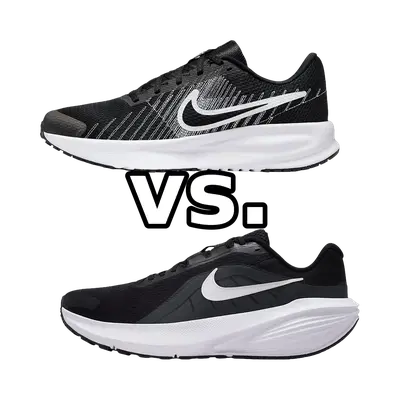
Nike Run Defy vs Nike Downshifter 14
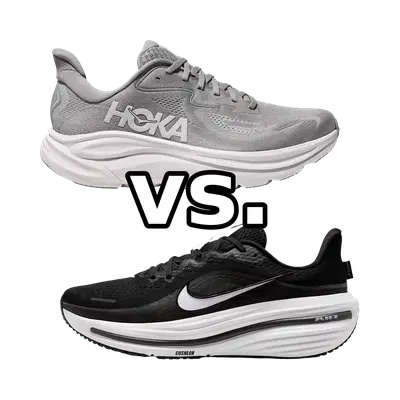
Hoka Clifton 10 vs Nike Winflo 12
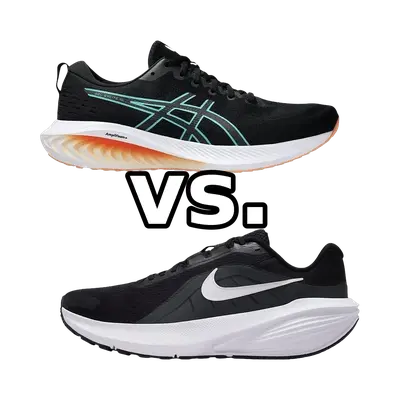
Asics Gel-Excite 10 vs Nike Downshifter 14
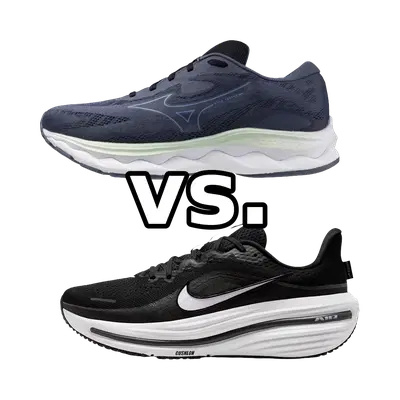
Mizuno Wave Serene vs Nike Winflo 12
Nike Winflo 12 vs Brooks Glycerin 23
Nike Vomero 18 vs Nike Winflo 12
© 2026 longrunshoes.ai | All rights reserved.
Use of materials from this site is permitted only with proper attribution and a link to longrunshoes.ai.