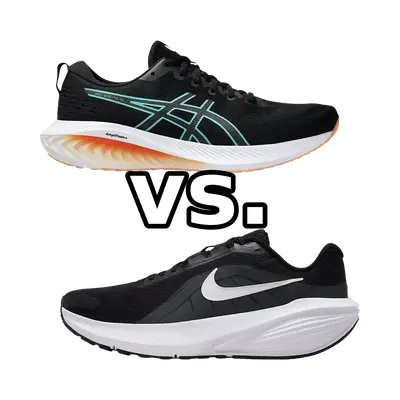
Asics Gel-Excite 10 vs Nike Run Defy:
Which to Choose
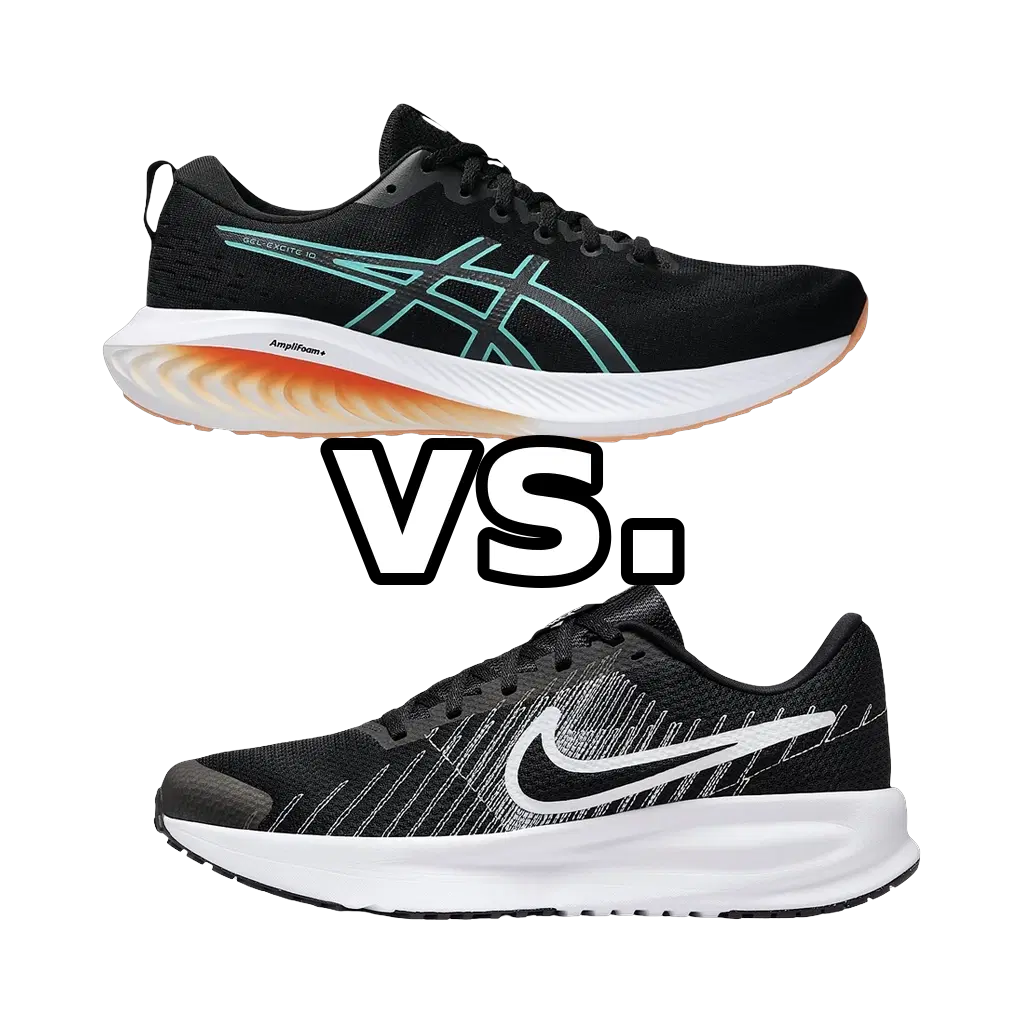
Verdict
This is genuinely close to a coin flip — both are capable, neutral, low-rebound beginner trainers for easy 5K–10K miles, and neither outperforms the other. Let the decision come down to fit and feel in the two brands plus drop preference: go Asics Gel-Excite 10 for the lower 8mm offset, rearfoot Gel cushioning, and a slightly livelier easy pace, or Nike Run Defy for the more traditional 10mm heel-led geometry and grippy waffle outsole on longer, relaxed runs. Whichever fits your foot better is the right one.
Pace
2 of 6
Cushioning
3 of 6
Responsiveness
2 of 6
Stability
3 of 6
Drop
8 mm
Support
Neutral
Plate
None
Distances
5K10K
Pace
2 of 6
Cushioning
3 of 6
Responsiveness
2 of 6
Stability
3 of 6
Drop
10 mm
Support
Neutral
Plate
None
Distances
5K10K
At a Glance
Asics Gel-Excite 10Nike Run Defy
Who Should Choose Each Shoe
Choose
Asics Gel-Excite 10
Choose the Gel-Excite 10 if you prefer a slightly lower 8mm drop and like the idea of a dedicated rearfoot Gel unit cushioning your heel strike, and if your easy runs tend to live at the quicker end of relaxed — around casual 5K efforts where this shoe is at its sweet spot. It's a sensible pick for a new runner who wants a dependable, planted base-builder and doesn't need a tall or bouncy stack. Those loyal to Asics' familiar AmpliFoam feel will be right at home.
Choose
Nike Run Defy
Choose the Run Defy if you want a more traditional 10mm heel-to-toe drop that eases a heel-led stride, and if your runs skew toward longer, conversational easy efforts with the 10K as your comfortable target. Its waffle-pattern outsole makes it a touch more reassuring on mixed road surfaces, and the dense, protective foam is built to log durable everyday miles. It's an easy recommendation for a beginner in the Nike fit who prioritizes a settled, no-surprises ride over any hint of pop.
Head-to-Head
These two are strikingly similar, so the honest headline is that there's no meaningful performance gap between them: both deliver a soft-on-contact but dense, protective ride where the foam absorbs impact more than it springs back, both stay composed and predictable at a jog, and both go flat the moment you try to push the pace. Cushioning is moderate on each — Asics' AmpliFoam midsole with a dedicated rearfoot Gel unit for heel impact versus Nike's single unnamed, deliberately dense foam — and neither is a tall, plush, maximalist stack. The clearest real difference is geometry: the Gel-Excite 10 runs an 8mm heel-to-toe drop while the Run Defy sits at 10mm, so the Nike encourages a more traditional, heel-led stride that many beginners find natural, while the Asics' slightly lower offset sits you a touch flatter. Their pace windows differ only marginally — the Asics is tuned around 6:15–7:15 min/km with its sweet spot on casual 5Ks, the Nike around 6:30–7:30 min/km with the 10K as its comfort zone — meaning the Asics is a hair more willing at the quicker end of easy, while the Nike is happiest settling into a longer, conversational grind. Both are neutral with a stable, broad-enough platform and no pronation support, and both lean on breathable mesh uppers; the Run Defy adds a waffle-pattern rubber outsole for grip. Weight is close enough to call a wash, with the Asics running marginally heavier, and neither will ever feel lively.
© 2026 longrunshoes.ai | All rights reserved.
Use of materials from this site is permitted only with proper attribution and a link to longrunshoes.ai.