
Nike Pegasus 42 vs Puma Velocity Nitro 5:
Which to Choose

Verdict
It comes down to drop and intent. Go Pegasus 42 if you want a taller, firmer, 14mm heel-biased workhorse for protected long and easy miles; go Velocity Nitro 5 if you want a lighter, flatter 5mm trainer that feels livelier and rewards picking up the pace. Neither is the faster "racer," but the Velocity is the one to pick if versatility toward tempo and a lower, more natural ride matter most, and the Pegasus if steady, cushioned heel-strike mileage is your priority.
Pace
4 of 6
Cushioning
4 of 6
Responsiveness
4 of 6
Stability
4 of 6
Drop
14 mm
Support
Neutral
Plate
None
Distances
10KHalfMarathon
Pace
4 of 6
Cushioning
3 of 6
Responsiveness
4 of 6
Stability
4 of 6
Drop
5 mm
Support
Neutral
Plate
None
Distances
10KHalfMarathon
At a Glance
Nike Pegasus 42Puma Velocity Nitro 5
Who Should Choose Each Shoe
Choose
Nike Pegasus 42
Choose the Pegasus 42 if you're a heel striker who wants a tall, planted, dependable trainer for easy-to-moderate daily mileage and long steady runs, and you like a high offset that keeps you up off the ground. It's a strong pick for beginners building an aerobic base and for experienced runners who want one durable workhorse that prioritizes consistency and protection over low weight. If 14mm of drop and a firm, heel-biased ride feel natural to you, this is the more forgiving long-haul cruiser of the two.
Choose
Puma Velocity Nitro 5
Choose the Velocity Nitro 5 if you want a lighter, lower, more connected shoe that encourages a midfoot strike and comes alive when you add some pace — think steady miles with the occasional pickup, tempo days, and halves. Its 5mm drop and springier NITROFOAM suit runners who find a 14mm offset too heel-heavy and who value liveliness and ground feel over maximum cushioning. Just be aware that the softer, springy outsole can wear faster if you log very heavy mileage.
Head-to-Head
The single biggest difference is drop and geometry. The Pegasus 42 runs a very high 14mm offset, with a 36mm heel over a 22mm forefoot — a tall, heel-heavy platform you feel on every heel strike, smoothed by a gentle toe-spring. The Velocity Nitro 5 is far flatter at 5mm, with a 31mm heel over a 26mm forefoot, a lower-profile and more even stack that encourages a midfoot-friendly stride and keeps more ground feel. Weight follows suit: the Pegasus is the heftier shoe at 286g (men's US 9) against the Velocity's 238g, a real ~48g gap you notice when the pace drops. The foams behave differently too — Nike's ReactX plus a full-length Air Zoom unit feels firm and businesslike, with a distinct pop that wakes up as you speed up, whereas Puma's ATPU-based NITROFOAM is softer on contact but snaps back quickly for a bouncier, livelier rebound. On the metrics the Pegasus carries slightly more cushioning (4/6 vs 3/6) and sits taller at the heel, so it offers a touch more protection for long, steady efforts; the Velocity is lighter and more responsive-feeling, and both rate the same for stability (moderate, neutral, no pronation support) and both go without a plate. In use, the Pegasus rewards consistent, moderate training tempos and feels like more shoe than you need if you push hard, while the Velocity genuinely comes alive when you lean into tempo and treats the half marathon as its sweet spot.
Similar Comparisons

Puma Velocity Nitro 3 vs Puma Velocity Nitro 5
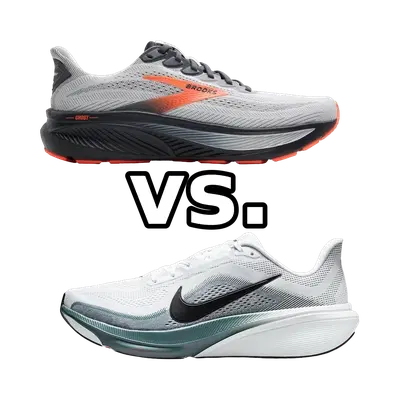
Brooks Ghost 17 vs Nike Pegasus 42

Brooks Ghost 18 vs Puma Velocity Nitro 5

Hoka Clifton 10 vs Nike Pegasus 42

Puma Deviate Pure Nitro vs Puma Velocity Nitro 5

Asics Novablast 6 vs Nike Pegasus 42
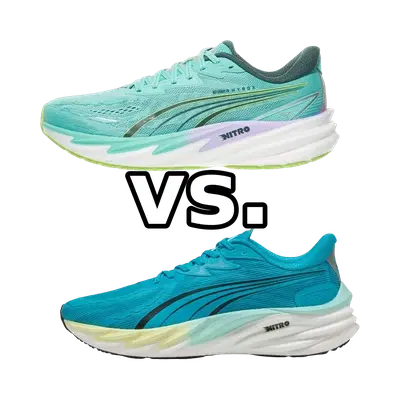
Puma Velocity Nitro 5 vs Puma Velocity Nitro 4

Nike Pegasus Premium vs Nike Pegasus 42
© 2026 longrunshoes.ai | All rights reserved.
Use of materials from this site is permitted only with proper attribution and a link to longrunshoes.ai.