
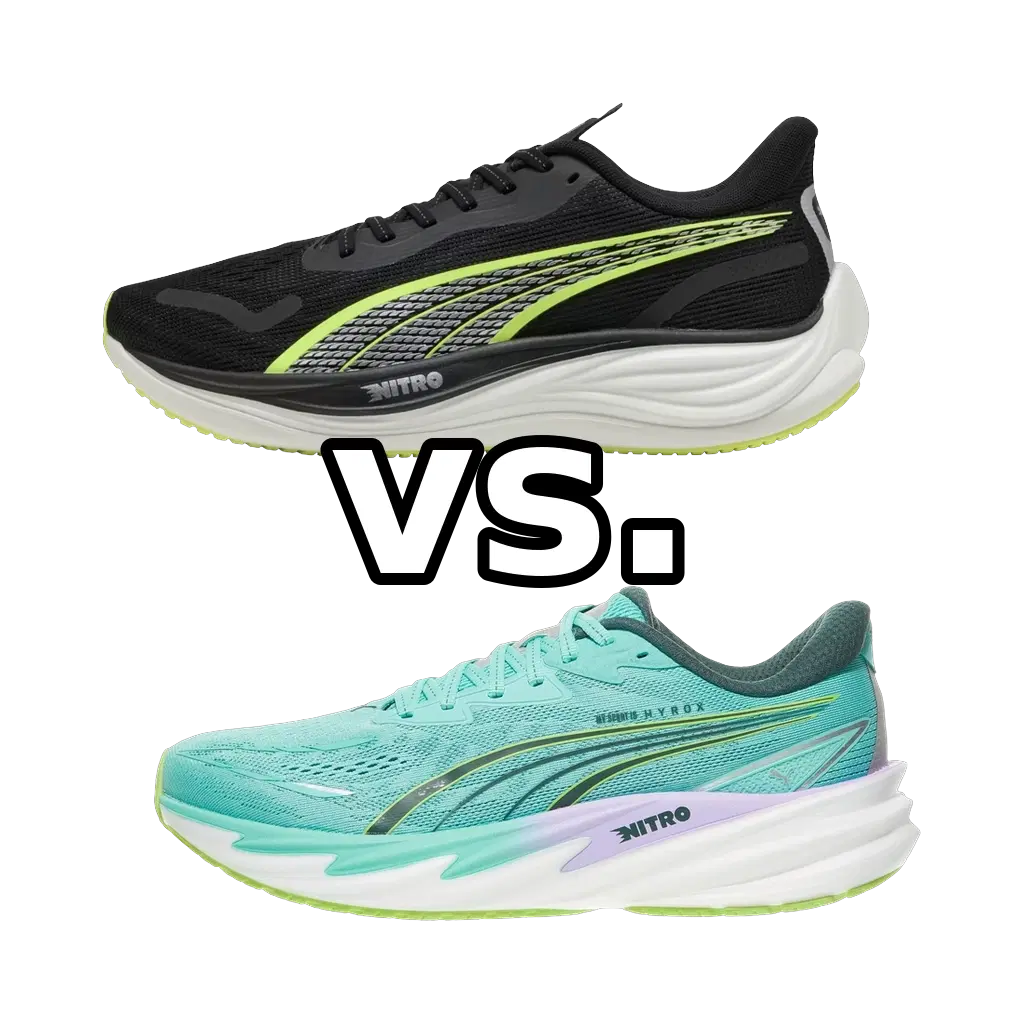
Puma Velocity Nitro 3 vs Puma Velocity Nitro 5:
Which to Choose
Verdict
It genuinely depends on two things: drop preference and what you want from the ride. If you're happy with a 10mm offset and value a touch more cushioning and a grounded, predictable feel, the Nitro 3 still does its job and there's no pressing need to upgrade. But if you want a lighter, bouncier, more uptempo shoe and you're comfortable dropping to a 5mm, midfoot-friendly stance, the Nitro 5 is the real step forward — a more responsive, race-leaning evolution of the same dependable daily trainer.
Pace
4 of 6
Cushioning
4 of 6
Responsiveness
4 of 6
Stability
4 of 6
Drop
10 mm
Support
Neutral
Plate
None
Distances
10KHalfMarathon
Pace
4 of 6
Cushioning
3 of 6
Responsiveness
4 of 6
Stability
4 of 6
Drop
5 mm
Support
Neutral
Plate
None
Distances
10KHalfMarathon
At a Glance
Puma Velocity Nitro 3Puma Velocity Nitro 5
Who Should Choose Each Shoe
Choose
Puma Velocity Nitro 3
Choose the Velocity Nitro 3 if you're a heel or midfoot striker who prefers a traditional 10mm drop and doesn't want to adapt your stride to a lower-offset shoe, or if you lean on this pair for longer, easier days and want the extra sliver of cushioning and protection it offers over the 5. It's also the safer pick if you value a grounded, predictable transition and proven Nitro EVA over chasing the springiest possible ride. Runners who found the 3 already dialed in for their half-marathon and marathon training have no urgent reason to change.
Choose
Puma Velocity Nitro 5
Choose the Velocity Nitro 5 if you want a lighter, livelier daily trainer that rewards picking up the pace — the reduced weight, springier ATPU NITROFOAM, and uptempo-friendly pace zone make it the better tempo-and-progression tool of the two. It suits runners comfortable with a low 5mm drop and a midfoot-friendly, natural stride, and improving Nitro 3 owners who want more rebound and less shoe underfoot without leaving the neutral, plateless family. Just weigh the durability caveat if you log very high mileage.
Head-to-Head
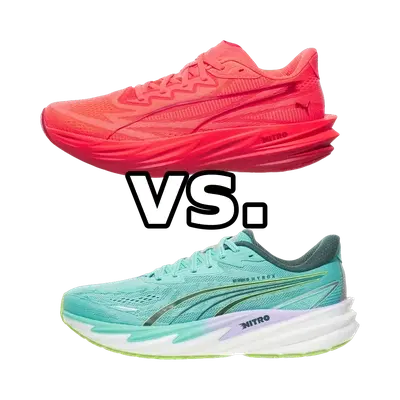
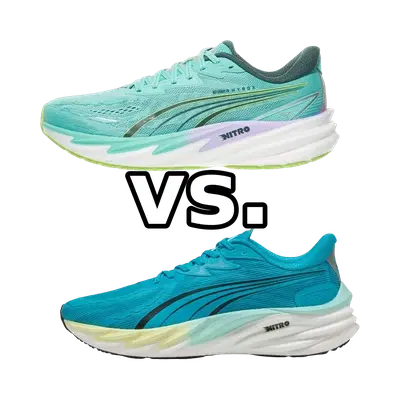
The headline change from 3 to 5 is a shift in geometry and feel rather than category. The Nitro 3 runs a traditional 10mm heel-to-toe drop and weighs around 275g in a men's US 9; the Nitro 5 drops to a 5mm offset and slims down to roughly 238g, so it's both noticeably lighter and considerably lower in drop — a more midfoot-friendly, natural-stride shoe versus the heel-and-midfoot-friendly ride of the 3. The midsole material changed too: the 3 uses nitrogen-infused Nitro EVA that reads as moderately soft but grounded, with a clean, predictable transition and a fair amount of ground feel, while the 5 moves to an ATPU-based NITROFOAM that is softer on contact but springs back faster, giving a bouncier, more rebound-driven ride. That livelier foam comes with a slightly firmer, less protective cushioning balance — the 5 sits a touch lower on the cushioning scale than the 3 — so it's less about plush long-run comfort and more about return underfoot. Neither shoe has a plate, both stay neutral with a stable, predictable platform and no added pronation support, and both share the same best distances, but their pace personalities diverge: the 3 is happiest around 5:00–6:00 min/km with the ability to press down to roughly 4:45, while the 5 skews faster and more uptempo, optimal around 4:45–5:30 min/km and best when you drop toward 4:30. In short, the 5 is the lighter, springier, lower-drop, slightly firmer sibling; the 3 is the higher-drop, marginally more cushioned, more classic-feeling one. One honest caveat on the 5: the softer, springier outsole compound on trainers like this can wear faster under heavy mileage.

© 2026 longrunshoes.ai | All rights reserved.
Use of materials from this site is permitted only with proper attribution and a link to longrunshoes.ai.