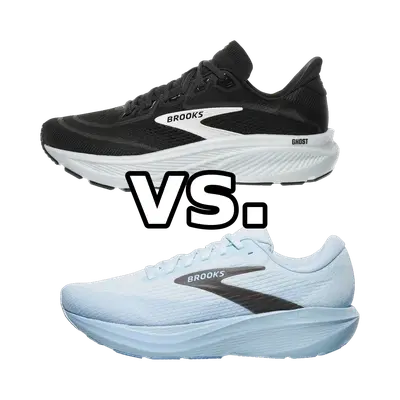
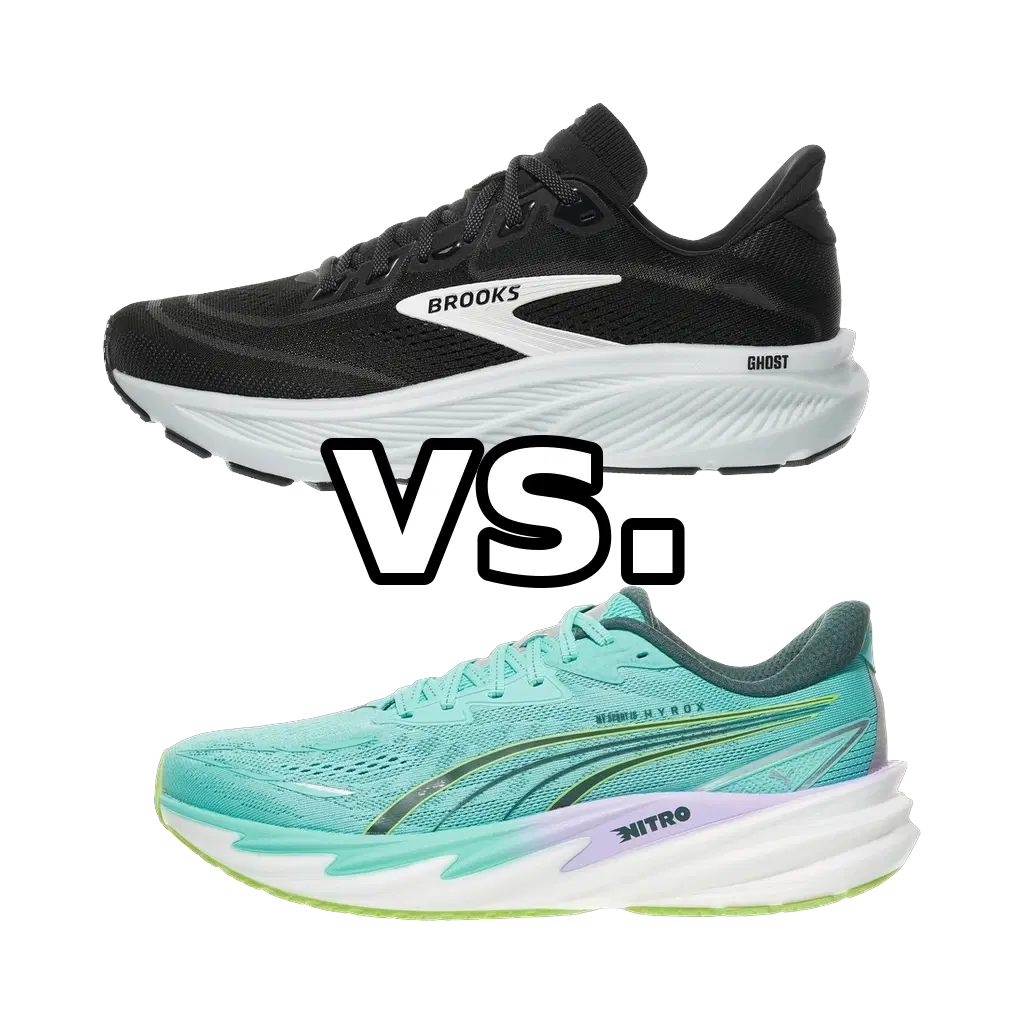
Brooks Ghost 18 vs Puma Velocity Nitro 5:
Which to Choose
Verdict
It genuinely depends — but on fit and feel, not quality, since both are well-executed neutral trainers for the same distances. Pick the Ghost 18 if you're a heel striker who wants maximum cushioning, a high 12mm drop, and a planted, durable, drama-free long-run ride; pick the Velocity Nitro 5 if you want a noticeably lighter, lower-drop, springier shoe that rewards picking up the pace. If you can't decide, let your foot strike and preferred effort break the tie: high heel, easy miles point to the Ghost, midfoot and tempo point to the Puma.
Pace
3 of 6
Cushioning
4 of 6
Responsiveness
3 of 6
Stability
4 of 6
Drop
12 mm
Support
Neutral
Plate
None
Distances
10KHalfMarathon
Pace
4 of 6
Cushioning
3 of 6
Responsiveness
4 of 6
Stability
4 of 6
Drop
5 mm
Support
Neutral
Plate
None
Distances
10KHalfMarathon
At a Glance
Brooks Ghost 18Puma Velocity Nitro 5
Who Should Choose Each Shoe
Choose
Brooks Ghost 18
Choose the Ghost 18 if you're a neutral heel striker — or a newer runner — who wants a dependable, no-drama trainer for steady daily and long runs and values predictability, a tall cushioned platform, and durability over bounce. Its 12mm drop and firm, planted ride are ideal for runners who log consistent easy-to-moderate miles (roughly 5:30–6:30 min/km) and want a shoe that eases the calves and just gets the job done rather than one that eggs them on to go faster.
Choose
Puma Velocity Nitro 5
Choose the Velocity Nitro 5 if you want one light, lively neutral shoe to cover most of your week, from steady miles to pickups and tempo efforts, and you prefer a springy, responsive ride with real ground feel over deep, plush softness. Its 5mm drop and lower stack suit midfoot-leaning runners comfortable with a more natural stride who tend to run in the uptempo zone (around 4:45–5:30 min/km and quicker), and who will actually use the rebound rather than only jogging easy.
Head-to-Head
The clearest split is geometry and weight. The Ghost 18 runs a 12mm drop on a 37mm heel / 25mm forefoot stack and weighs 289g in a men's US 9; the Velocity Nitro 5 sits at a 5mm drop on a much more level 31mm / 26mm platform and weighs about 238g — roughly 51g lighter. That 7mm drop gap matters: the Ghost's steep heel-to-toe offset and taller heel favor heel strikers and take load off the calves, while the Velocity's low, near-flat profile encourages a midfoot-friendly, natural stride and asks a bit more of the calf and Achilles. Underfoot the foams tell the same story from both sides — Brooks's DNA Loft v3 is cushioned but firm and controlled, delivering a smooth, planted, muted-rebound roll that rewards consistency over spring, whereas Puma's NITROFOAM feels soft on contact but snaps back quickly for a bouncy, lively ride that comes alive at tempo. Cushioning volume tips to the Ghost (a genuinely high-cushion long-run platform), while responsiveness and the preferred pace zone tip to the Velocity, which feels best as you drop toward tempo and a touch ordinary at a true crawl. Both are honest neutral shoes with no pronation posting and no plate, both offer a stable, dependable platform, and both cover the same race distances — so the decision comes down to high-drop, firm, protective calm versus low-drop, light, energetic pop. One trade-off worth weighing: the Ghost's extra weight buys durability and planted stability, while the Velocity's softer, springier outsole can wear faster under heavy mileage.</paragraph>
Similar Comparisons

Puma Velocity Nitro 3 vs Puma Velocity Nitro 5

Saucony Ride 19 vs Brooks Ghost 18

Nike Pegasus 42 vs Puma Velocity Nitro 5
Brooks Ghost 17 vs Brooks Ghost 18
Puma Deviate Pure Nitro vs Puma Velocity Nitro 5

Nike Pegasus 42 vs Brooks Ghost 18
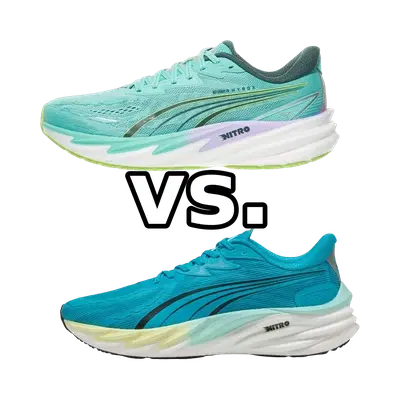
Puma Velocity Nitro 5 vs Puma Velocity Nitro 4
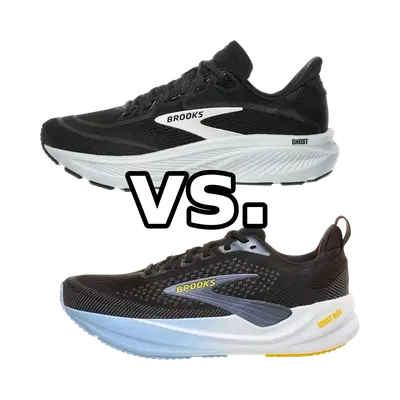
Brooks Ghost 18 vs Brooks Ghost Max 4
© 2026 longrunshoes.ai | All rights reserved.
Use of materials from this site is permitted only with proper attribution and a link to longrunshoes.ai.