
Puma Velocity Nitro 5 vs Puma Velocity Nitro 4:
Which to Choose
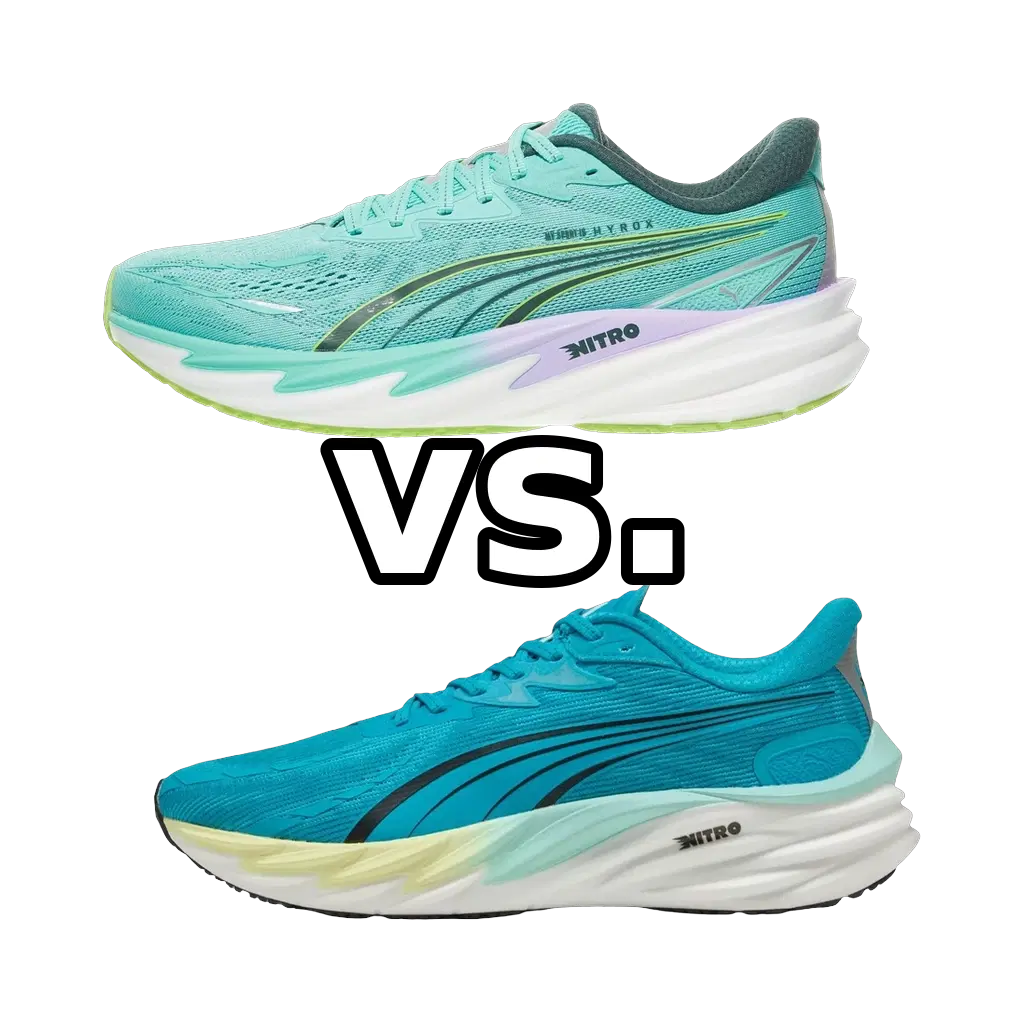
Verdict
This is a genuine "it depends," and what it depends on is drop and ride preference, not quality — both are capable neutral do-everything trainers for the 10K-to-marathon range. Go to the Nitro 5 if you want the softer, bouncier ATPU foam and a lower ~5 mm drop for a midfoot-oriented stride; stay with or choose the Nitro 4 if you value its slightly lighter weight, firmer and more connected feel, and traditional 10 mm drop. For a happy Nitro 4 owner, upgrade only if the lower drop and springier foam specifically appeal — otherwise you're changing the character of a shoe you already like rather than fixing a flaw.
Pace
4 of 6
Cushioning
3 of 6
Responsiveness
4 of 6
Stability
4 of 6
Drop
5 mm
Support
Neutral
Plate
None
Distances
10KHalfMarathon
Pace
3 of 6
Cushioning
4 of 6
Responsiveness
4 of 6
Stability
4 of 6
Drop
10 mm
Support
Neutral
Plate
None
Distances
10KHalfMarathon
At a Glance
Puma Velocity Nitro 5Puma Velocity Nitro 4
Who Should Choose Each Shoe
Choose
Puma Velocity Nitro 5
Choose the Velocity Nitro 5 if you want the newer, softer-on-contact ATPU foam and a lower, roughly 5 mm drop that suits a midfoot strike and a more natural stride. It's the better pick for a recreational or intermediate neutral runner who likes a lively daily trainer that comes alive when the pace drops, and who prefers a springier rebound over a firm, locked-to-the-ground feel. If you're a Nitro 4 owner who found the 10 mm drop a bit high or wished the ride were a shade softer and bouncier, this is the upgrade that actually addresses both.
Choose
Puma Velocity Nitro 4
Choose the Velocity Nitro 4 if you want the slightly lighter shoe and prefer a firmer, more directly connected ground feel for steady everyday mileage — it's an ideal base-builder for beginners and a reliable high-volume workhorse for experienced runners. Its traditional 10 mm drop is the friendlier option for committed heel strikers and anyone who likes the calf relief a higher offset provides. If you already own the Nitro 4, run mostly at easy-to-steady effort, and get along with its 10 mm drop and firmer ride, there's no urgent reason to switch — the 5 is a different flavor, not strictly a better shoe for your use.
Head-to-Head
The headline difference is the foam. The Nitro 4 runs on a single layer of nitrogen-infused NITROFOAM that reads as lively and lightly springy rather than plush — it firms up when you push the pace and gives a very connected, honest ground feel, but at slow jogs it can read firm rather than cradling. The Nitro 5 switches to an ATPU-based NITROFOAM that feels softer on contact and springs back more readily, trading a little of the 4's immediate, firm snap for a more compliant, bouncier ride that rewards picking up the tempo. The second big change is geometry: by caliper the Nitro 4 sits on a 34 mm heel / 24 mm forefoot stack for a traditional 10 mm drop that favors heel strikers and eases the calves, while the Nitro 5 measures 31 mm heel / 26 mm forefoot — a lower, roughly 5 mm drop that encourages a more midfoot-friendly, natural stride and keeps good ground feel. Weight runs counter to what you might expect from the softer foam: the Nitro 4 is the lighter of the two at about 224 g in a men's US 9 versus roughly 238 g for the Nitro 5, so the predecessor still has a slight edge in pure nimbleness. Everything else is largely shared — both are neutral with a moderately stable platform and no pronation correction, both skip a plate, both lean on NITROFOAM rebound rather than a carbon kick, and both target the same 10K/half/marathon band. The Nitro 5 carries a touch more of an uptempo bias in how it's tuned, while the Nitro 4 is happiest at steady daily pace; neither is a 5K spike-racer or a max-stack recovery cruiser.
Similar Comparisons

Puma Velocity Nitro 3 vs Puma Velocity Nitro 4

Nike Pegasus 42 vs Puma Velocity Nitro 5
New Balance Fresh Foam X 1080v15 vs Puma Velocity Nitro 4

Brooks Ghost 18 vs Puma Velocity Nitro 5

Adidas Ultraboost 5X vs Puma Velocity Nitro 4
Puma Deviate Pure Nitro vs Puma Velocity Nitro 5

Brooks Glycerin 22 vs Puma Velocity Nitro 4
© 2026 longrunshoes.ai | All rights reserved.
Use of materials from this site is permitted only with proper attribution and a link to longrunshoes.ai.