
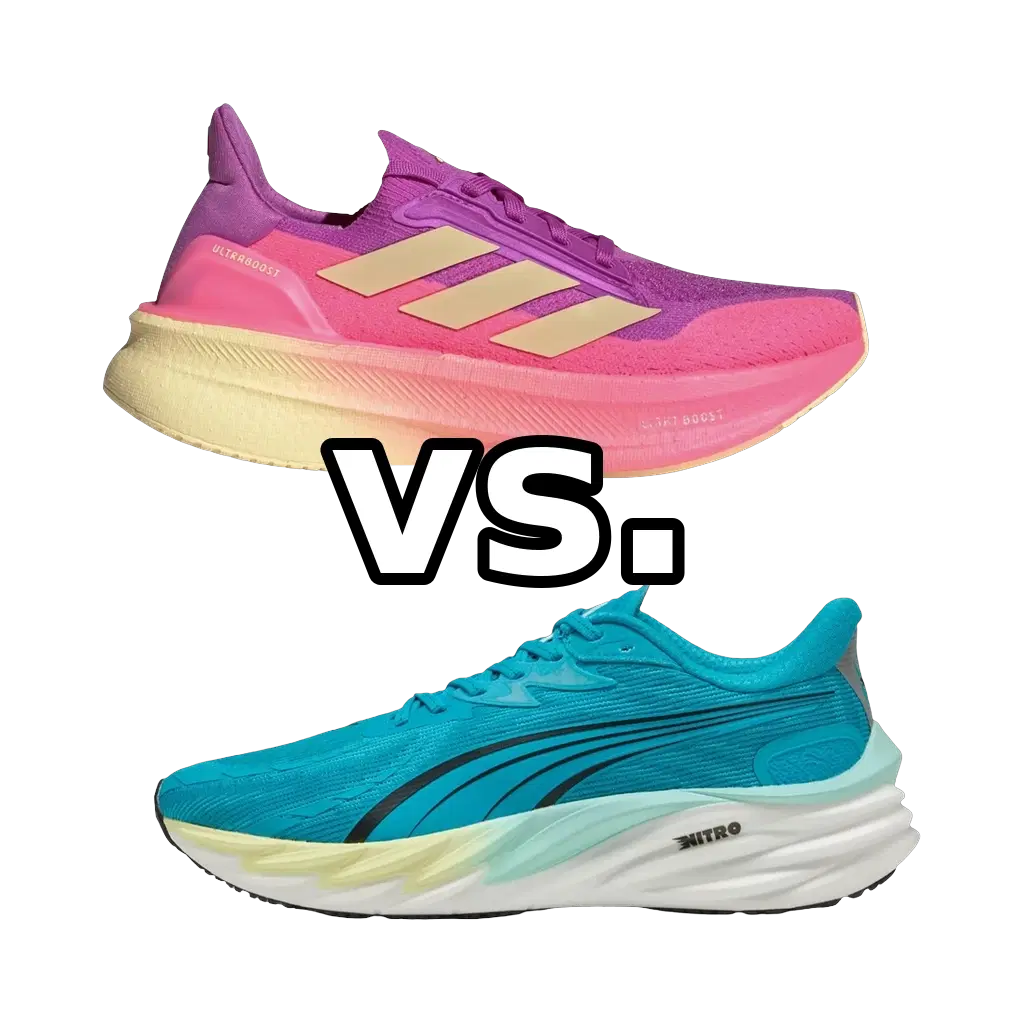
Adidas Ultraboost 5X vs Puma Velocity Nitro 4:
Which to Choose
Verdict
These are close cousins, not opposites, so it comes down to temperament and range. Go with the Velocity Nitro 4 if you value a lighter, livelier, more versatile shoe that stretches from easy days to tempo and marathon distance; go with the Ultraboost 5X if you'd trade some speed and range for a plusher, bouncier, slip-on-comfortable ride focused on easy and short-to-mid-distance miles. For most runners wanting a single do-it-all trainer, the Velocity is the more adaptable choice; for comfort-first easy running, the Ultraboost wins.
Pace
3 of 6
Cushioning
4 of 6
Responsiveness
3 of 6
Stability
4 of 6
Drop
10 mm
Support
Neutral
Plate
None
Distances
10KHalf
Pace
3 of 6
Cushioning
4 of 6
Responsiveness
4 of 6
Stability
4 of 6
Drop
10 mm
Support
Neutral
Plate
None
Distances
10KHalfMarathon
At a Glance
Adidas Ultraboost 5XPuma Velocity Nitro 4
Who Should Choose Each Shoe
Choose
Adidas Ultraboost 5X
Choose the Ultraboost 5X if your priority is plush, bouncy comfort and a one-shoe do-everything trainer for easy and steady miles rather than chasing pace. It's ideal for recreational neutral runners who love a soft, springy underfoot feel and the convenience of a laceless slip-on, and who mostly run 10K-and-under or relaxed long runs at easy effort. If you already own and like cushioned, comfort-first daily trainers and have no interest in tempo sessions or marathon volume, this is the more indulgent ride.
Choose
Puma Velocity Nitro 4
Choose the Velocity Nitro 4 if you want one versatile trainer that can carry the bulk of your weekly mileage and still handle the occasional faster effort. Its lighter weight, firmer and more responsive foam, and marathon-capable range make it the better fit for runners logging higher volume, building toward longer races, or mixing in steady and tempo work — and it suits both beginners building a base and experienced high-mileage runners. Pick it if you'd rather have a connected, honest ride you can pick up the pace in than a soft pillow.
Head-to-Head
The clearest split is weight and ride character. The Velocity Nitro 4 comes in around 224g (men's US 9), while the Ultraboost 5X sits roughly 50g heavier at about 275g — a gap you feel the moment you try to push the pace. That weight tracks with the two foams: the Ultraboost's TPU Boost is soft, dense and distinctly springy, a plush bounce that most runners notice instantly but that can feel a touch sluggish when you accelerate. The Velocity's nitrogen-infused NITROFOAM is the opposite temperament — lighter, firmer and lively rather than pillowy, firming up pleasantly as you lift the pace and giving a more connected, honest ground feel (which is also why it reads a little firm at very slow jogs, where the Ultraboost is more cradling). That difference shows up in the responsiveness scores (Velocity edges ahead, 4/6 to 3/6) and in usable range: both excel from the 10K through the half, but the Velocity stretches comfortably to the marathon at easy effort and takes tempo work down to roughly 4:40/km, whereas the Ultraboost's sweet spot stays in the 5:30/km-and-slower easy zone. The two are genuinely matched elsewhere — same 10mm drop, same neutral support with no medial post, same plateless build, similar durable-but-warm uppers, and comparable everyday cushioning depth. The last real distinction is fit and feel: the Ultraboost uses a laceless Primeknit sock-like upper and a Continental outsole, so it's a true slip-on, plush-comfort experience, while the Velocity uses a laced engineered knit/mesh upper reinforced with PWRTAPE over a PUMAGRIP outsole for a more dialed-in, adjustable lockdown.
Similar Comparisons
Puma Velocity Nitro 3 vs Puma Velocity Nitro 4

Adidas Ultraboost 5X vs Mizuno Wave Rider 29
Puma Velocity Nitro 5 vs Puma Velocity Nitro 4
New Balance Fresh Foam X 880v15 vs Adidas Ultraboost 5X
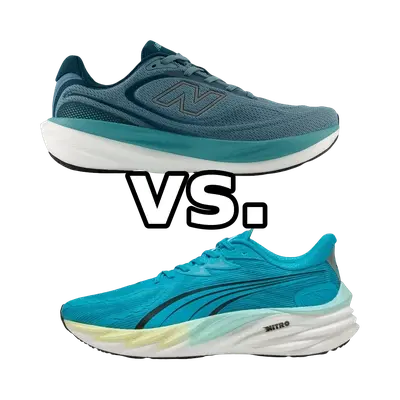
New Balance Fresh Foam X 1080v15 vs Puma Velocity Nitro 4
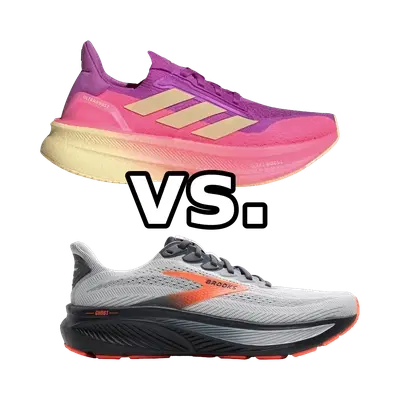
Adidas Ultraboost 5X vs Brooks Ghost 17
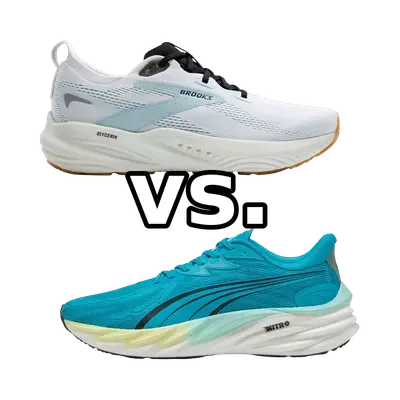
Brooks Glycerin 22 vs Puma Velocity Nitro 4
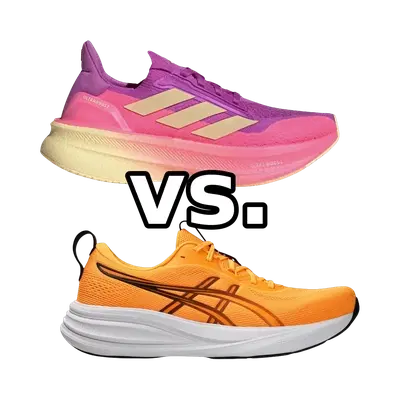
Adidas Ultraboost 5X vs Asics Gel-Pulse 17
© 2026 longrunshoes.ai | All rights reserved.
Use of materials from this site is permitted only with proper attribution and a link to longrunshoes.ai.