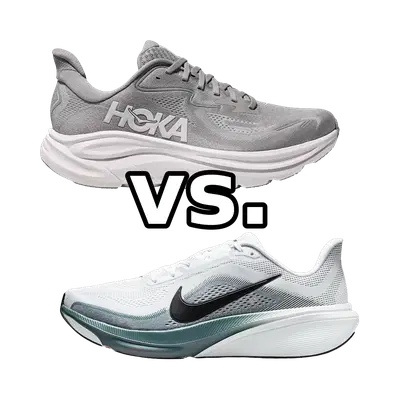
Hoka Clifton 10 vs Saucony Ride 19:
Which to Choose
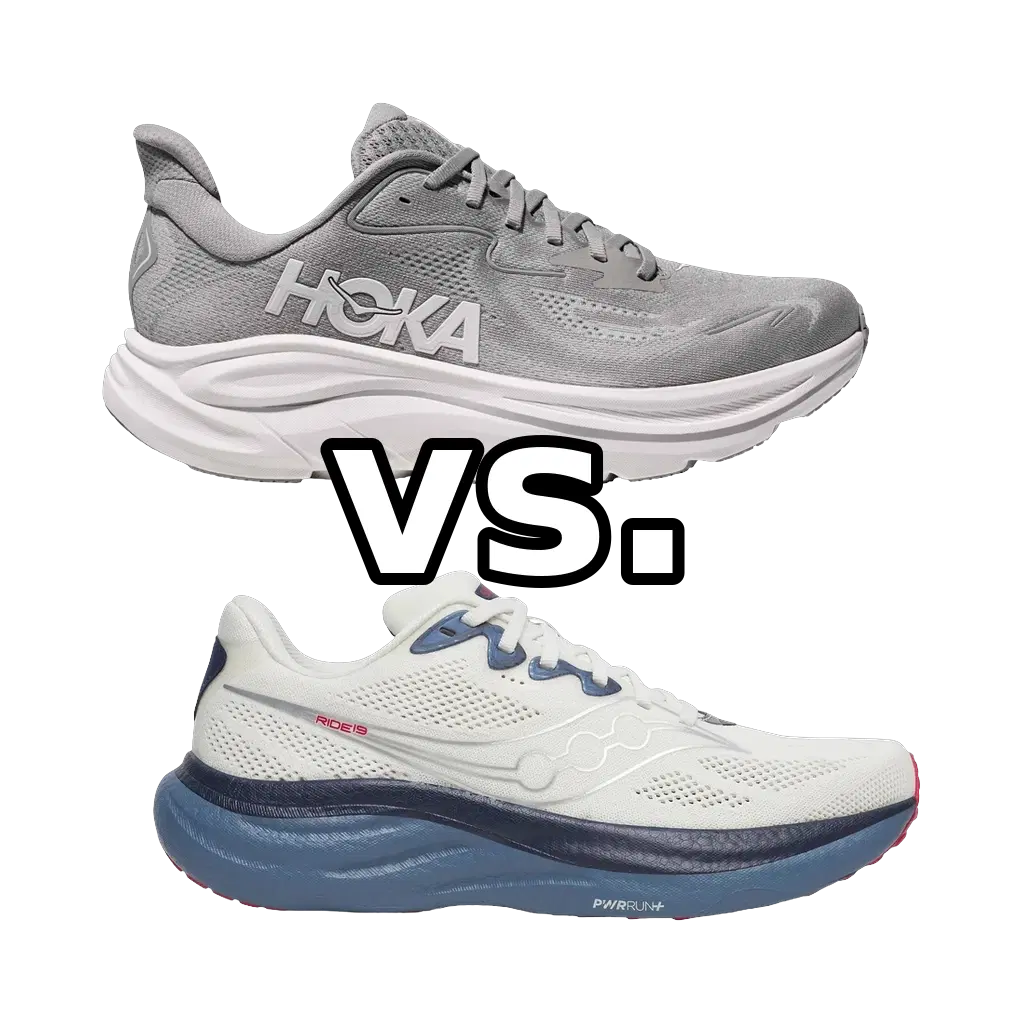
Verdict
It genuinely depends — but on ride character, not quality, because both are excellent neutral daily trainers at the same weight and drop. Go Clifton 10 if you want the softest, tallest, most rocker-driven cushion for easy long-run cruising and love that protective Hoka float. Go Ride 19 if you want a slightly springier, lower, more grounded foam that stays lively and holds its bounce longer across a training cycle. Soft-and-protective versus bouncy-and-durable is the whole decision.
Pace
3 of 6
Cushioning
5 of 6
Responsiveness
3 of 6
Stability
4 of 6
Drop
8 mm
Support
Neutral
Plate
None
Distances
10KHalfMarathon
Pace
3 of 6
Cushioning
5 of 6
Responsiveness
4 of 6
Stability
4 of 6
Drop
8 mm
Support
Neutral
Plate
None
Distances
10KHalfMarathon
At a Glance
Hoka Clifton 10Saucony Ride 19
Who Should Choose Each Shoe
Choose
Hoka Clifton 10
Pick the Clifton 10 if your priority is maximum underfoot protection and a soft, quiet ride for easy and long days — it's the taller, plusher platform and the rocker does real work rolling a tired, heel-striking gait forward late in a long run. It suits beginners who want a forgiving cruiser and experienced runners who log steady aerobic volume and don't mind replacing the shoe once the foam packs out. If you love that signature Hoka "floating" rocker sensation, nothing about the Ride replicates it.
Choose
Saucony Ride 19
Choose the Ride 19 if you want one dependable trainer that feels a touch more versatile — the PWRRUN+ eTPU gives a mild pop on toe-off and a more connected, stable feel, so it handles the occasional steady pickup better than the Clifton without ever pretending to be a speed shoe. It's the smarter pick for runners who want their cushioning to stay lively deep into a high-mileage block, since the eTPU resists packing out longer than the Clifton's EVA. Runners who find max-stack shoes vague or tippy will appreciate its lower, flatter, more grounded platform.
Head-to-Head
On paper these two are near twins — both neutral, both 8mm drop, both scoring high on cushioning, and both weighing essentially the same at roughly 278g in a men's US 9, so weight is not the tiebreaker here. The real split is the foam. The Clifton 10 rides on compression-molded EVA: soft, deep, and protective, but the kind of cushioning that gives back less the harder you push and that flattens out under pace. The Ride 19 uses PWRRUN+ eTPU, a springier pellet foam that lands soft without going mushy and returns a mild bounce on toe-off — the reason it edges the Clifton on responsiveness and feels livelier across varied paces. Geometry is the other difference: the Clifton is the taller, more maximal shoe, stacking 42mm/34mm against the Ride's 36mm/28mm, and it pairs that height with a pronounced early-stage meta-rocker that actively rolls you from heel to toe. The Ride sits lower and flatter, delivering a smoother, more conventional transition and a slightly more connected, planted feel underfoot rather than a rocker-driven one. Durability also tilts toward the Saucony: EVA tends to pack out over high mileage, so the Clifton's plushness fades before its outsole does, whereas eTPU holds its bounce longer through a training cycle. Both guide a relaxed, rolling cadence well and both lose the plot above roughly 4:30–4:45 min/km, so neither is the one to reach for when you want to run fast.
Similar Comparisons
Saucony Ride 18 vs Saucony Ride 19
Hoka Clifton 10 vs Saucony Endorphin Azura
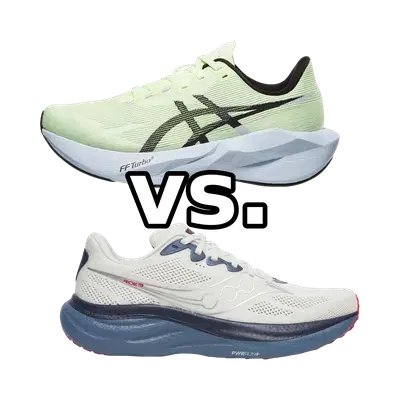
Asics Novablast 6 vs Saucony Ride 19
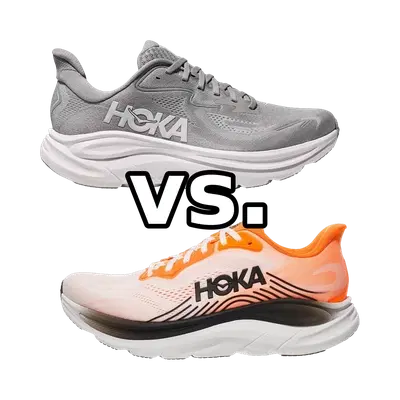
Hoka Clifton 10 vs Hoka Clifton 11
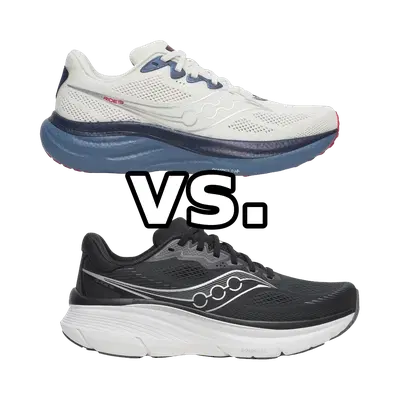
Saucony Ride 19 vs Saucony Guide 19
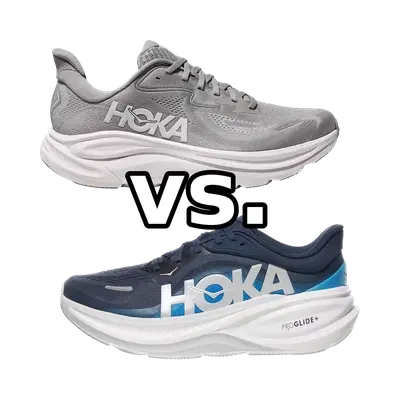
Hoka Clifton 10 vs Hoka Clifton Pro
Saucony Endorphin Azura vs Saucony Ride 19
Hoka Clifton 10 vs Hoka Arahi 8
© 2026 longrunshoes.ai | All rights reserved.
Use of materials from this site is permitted only with proper attribution and a link to longrunshoes.ai.