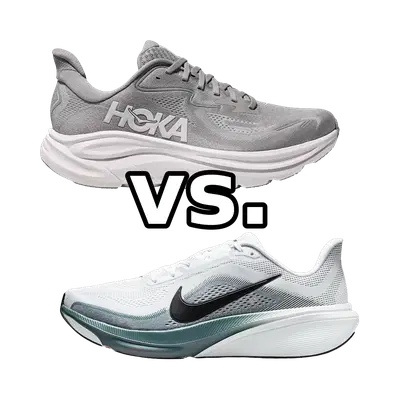
Hoka Clifton 10 vs Hoka Mach 7:
Which to Choose
Verdict
It genuinely depends — on how you run, not on which is "better." Both are neutral, plateless Hoka trainers good for 10K up to the marathon, so let ride feel decide: go Clifton 10 for soft, tall, protective long-run cushioning and extra stability, go Mach 7 for a lighter, firmer, springier shoe that still has gears for tempo days. If you run mostly slow and want comfort, the Clifton wins; if your pace varies and you want one shoe that can get up and move, the Mach is the more flexible pick — and it holds its character over the miles a little better.
Pace
3 of 6
Cushioning
5 of 6
Responsiveness
3 of 6
Stability
4 of 6
Drop
8 mm
Support
Neutral
Plate
None
Distances
10KHalfMarathon
Pace
4 of 6
Cushioning
4 of 6
Responsiveness
4 of 6
Stability
3 of 6
Drop
10 mm
Support
Neutral
Plate
None
Distances
10KHalfMarathon
At a Glance
Hoka Clifton 10Hoka Mach 7
Who Should Choose Each Shoe
Choose
Hoka Clifton 10
Pick the Clifton 10 if your week is mostly easy aerobic mileage and long runs, and your top priority is a soft, forgiving, protective ride that stays comfortable late into a marathon. It's the better call for beginners, heavier runners, or anyone coming back from injury who wants maximum impact absorption and a calm, stable platform — and who isn't bothered that it goes vague if you try to run fast in it.
Choose
Hoka Mach 7
Pick the Mach 7 if you want one shoe for most of your week and you value versatility and pace over plushness — easy miles, steady runs, and tempo sessions all from the same pair. It rewards runners who like a firmer, lower, more connected ride with real snap, who do some uptempo work, and who'd rather carry less weight on their foot than sit on a tall stack of soft foam.
Head-to-Head
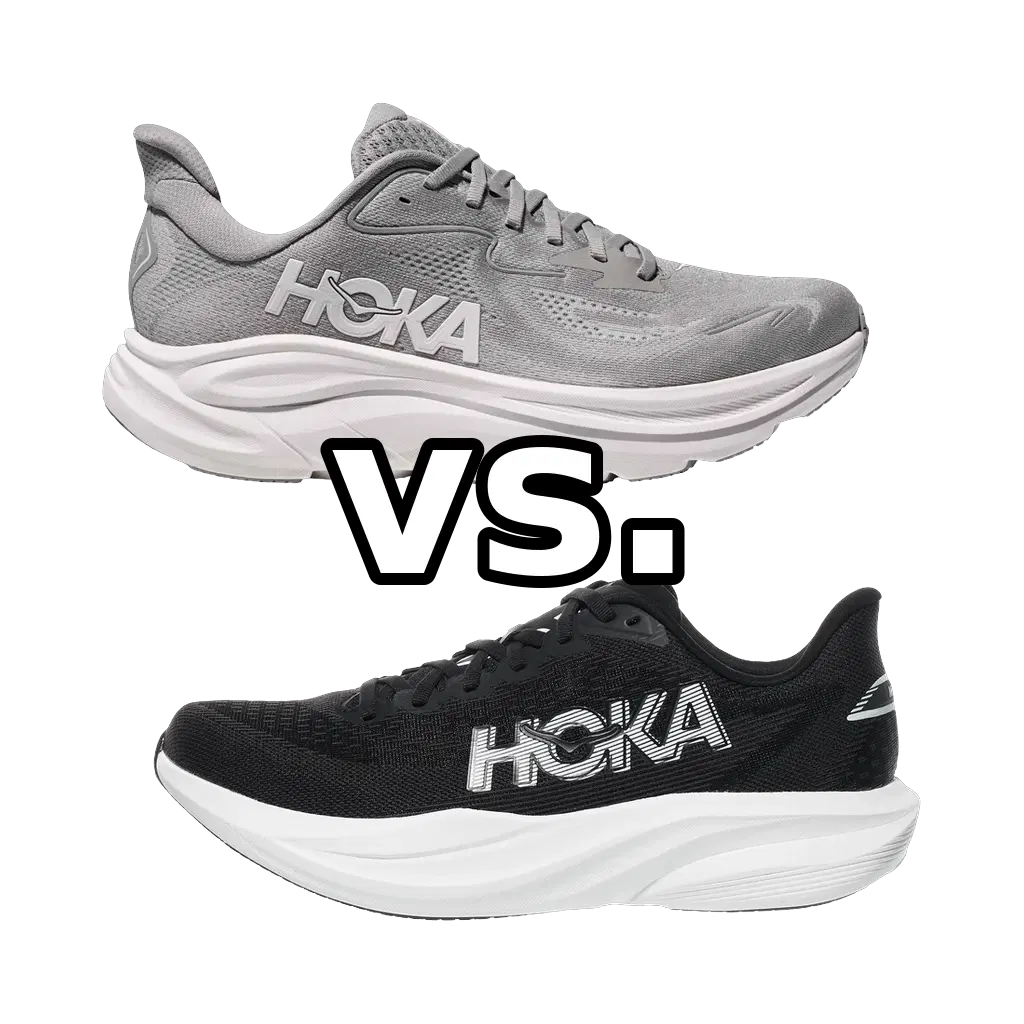
The clearest split is foam character. The Clifton 10 runs a compression-molded EVA on a tall 42 mm heel / 34 mm forefoot platform (8 mm drop) — deep, plush, and quiet, built to soak up impact rather than return energy. The Mach 7 uses supercritical EVA on a lower 36 mm / 26 mm stack, and it feels lively and springy with a firm, businesslike snap; its effective drop measures close to 10 mm underfoot even though Hoka lists 5 mm. That stack difference is real and you feel it: the Clifton sits you higher and more insulated from the road, the Mach keeps you lower with noticeably better ground feel. Weight follows the same logic — the Mach 7 is the lighter shoe at 224 g (men's US9) versus roughly 258 g for the Clifton 10, and that ~34 g gap shows up when you accelerate. Both use a rocker and neither has a plate, but the Clifton's wide meta-rocker is about calm, protective roll-through, while the Mach's milder rocker is tuned for turnover. On ride feel, the Clifton's cushioning is protective rather than energetic — push the pace and the soft foam flattens and gives less back, with its sweet spot in the 5:00–6:00 min/km easy-to-long-run zone and a practical ceiling around 4:45. The Mach 7 is happiest at 4:30–5:30 min/km steady-to-tempo work and will hold a quicker 4:15–4:45 gear, but it can feel a touch firm and unforgiving on genuinely slow plod days. On stability the Clifton has the edge for a neutral shoe thanks to that broad platform; the Mach is merely medium, stable enough for daily miles but less planted. One durability note that cuts toward the Mach: the Clifton's soft EVA tends to pack out and lose its plush feel before the outsole wears, so the magic fades with high mileage.
Similar Comparisons
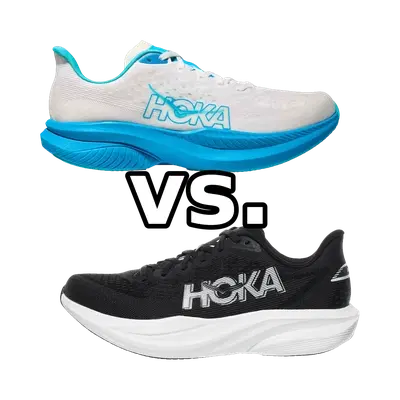
Hoka Mach 6 vs Hoka Mach 7
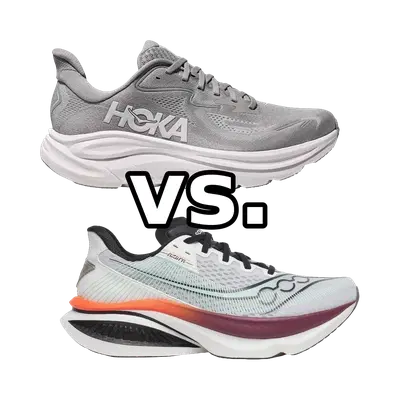
Hoka Clifton 10 vs Saucony Endorphin Azura
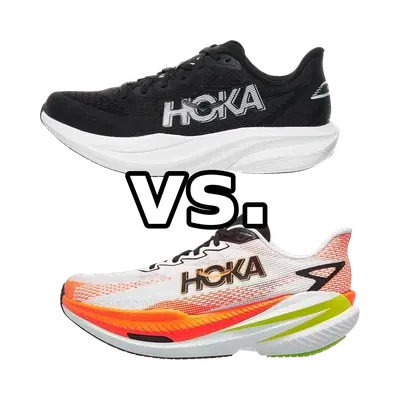
Hoka Mach 7 vs Hoka Mach X 3
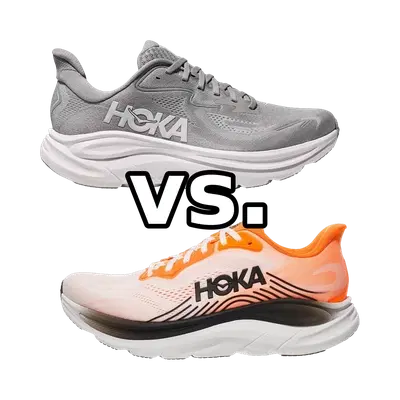
Hoka Clifton 10 vs Hoka Clifton 11
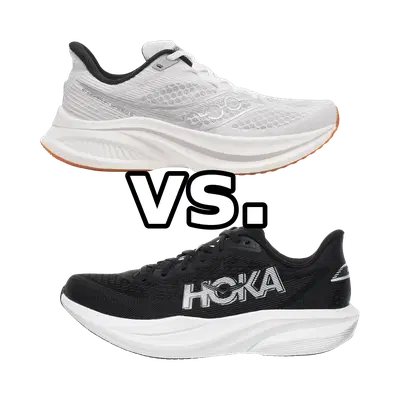
Saucony Endorphin Speed 5 vs Hoka Mach 7
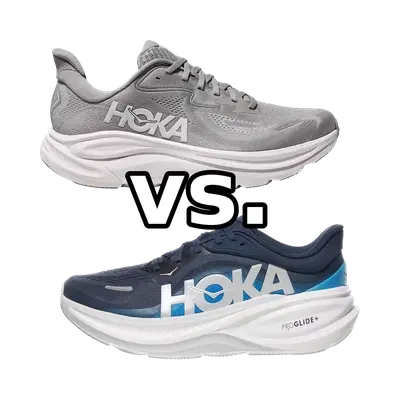
Hoka Clifton 10 vs Hoka Clifton Pro
Puma Deviate Nitro 4 vs Hoka Mach 7
Hoka Clifton 10 vs Hoka Arahi 8
© 2026 longrunshoes.ai | All rights reserved.
Use of materials from this site is permitted only with proper attribution and a link to longrunshoes.ai.