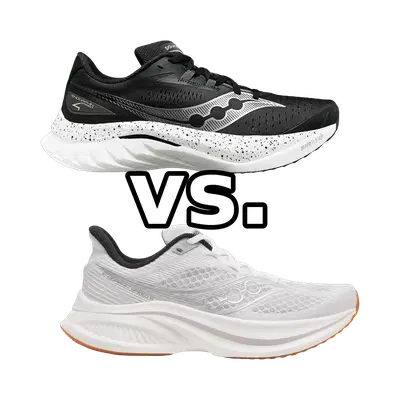
Saucony Endorphin Speed 5 vs Hoka Mach 7:
Which to Choose
Verdict
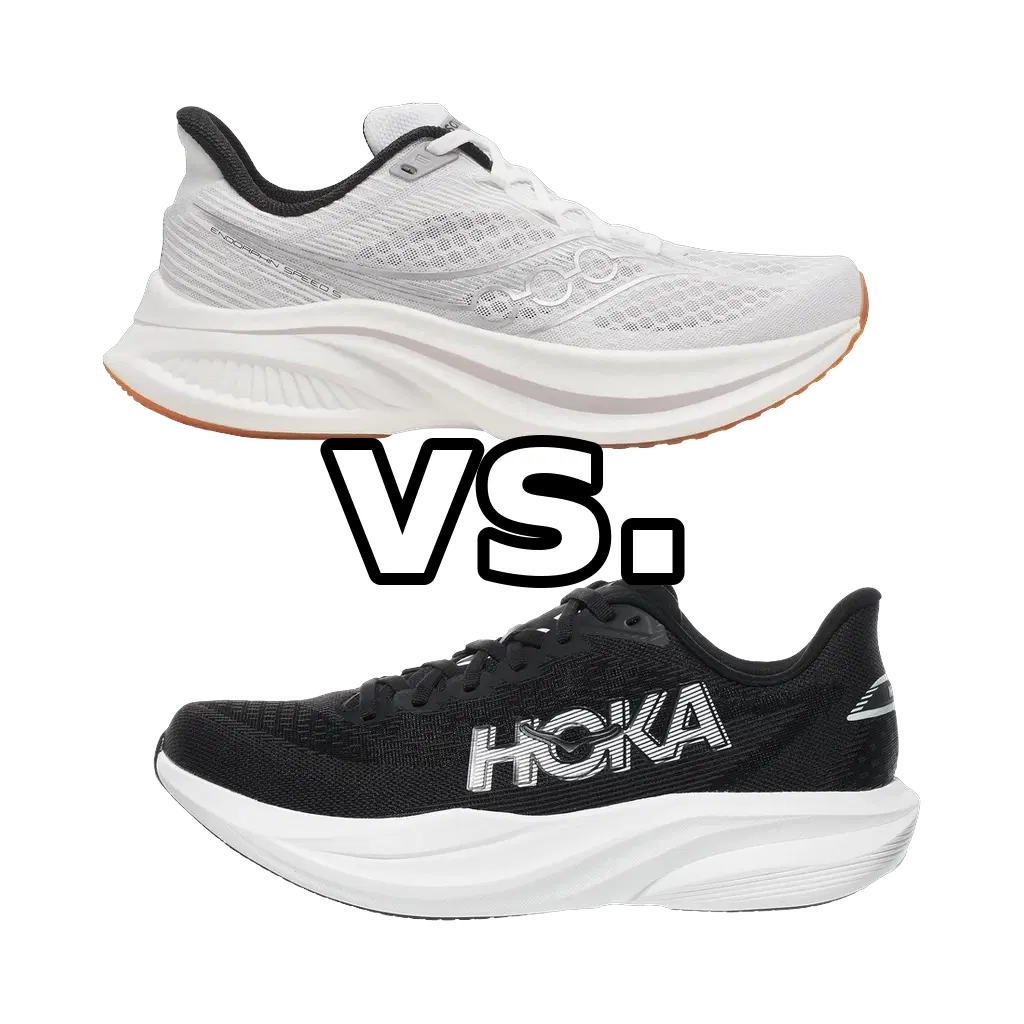
It depends on how fast your week actually is. If a meaningful share of your running is tempo work and racing and you want that plated, springy roll, the newer Endorphin Speed 5 is the more capable and propulsive choice; if you want a firmer, lighter, more grounded everyday trainer that still handles the occasional fast day, the Mach 7 is the smarter daily driver. They share a near-identical stack and drop, so the real deciding factor is plate-and-PEBA propulsion versus plateless everyday versatility.
Pace
5 of 6
Cushioning
5 of 6
Responsiveness
5 of 6
Stability
3 of 6
Drop
8 mm
Support
Neutral
Plate
Composite
Distances
10KHalfMarathon
Pace
4 of 6
Cushioning
4 of 6
Responsiveness
4 of 6
Stability
3 of 6
Drop
10 mm
Support
Neutral
Plate
None
Distances
10KHalfMarathon
At a Glance
Saucony Endorphin Speed 5Hoka Mach 7
Who Should Choose Each Shoe
Choose
Saucony Endorphin Speed 5
Choose the Endorphin Speed 5 if you're an intermediate-to-experienced runner who wants a single shoe for tempo sessions, long marathon-training miles, and race day without buying a separate carbon racer. Its PEBA foam and winged nylon plate reward runners who regularly drop into the 3:45–4:15 min/km range and want a springy, rolling, propulsive ride that keeps up. It's the better pick if genuine speedwork and racing make up a real chunk of your week and you can live with a slightly busy, tall feel on easy days.
Choose
Hoka Mach 7
Choose the Mach 7 if you're a neutral runner who wants one shoe to cover most of the week — easy miles, steady runs, and the occasional tempo — with a firmer, more connected feel and a bit less weight on foot. Its plateless supercritical-EVA build and mild rocker suit runners who prioritize ground feel and everyday versatility over race-day propulsion, and who spend more time cruising at steady-to-uptempo paces than hammering intervals. Pick it if a lively daily trainer that can dip fast matters more to you than a plated shoe that begs to race.
Head-to-Head
On paper these two sit remarkably close on the dimensions that usually separate trainers: the Endorphin Speed 5 stacks 37mm heel / 27mm forefoot and the Mach 7 measures 36mm / 26mm, so both are moderately cushioned, low-to-moderate-profile rides rather than max-stack pillows — the difference underfoot is a millimeter, not a category. Both also measure close to 10mm of real heel-to-toe drop regardless of their stated figures (8mm for the Saucony, 5mm listed by Hoka), so heel and midfoot strikers will feel at home in either. The Mach 7 is the lighter shoe at 224g in a men's US 9 versus 241g for the Speed 5, a real but modest 17g gap. Where they genuinely diverge is construction and ride character. The Endorphin Speed 5's PWRRUN PB (PEBA) foam is soft yet lively with a clear bounce, and its semi-rigid winged nylon plate guides you through a rolling, propulsive toe-off — it comes alive when you press the pace and rewards efforts down toward 3:45–4:15 min/km. The Mach 7 is plateless and built on firmer supercritical EVA with a mild rocker; it's springy and businesslike with noticeably more ground feel, snappy when you push but never delivering the plated pop of the Saucony, and it tops out effectively around 4:15–4:45 min/km. Both are neutral with no posting and comparable, moderate stability. In short: similar footprint and weight class, but the Speed 5 is the springier, more race-capable tool and the Mach 7 is the firmer, more grounded, slightly lighter daily workhorse.
Similar Comparisons
Hoka Mach 6 vs Hoka Mach 7

Adidas Adizero Evo SL vs Saucony Endorphin Speed 5
Hoka Mach 7 vs Hoka Mach X 3

Adidas Adizero Boston 13 vs Saucony Endorphin Speed 5
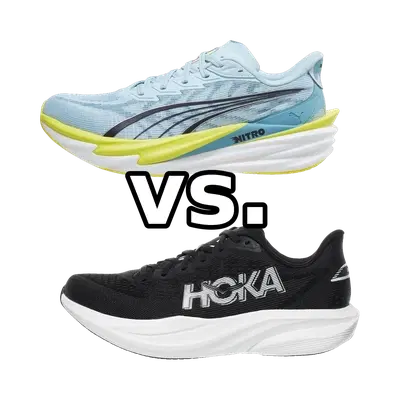
Puma Deviate Nitro 4 vs Hoka Mach 7
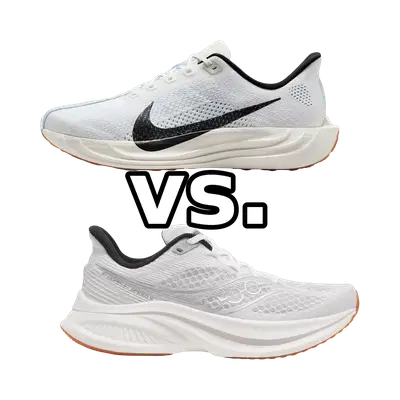
Nike Pegasus Plus vs Saucony Endorphin Speed 5

Adidas Adizero Evo SL vs Hoka Mach 7
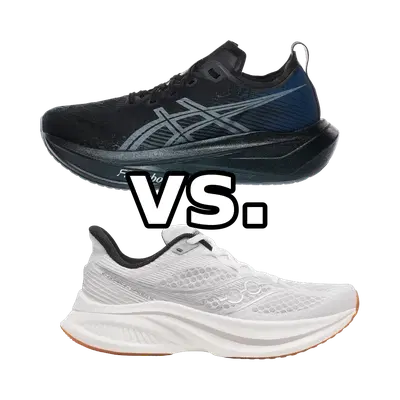
Asics Megablast vs Saucony Endorphin Speed 5
© 2026 longrunshoes.ai | All rights reserved.
Use of materials from this site is permitted only with proper attribution and a link to longrunshoes.ai.