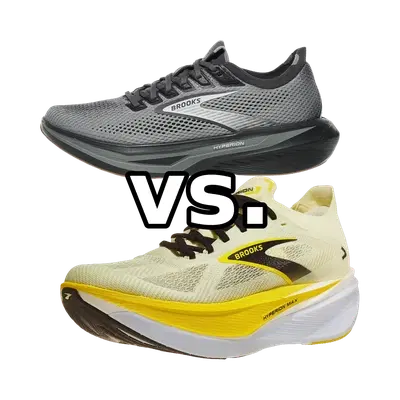
Brooks Hyperion 2 vs Brooks Hyperion 3:
Which to Choose
Verdict
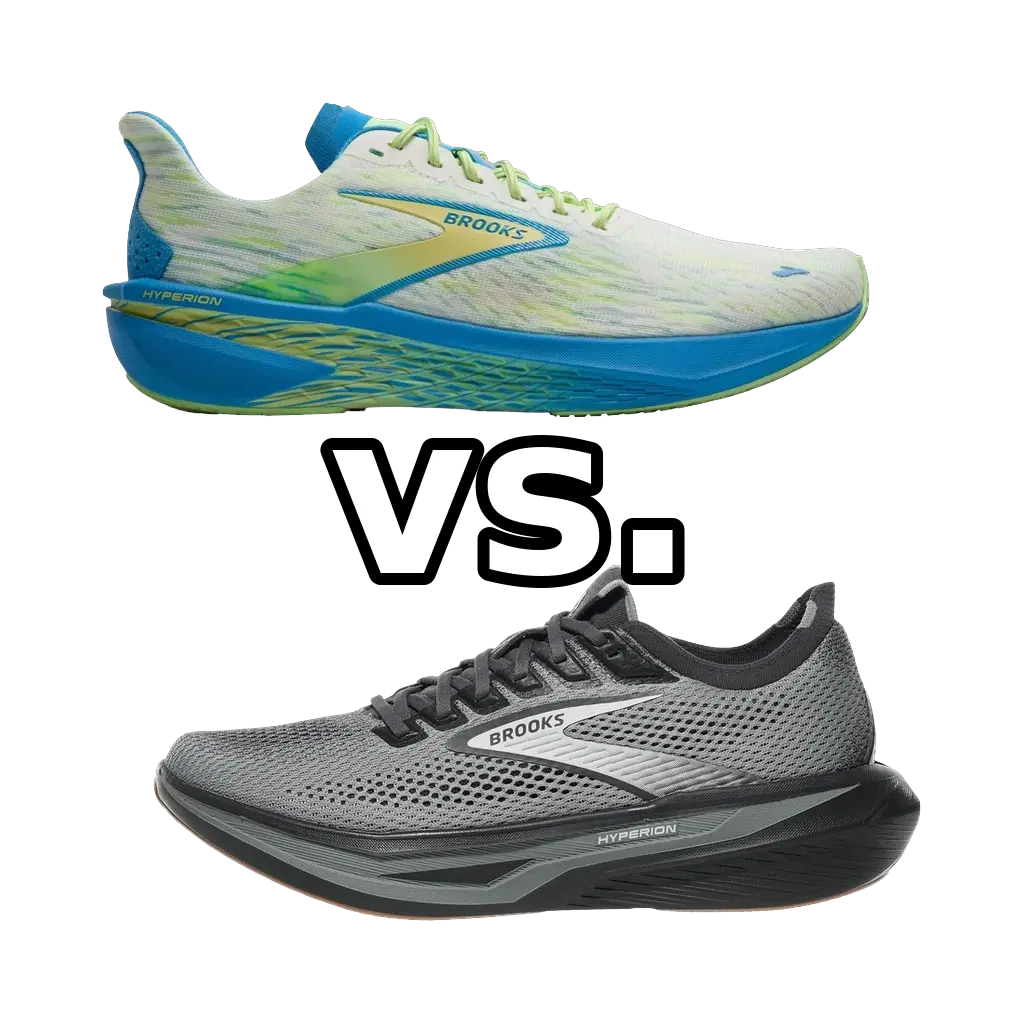
It depends on what you loved about the Hyperion 2. If it was the light, low, fast racer feel, the Hyperion 3 isn't really an upgrade — it's heavier, taller, and softer, and you may prefer to stick with the 2 for pure speed work. But if you wanted the same foam and fit with more cushioning and more daily-driver versatility, the Hyperion 3 is the better all-rounder and a worthwhile move. Buy the 2 to race; buy the 3 to train fast and often.
Pace
5 of 6
Cushioning
3 of 6
Responsiveness
4 of 6
Stability
3 of 6
Drop
8 mm
Support
Neutral
Plate
None
Distances
5K10KHalf
Pace
4 of 6
Cushioning
4 of 6
Responsiveness
4 of 6
Stability
3 of 6
Drop
8 mm
Support
Neutral
Plate
None
Distances
5K10KHalf
At a Glance
Brooks Hyperion 2Brooks Hyperion 3
Who Should Choose Each Shoe
Choose
Brooks Hyperion 2
Choose the Hyperion 2 if what you want is a lean, low-slung speed shoe — a runner who does dedicated tempo sessions, intervals, and 5K-to-half races at genuinely quick paces and prizes a light, ground-connected footstrike over plushness. It suits neutral runners with an efficient stride who felt the previous version was already enough shoe and don't want extra foam or weight getting between them and the road. If you have a pair now and love how fast and direct they feel, there's no upgrade pressure here; the 2 remains the purer racer of the two.
Choose
Brooks Hyperion 3
Choose the Hyperion 3 if you want one neutral shoe that handles honest daily mileage and still picks up the pace on tempo days, rather than a single-purpose speed tool. The added foam and softer ride make it the better pick for improving recreational runners logging 5K-to-half training at moderate paces, or for anyone who found the Hyperion 2 a touch firm and under-cushioned in the forefoot on longer or tired-legged runs. Hyperion 2 owners who wanted more protection and versatility — not more speed — are the ones who'll see this as a real step up.
Head-to-Head
The core recipe carries over: same DNA Flash v2 midsole with no plate, same 8mm listed drop, same neutral platform, and the same lively-but-firm foam personality that rewards a rolling midfoot strike and wakes up when you push the pace. The difference is how much shoe sits under you. The Hyperion 3 adds foam — its heel stack lands near 36mm against roughly 34mm on the Hyperion 2 — and that extra material, plus a softer tune, is why our cushioning rating rises from 3/6 on the 2 to 4/6 on the 3. That comes at a cost on the scale: the Hyperion 2 is around 201g in a men's US 9, while the Hyperion 3 climbs into the low 240s, so it no longer feels as feathery or as connected to the road. The intended pace shifts to match: the Hyperion 2 is dialed in for genuinely quick tempo and race efforts (roughly 4:00–4:45 min/km) and earns a 5/6 pace score, whereas the Hyperion 3 is happiest a notch slower (about 4:30–5:30 min/km) at 4/6, behaving more like a fast daily trainer than a racer. Responsiveness, stability, support, and best distances are effectively identical on paper — both are 4/6 responsive, 3/6 neutral-stable, plateless, and both peak at the 10K. So the trade is clean: the 3 is more cushioned and more forgiving on tired legs and longer easy miles, the 2 is lighter, lower, snappier, and more honest at true race pace.
© 2026 longrunshoes.ai | All rights reserved.
Use of materials from this site is permitted only with proper attribution and a link to longrunshoes.ai.