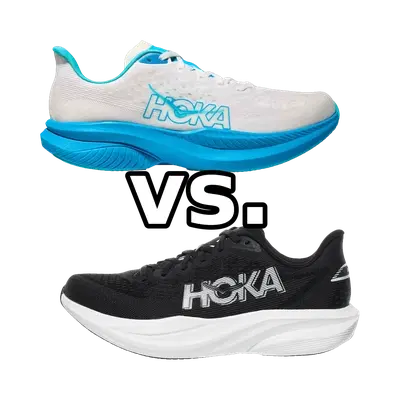
Hoka Mach 6 vs Brooks Hyperion 3:
Which to Choose
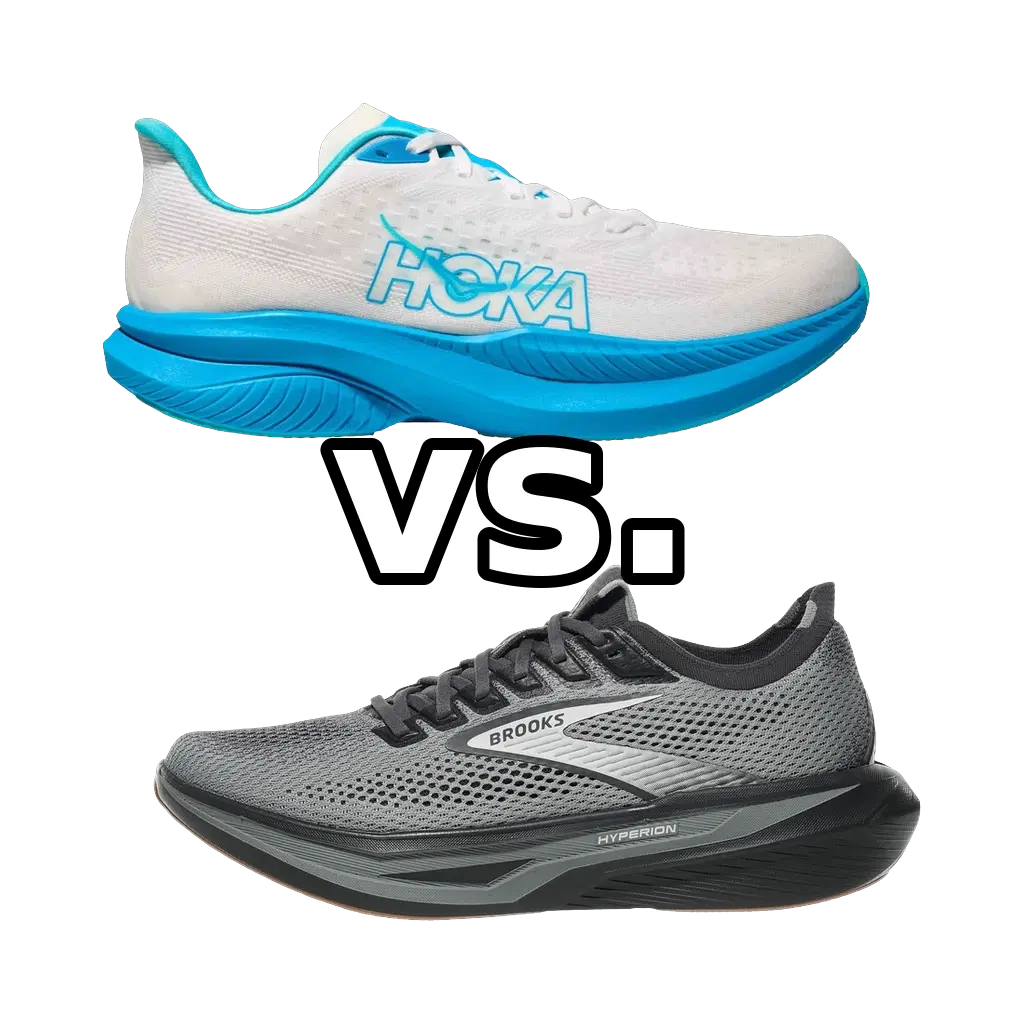
Verdict
These are genuinely similar shoes — same category, same foam philosophy, same neutral stance — so it comes down to distance and drop, not quality. Go Mach 6 for the lower 5mm drop, more forefoot cushioning, and marathon-capable range; go Hyperion 3 for the higher 8mm drop, leaner ride, and a sharper focus on 5K-to-half speed. Both will serve as an everyday uptempo trainer; pick by how far you run and how much ground feel you want.
Pace
4 of 6
Cushioning
4 of 6
Responsiveness
4 of 6
Stability
3 of 6
Drop
5 mm
Support
Neutral
Plate
None
Distances
10KHalfMarathon
Pace
4 of 6
Cushioning
4 of 6
Responsiveness
4 of 6
Stability
3 of 6
Drop
8 mm
Support
Neutral
Plate
None
Distances
5K10KHalf
At a Glance
Hoka Mach 6Brooks Hyperion 3
Who Should Choose Each Shoe
Choose
Hoka Mach 6
Choose the Mach 6 if you want one shoe to carry most of your week and to stretch all the way to the marathon — the thicker 32mm forefoot and gentle rocker keep transitions smooth and legs fresher when the miles pile up. It's the better pick for a lower 5mm drop and a midfoot strike, and for runners whose sweet spot is half-marathon pace and progression running. If your long run is a real event rather than an afterthought, this is the more protective of the two.
Choose
Brooks Hyperion 3
Choose the Hyperion 3 if your focus is 5K to 10K speed and you like a shoe that feels fast, connected, and direct underfoot. The higher 8mm drop and leaner 25mm forefoot reward a rolling midfoot strike and quick turnover, making it the sharper tool for tempo sessions and shorter races — just know that the thin forefoot means more ground feel and a firmer ride on tired legs. It's ideal for a runner who wants a crisp daily-plus-tempo trainer and rarely ventures past the half.
Head-to-Head
On the headline metrics these two are near twins — both score moderate on cushioning, responsiveness, and pace, and both sit at a neutral, mid-level stability (no posts, no plate, a narrow fast-feeling platform). The foams are cousins too: the Mach 6 uses a supercritical EVA/TPU blend, the Hyperion 3 a nitrogen-infused DNA Flash v2 supercritical EVA, and both read as lively and moderately firm rather than pillowy, waking up when you push the pace and feeling businesslike at a crawl. The real separation is geometry. The Mach 6 runs a 5mm drop on a roughly 37/32mm stack, while the Hyperion 3 is an 8mm-drop shoe (Brooks' spec) on a lab-measured ~36/25mm stack. Heel height is almost identical, but the Mach 6 carries far more foam underfoot — 32mm vs 25mm forefoot — so it protects tired legs better over distance and rides with a gentle rocker, whereas the Hyperion's thin 25mm forefoot gives noticeably more ground feel and can turn harsh on long slow jogs. That geometry maps straight onto use case: the Mach 6 is rated 10K through the marathon with the half as its sweet spot, while the Hyperion 3 excels at 5K to half with the 10K as its home base and feels more like a short-to-mid-distance sharpener. Weight is close enough to be a wash — both are genuinely light trainers, with the Mach 6 around 232g and the Hyperion 3 roughly 241–244g in a men's US 9 — so it shouldn't swing the decision. In short: lower drop and more forefoot cushion plus rocker on the Mach 6 for longer efforts, a higher drop and a leaner, more connected, faster-feeling platform on the Hyperion 3 for shorter speed.
Similar Comparisons
Brooks Hyperion 2 vs Brooks Hyperion 3
Hoka Mach 6 vs Hoka Mach X 3
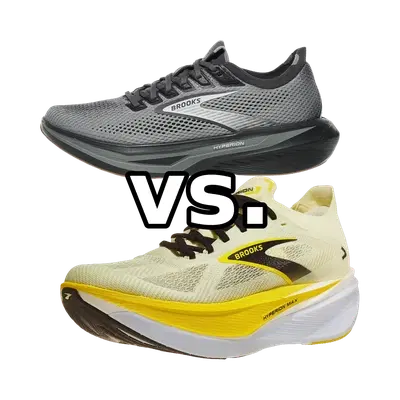
Brooks Hyperion 3 vs Brooks Hyperion Max 3
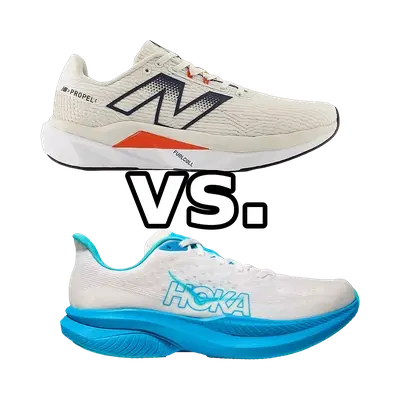
New Balance FuelCell Propel v5 vs Hoka Mach 6
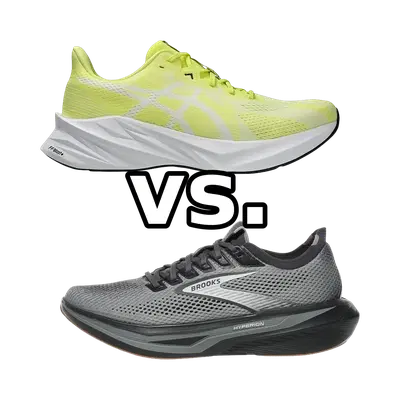
Asics Dynablast 5 vs Brooks Hyperion 3
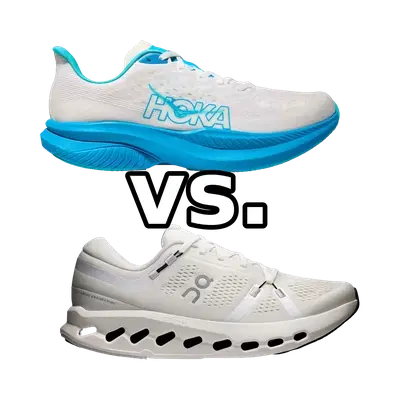
Hoka Mach 6 vs On Cloudsurfer 2
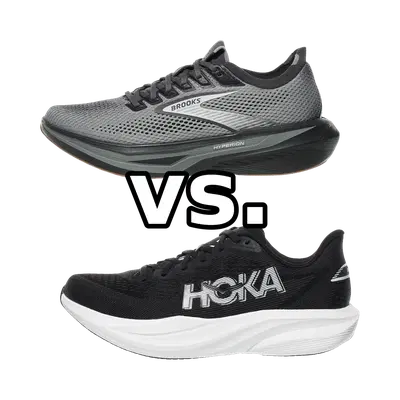
Brooks Hyperion 3 vs Hoka Mach 7
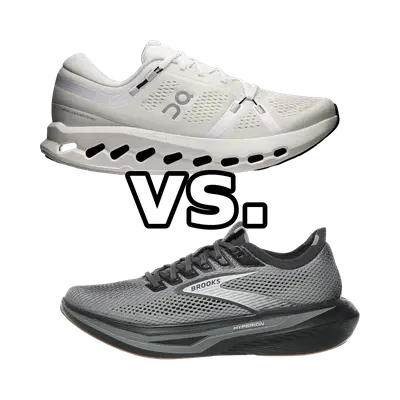
On Cloudsurfer 2 vs Brooks Hyperion 3
© 2026 longrunshoes.ai | All rights reserved.
Use of materials from this site is permitted only with proper attribution and a link to longrunshoes.ai.