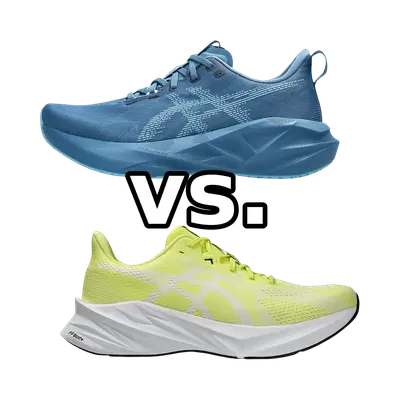
Asics Dynablast 5 vs Brooks Hyperion 3:
Which to Choose
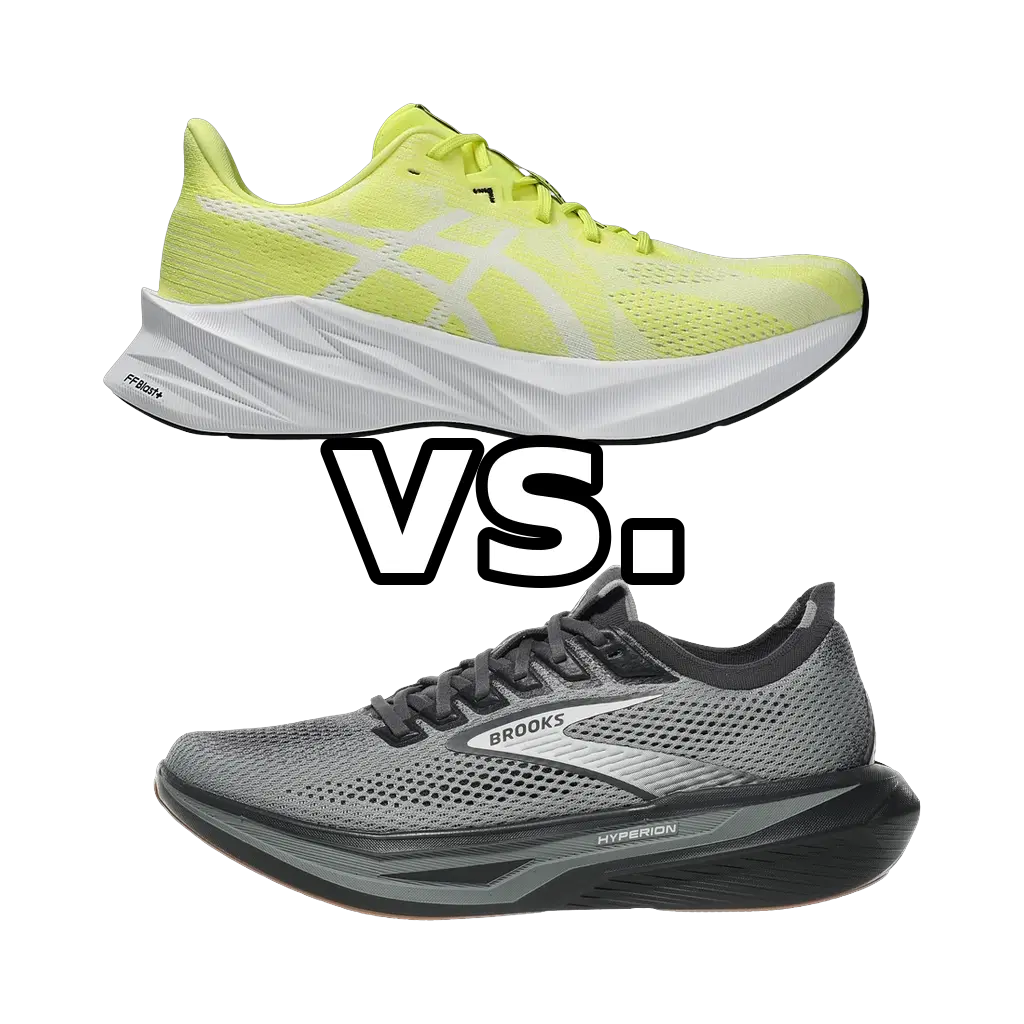
Verdict
These are two versions of the same shoe philosophy, so it comes down to ride preference, not category. Go Hyperion 3 if you want lighter and firmer with sharper ground feel for faster efforts; go Dynablast 5 if you want a touch more forefoot cushioning and forgiveness for everyday mileage. Both nail the 10K sweet spot and neither is a long-slow or marathon shoe — match the pick to whether you value speed and ground feel (Brooks) or comfort and protection (Asics).
Pace
4 of 6
Cushioning
4 of 6
Responsiveness
4 of 6
Stability
3 of 6
Drop
8 mm
Support
Neutral
Plate
None
Distances
5K10KHalf
Pace
4 of 6
Cushioning
4 of 6
Responsiveness
4 of 6
Stability
3 of 6
Drop
8 mm
Support
Neutral
Plate
None
Distances
5K10KHalf
At a Glance
Asics Dynablast 5Brooks Hyperion 3
Who Should Choose Each Shoe
Choose
Asics Dynablast 5
Pick the Dynablast 5 if you want the more forgiving of the two for genuine daily mileage — the extra forefoot foam (30mm vs 25mm) makes it more comfortable on tired legs and steadier-paced runs while still popping on tempo days. It suits recreational and improving runners who log most miles in the 4:45–5:30 min/km range and want one shoe that leans slightly toward cushioning over raw ground feel. If you found firmer, thin-forefoot trainers punishing on longer efforts, this is the safer everyday choice.
Choose
Brooks Hyperion 3
Choose the Hyperion 3 if speed and a light, connected feel matter most. At ~241–244g it's the lighter shoe, and its firm 25mm forefoot gives crisp ground contact that rewards a quick, rolling midfoot strike — ideal for runners who spend real time at 4:15–4:45 min/km and want a snappy 5K-to-half tempo tool. It's the better pick for someone who prizes turnover and precision and doesn't mind a firmer, more honest ride on longer or slower days.
Head-to-Head
Start with what's identical, because a lot is: both run an 8mm heel-to-toe drop, both are neutral with a middling, non-corrective platform (no medial post, no plate), and both derive their pop from a springy foam rather than any structure. Where they split is weight and underfoot geometry. The Hyperion 3 is the lighter shoe at roughly 241–244g in a men's US 9, against about 260g for the Dynablast 5 — a real ~15–20g gap you'll notice on faster reps. But the Dynablast carries more foam: a lab stack around 38mm heel / 30mm forefoot versus the Hyperion's slimmer 36mm heel / 25mm forefoot. That 5mm of extra forefoot is the crux of the ride difference. The Hyperion's thin 25mm forefoot gives sharp ground feel and a firmer, more connected turnover that rewards a fast rolling stride, but can feel a touch harsh on tired legs or long slow jogs. The Dynablast's FF Blast+ is light and bouncy with a hair more everyday softness and a bit more protection under the ball of the foot, so it stays comfortable a little longer while still coming alive when you speed up. Pace zones reflect this: the Dynablast is optimal around 4:45–5:30 min/km and best pushed to 4:30–5:00, while the lighter, firmer Hyperion wants 4:30–5:30 and rewards you most when you lean into 4:15–4:45 min/km. Both fade past half-marathon distance as the modest cushioning thins out. In short — same category, same distances, but the Hyperion is the leaner, firmer, slightly faster-leaning tool, and the Dynablast is the marginally softer, more protective everyday version of the same idea.
Similar Comparisons
Brooks Hyperion 2 vs Brooks Hyperion 3
Asics Dynablast 5 vs Asics Dynablast 6
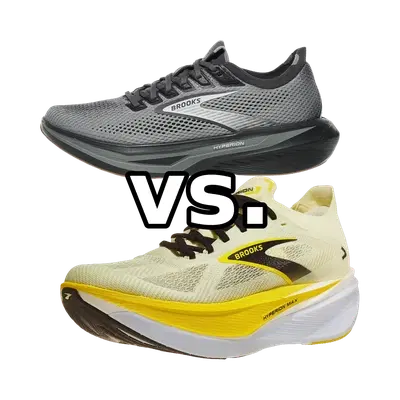
Brooks Hyperion 3 vs Brooks Hyperion Max 3
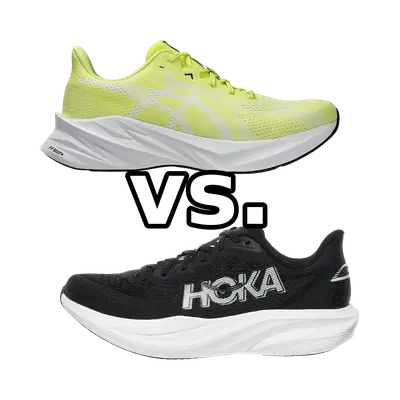
Asics Dynablast 5 vs Hoka Mach 7
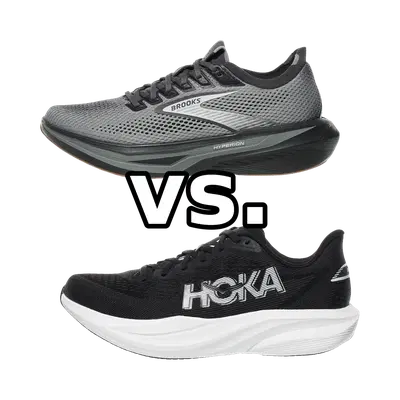
Brooks Hyperion 3 vs Hoka Mach 7
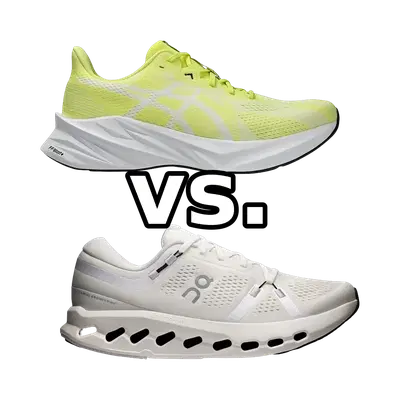
Asics Dynablast 5 vs On Cloudsurfer 2
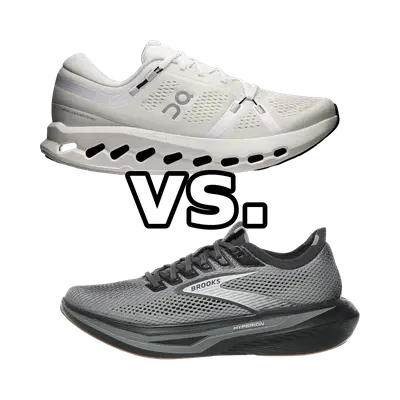
On Cloudsurfer 2 vs Brooks Hyperion 3
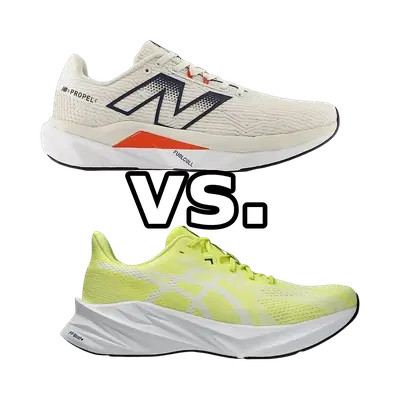
New Balance FuelCell Propel v5 vs Asics Dynablast 5
© 2026 longrunshoes.ai | All rights reserved.
Use of materials from this site is permitted only with proper attribution and a link to longrunshoes.ai.