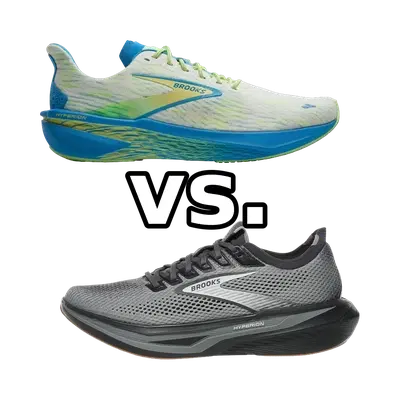
Brooks Hyperion 3 vs Hoka Mach 7:
Which to Choose
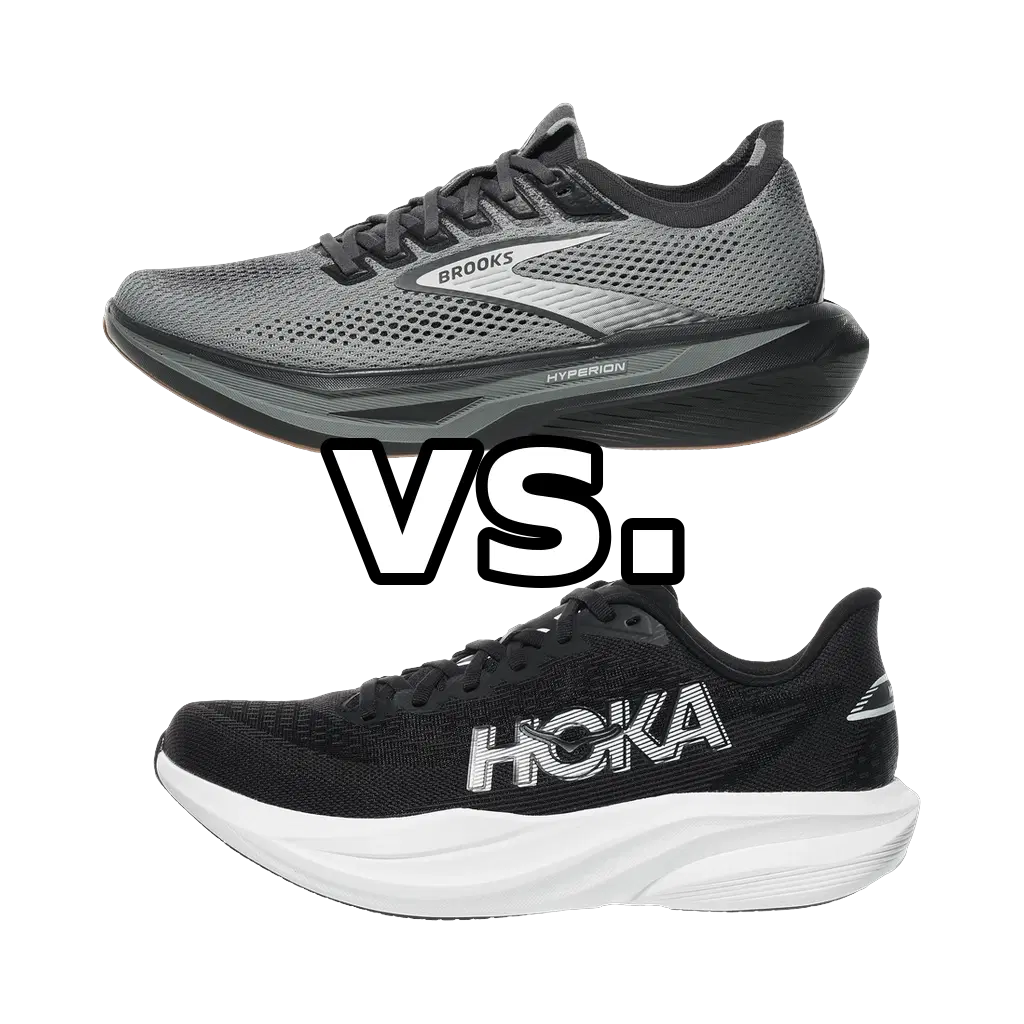
Verdict
These two are close enough that there's no wrong answer — pick by distance and ride preference, not by any single spec. Go Hyperion 3 if your focus is 5K-to-half speed and you like a firmer, foam-driven shoe you actively push; go Mach 7 if you want one lighter, rocker-smoothed trainer to span easy days through marathon efforts. If in doubt, the Mach 7 is the more versatile all-rounder and the Hyperion 3 the more distance-focused sharpening tool.
Pace
4 of 6
Cushioning
4 of 6
Responsiveness
4 of 6
Stability
3 of 6
Drop
8 mm
Support
Neutral
Plate
None
Distances
5K10KHalf
Pace
4 of 6
Cushioning
4 of 6
Responsiveness
4 of 6
Stability
3 of 6
Drop
10 mm
Support
Neutral
Plate
None
Distances
10KHalfMarathon
At a Glance
Brooks Hyperion 3Hoka Mach 7
Who Should Choose Each Shoe
Choose
Brooks Hyperion 3
Choose the Brooks Hyperion 3 if your training centers on 5K to half-marathon work and you want a shoe that comes alive specifically when you lean into a faster rhythm — an improving runner doing tempo days, 10K sharpening, and race-pace efforts, who prefers direct foam rebound and a connected, roll-through-the-midfoot feel over rocker-assisted cruising. It's the better pick if the 10K is your bread-and-butter distance and you don't need one shoe to also carry you through marathon-length long runs.
Choose
Hoka Mach 7
Choose the Hoka Mach 7 if you want a single do-it-all trainer that covers most of your week — easy miles, steady runs, the occasional tempo — and can also handle everything up to marathon distance. Its lighter weight and mild rocker make it the friendlier option on longer efforts and higher-mileage weeks, so it suits the runner who values versatility and effortless transitions over the Hyperion's more deliberate, race-sharp character, as long as you're comfortable with a firm, businesslike feel rather than a soft recovery ride.
Head-to-Head
Start with what's genuinely the same: both use a nitrogen/supercritical EVA midsole with no plate, both sit at 36 mm at the heel, both are firm-but-lively rather than plush, both share the same optimal 4:30–5:30 min/km training window and the same 4:15–4:45 min/km "fast day" ceiling, and both are medium-stability neutral platforms with good ground feel. The listed drops look different on the box — Brooks calls the Hyperion 8 mm, Hoka calls the Mach 7 5 mm — but on-foot they measure much closer, both landing near 10–11 mm, so the actual heel-to-toe slope you feel is broadly similar. The clearest real difference is weight: the Mach 7 comes in around 224 g in a men's US 9, noticeably lighter than the Hyperion 3's roughly 241–244 g, which makes the Hoka feel a touch more agile underfoot despite the near-identical stack (forefoot is essentially level too, 26 mm on the Mach 7 versus 25 mm on the Hyperion 3). The other difference is how they move you forward: the Mach 7 leans on a mild rocker to smooth transitions and keep an easy run rolling, while the Hyperion 3 has no rocker and relies purely on foam rebound, rewarding a deliberate midfoot roll and feeling most alive when you actively push the pace. That shapes their range — the Hyperion 3 is tuned for 5K to the half with the 10K as its sweet spot and can feel a little harsh on tired legs or very long slow jogs, whereas the Mach 7's rocker and lighter build stretch its comfortable range from 10K up through the marathon and everyday easy miles.
Similar Comparisons
Hoka Mach 6 vs Hoka Mach 7
Brooks Hyperion 3 vs Brooks Hyperion Max 3
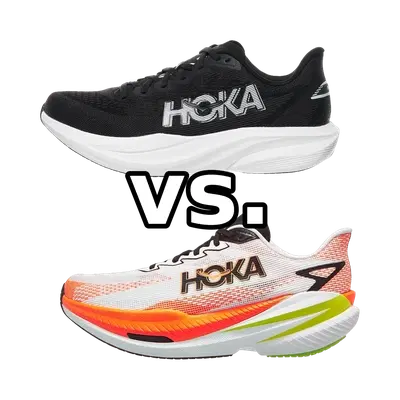
Hoka Mach 7 vs Hoka Mach X 3
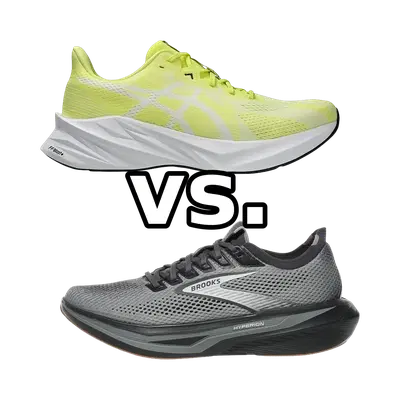
Asics Dynablast 5 vs Brooks Hyperion 3
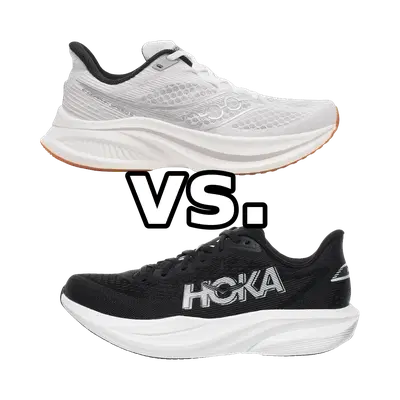
Saucony Endorphin Speed 5 vs Hoka Mach 7
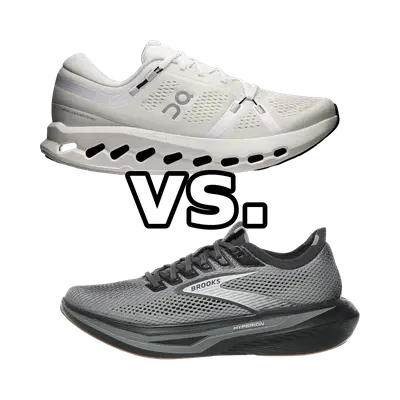
On Cloudsurfer 2 vs Brooks Hyperion 3
Puma Deviate Nitro 4 vs Hoka Mach 7
New Balance FuelCell Propel v5 vs Brooks Hyperion 3
© 2026 longrunshoes.ai | All rights reserved.
Use of materials from this site is permitted only with proper attribution and a link to longrunshoes.ai.