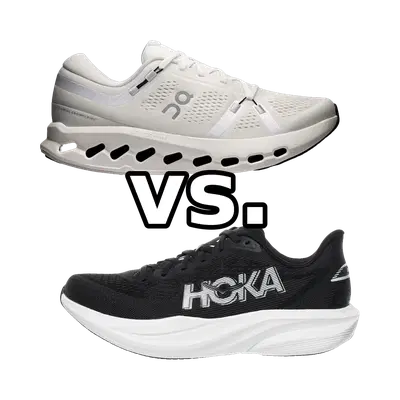
On Cloudsurfer 2 vs Brooks Hyperion 3:
Which to Choose
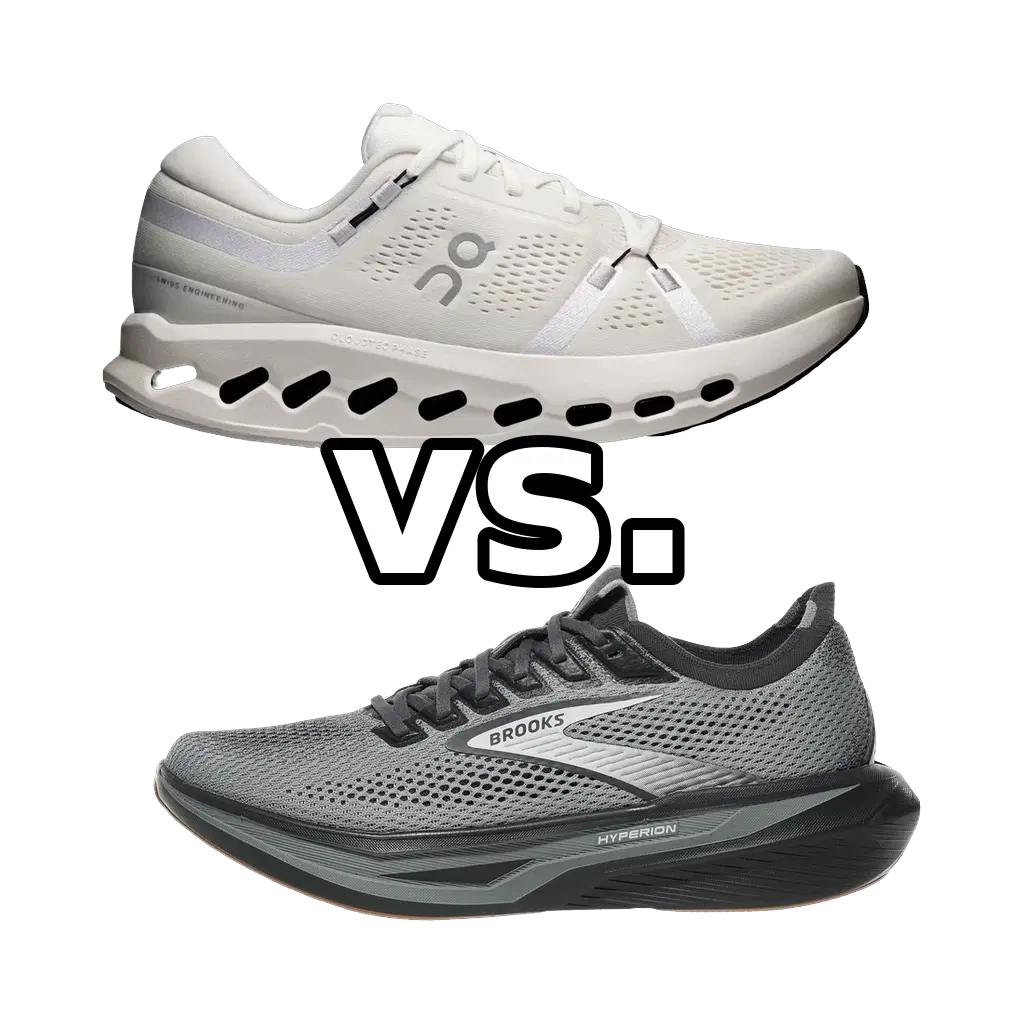
Verdict
These shoes serve the same purpose at the same level, so it genuinely comes down to ride preference and how fast you run. Choose the Cloudsurfer 2 for a softer, more cushioned, forgiving daily ride centered on the 10K-to-half range; choose the Hyperion 3 if you want the lighter, firmer, snappier shoe with more ground feel and real 5K speed. If you crave plush smoothness, go On; if you crave quick, direct responsiveness, go Brooks.
Pace
4 of 6
Cushioning
4 of 6
Responsiveness
4 of 6
Stability
3 of 6
Drop
7 mm
Support
Neutral
Plate
None
Distances
10KHalf
Pace
4 of 6
Cushioning
4 of 6
Responsiveness
4 of 6
Stability
3 of 6
Drop
8 mm
Support
Neutral
Plate
None
Distances
5K10KHalf
At a Glance
On Cloudsurfer 2Brooks Hyperion 3
Who Should Choose Each Shoe
Choose
On Cloudsurfer 2
Pick the Cloudsurfer 2 if you want the softer, smoother, more cushioned of the two for daily 10K-to-half-marathon training and value a springy roll-through over raw snap. It suits neutral runners who keep some rhythm but aren't chasing 5K sharpness, and who'd rather have a bit more forefoot protection and a forgiving landing on tired legs than maximum ground feel. If your weeks are built around steady miles and tempo efforts rather than short, fast reps, the On is the more comfortable everyday companion.
Choose
Brooks Hyperion 3
Pick the Hyperion 3 if you want the lighter, firmer, faster-feeling shoe and you actually race or train down at 5K and 10K pace, not just half-marathon tempo. It's the better fit for improving neutral runners with a rolling midfoot strike who like direct ground feel and a quick, snappy turnover, and who won't miss the extra plushness on long slow days. If your priority is a low-profile uptempo trainer that doubles as a short-distance racer, the Brooks is the sharper tool.
Head-to-Head
The headline differences are ride character and weight. Underfoot the Cloudsurfer 2 uses On's Helion superfoam in the CloudTec Phase geometry, where the hollow "clouds" collapse in sequence for a springy, moderately soft roll-through — lively, cushioned, and smooth, but a touch less planted at slow casual paces. The Hyperion 3 runs on a single slab of DNA Flash v2 (nitrogen-infused supercritical EVA) that feels moderately firm rather than pillowy; it rewards a rolling midfoot strike and comes alive when you lean into speed, with a thin 25mm forefoot that delivers real ground feel but can feel harsh on tired legs or very long slow jogs. The On's forefoot is a bit more substantial (around 27mm), so it offers more protection up front, while heel stacks are broadly comparable. Weight tips toward Brooks: the Hyperion 3 is the lighter shoe at roughly 241–244g in a men's US 9, versus the Cloudsurfer 2 at around 254–261g. Drop is close — 7mm on the On, 8mm (spec) on the Brooks — so neither forces a different footstrike. The other real split is speed range: both are genuine 10K-to-half shoes, but the Hyperion 3 reaches down to the 5K and is tuned a touch faster (optimal around 4:30–5:30 min/km, best near 4:15–4:45), while the Cloudsurfer 2 sits slightly more relaxed (optimal 5:00–5:45, best near 4:45–5:15). In short: the On is the softer, cushier, more forgiving daily cruiser that can still go quick; the Brooks is the lighter, firmer, more race-leaning tempo shoe.
Similar Comparisons
Brooks Hyperion 2 vs Brooks Hyperion 3
On Cloudsurfer 2 vs On Cloudsurfer Max
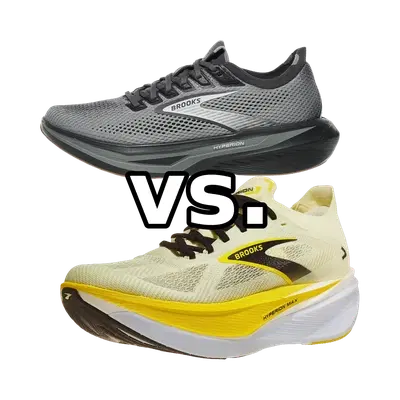
Brooks Hyperion 3 vs Brooks Hyperion Max 3
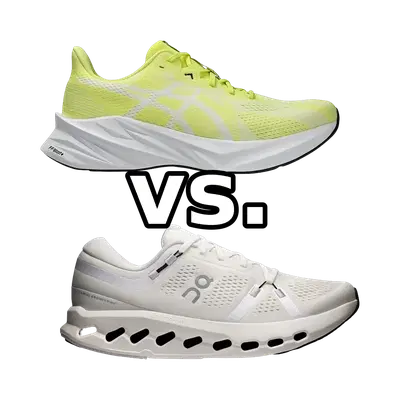
Asics Dynablast 5 vs On Cloudsurfer 2
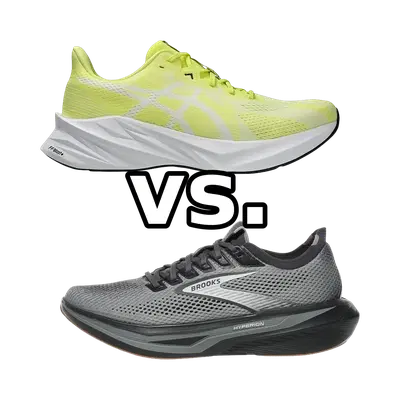
Asics Dynablast 5 vs Brooks Hyperion 3
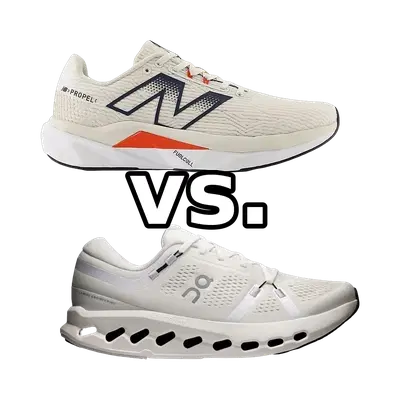
New Balance FuelCell Propel v5 vs On Cloudsurfer 2
Brooks Hyperion 3 vs Hoka Mach 7
On Cloudsurfer 2 vs On Cloudsurfer 3
© 2026 longrunshoes.ai | All rights reserved.
Use of materials from this site is permitted only with proper attribution and a link to longrunshoes.ai.