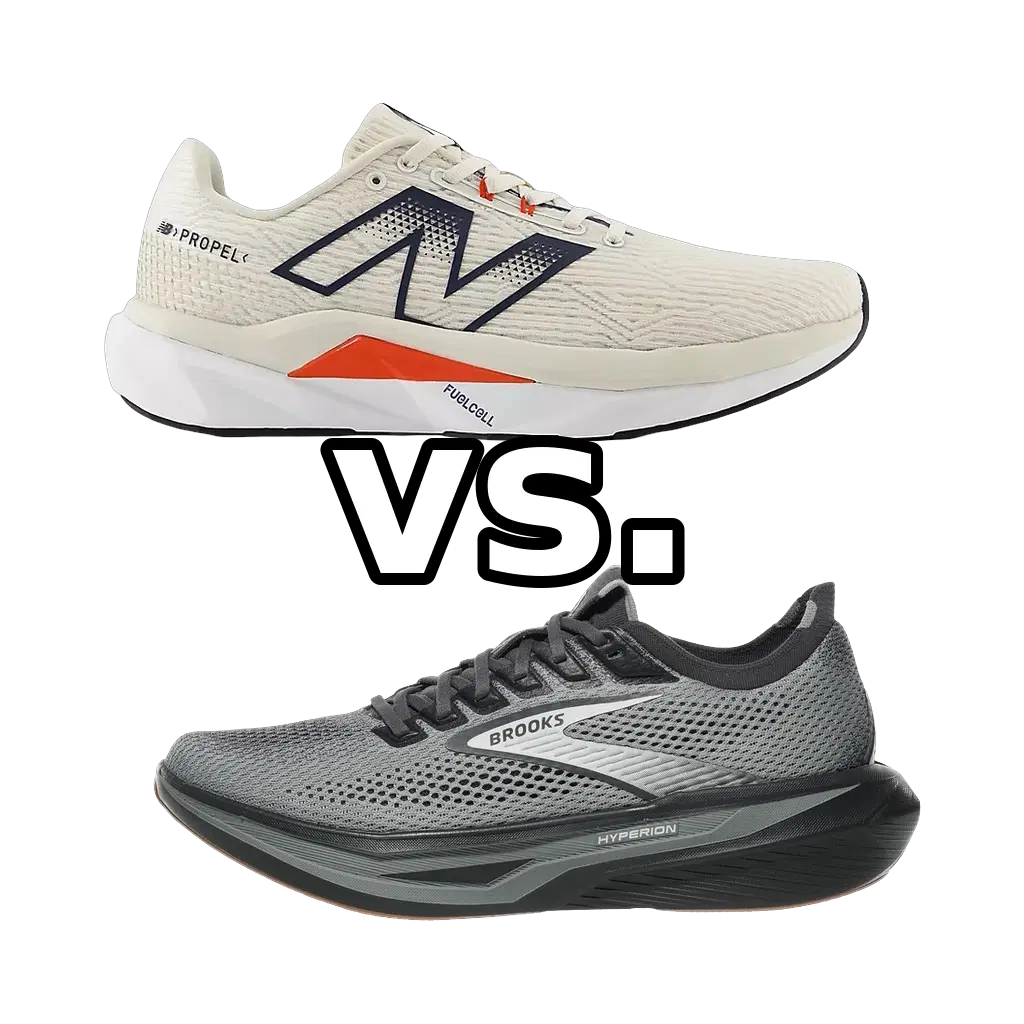
New Balance FuelCell Propel v5 vs Brooks Hyperion 3:
Which to Choose
Verdict
These are genuinely close shoes serving the same purpose, so let the ride decide, not the spec sheet. Go Hyperion 3 if you prioritize a light, firm, fast-feeling trainer for uptempo work and like ground feel; go Propel v5 if you want a softer, lower-drop, more forgiving everyday shoe that still bounces when you pick it up. Firm-and-fast versus soft-and-friendly — that's the whole call.
Pace
4 of 6
Cushioning
4 of 6
Responsiveness
4 of 6
Stability
3 of 6
Drop
6 mm
Support
Neutral
Plate
None
Distances
5K10KHalf
Pace
4 of 6
Cushioning
4 of 6
Responsiveness
4 of 6
Stability
3 of 6
Drop
8 mm
Support
Neutral
Plate
None
Distances
5K10KHalf
At a Glance
New Balance FuelCell Propel v5Brooks Hyperion 3
Who Should Choose Each Shoe
Choose
New Balance FuelCell Propel v5
Pick the Propel v5 if you're a beginner or intermediate neutral runner who wants one do-most-things trainer and values a softer, more forgiving landing over outright snap. Its lower 6mm drop, thicker forefoot and bouncier FuelCell foam make it the better choice for someone whose week is mostly steady miles with the occasional pickup, or for a heavier-footed runner who finds firm shoes punishing on easy days. It's also the easier shoe to live in if you don't love a pronounced ground-feel ride.
Choose
Brooks Hyperion 3
Pick the Hyperion 3 if speed is the point. At ~30g lighter with a firmer, more responsive DNA Flash v2 midsole and an 8mm drop that favors a rolling midfoot strike, it's the sharper tool for tempo runs, cruise intervals and quick 5K-to-half efforts, especially for a lighter, more efficient runner who already likes feeling the ground. Choose it if you want a dedicated uptempo trainer rather than a cushioned all-rounder — just know the thin forefoot gets harsh on long, slow, tired-leg miles.
Head-to-Head
Start with the hard numbers you can trust on both sides. The Hyperion 3 is the lighter shoe at roughly 241–244g in a men's US 9 versus about 275g for the Propel v5 — a ~30g gap you feel on repeats. Drop differs too: the Propel runs a 6mm offset, the Hyperion a slightly taller 8mm. Lab stacks land close at the heel (about 35mm for the Propel, 36mm for the Hyperion) but diverge sharply up front — the Propel carries roughly 28.5mm of forefoot foam against the Hyperion's thin 25mm. That forefoot difference drives the ride. The Propel's FuelCell platform is the softer, bouncier, more forgiving of the two: a friendly, mildly springy feel that rewards a quicker cadence but stays comfortable at easy pace, at the cost of feeling a touch unremarkable at a jog and wandering slightly through tight corners. The Hyperion's DNA Flash v2 is firmer and snappier, with noticeable ground feel that comes alive when you lean into a faster rhythm — but that thin, firm forefoot can turn harsh on tired legs or long slow efforts. Neither leans on a propulsion plate; the spring in both comes from the foam itself. Their optimal pace windows reflect the gap — the Hyperion wants about 4:15–4:45 min/km to shine, the Propel is happiest a notch slower around 4:40–5:15 min/km. Both use breathable engineered/jacquard mesh uppers with a secure, fairly snug performance fit (the Propel v5 trimmed down from the roomier v4). One practical caveat: the Propel's value-tier outsole is worth watching over high mileage.
Similar Comparisons
Brooks Hyperion 2 vs Brooks Hyperion 3
New Balance FuelCell Propel v5 vs On Cloudsurfer 2
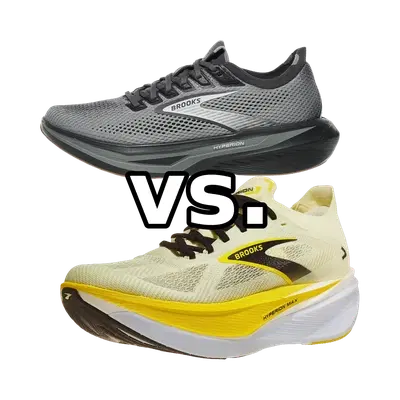
Brooks Hyperion 3 vs Brooks Hyperion Max 3
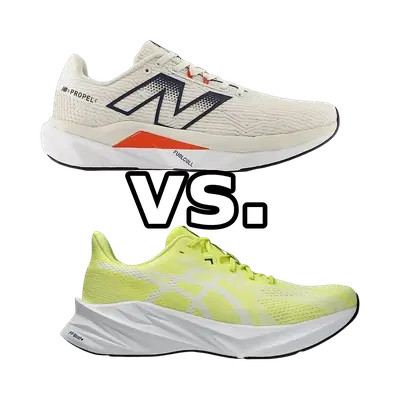
New Balance FuelCell Propel v5 vs Asics Dynablast 5
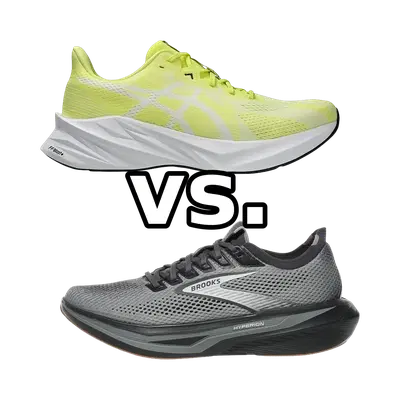
Asics Dynablast 5 vs Brooks Hyperion 3
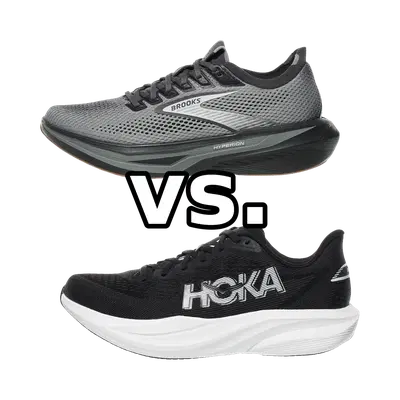
Brooks Hyperion 3 vs Hoka Mach 7
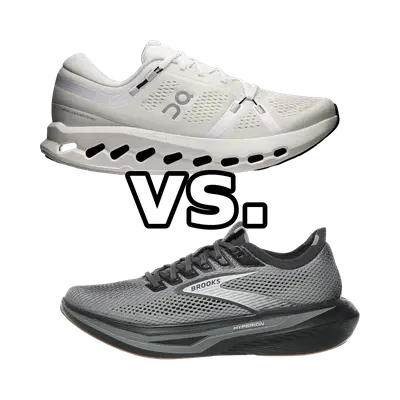
On Cloudsurfer 2 vs Brooks Hyperion 3
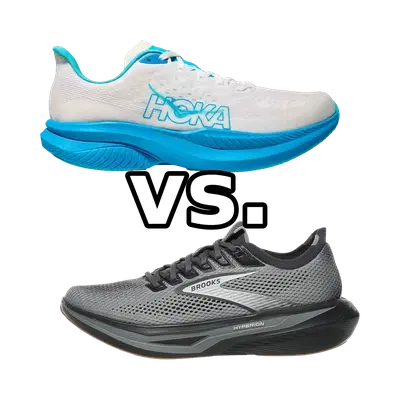
Hoka Mach 6 vs Brooks Hyperion 3
© 2026 longrunshoes.ai | All rights reserved.
Use of materials from this site is permitted only with proper attribution and a link to longrunshoes.ai.