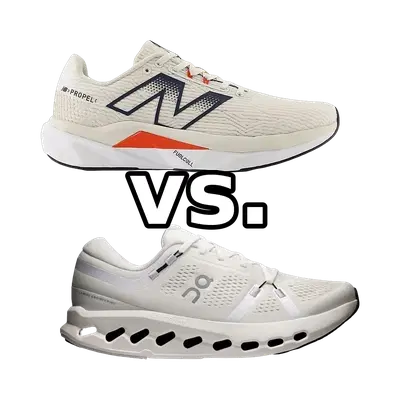
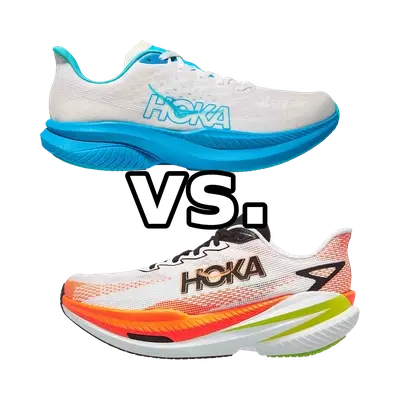
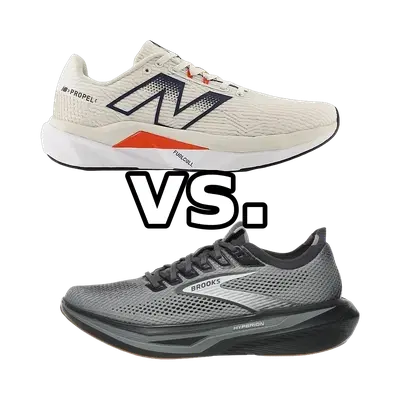
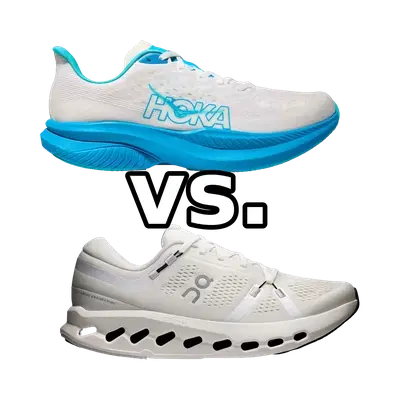
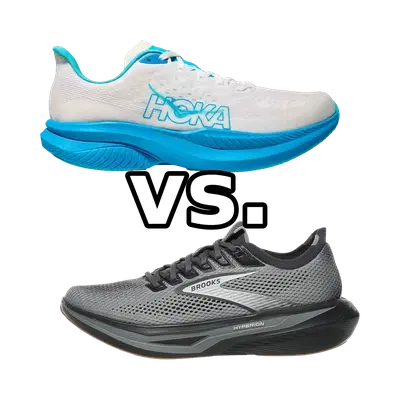
New Balance FuelCell Propel v5 vs Hoka Mach 6:
Which to Choose
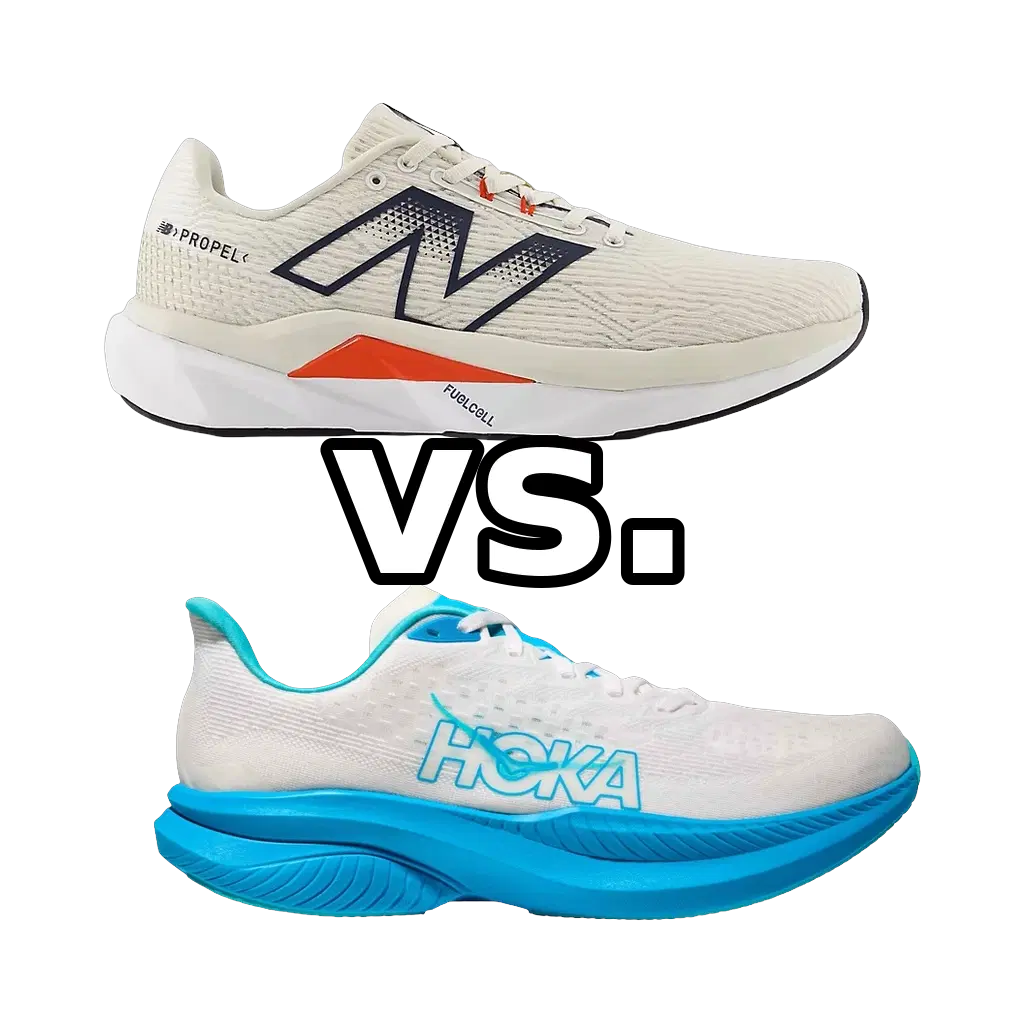
Verdict
These are close siblings with the same mission, so it comes down to range and ride feel, not quality. Go Mach 6 if you want the lighter, firmer, faster shoe that stretches to the marathon and thrives at tempo; go FuelCell Propel v5 if you want a softer, more forgiving everyday trainer focused on 5K-to-half distances and a gentler learning curve. Longer races and faster paces favor the Mach; forgiving daily comfort and shorter efforts favor the Propel.
Pace
4 of 6
Cushioning
4 of 6
Responsiveness
4 of 6
Stability
3 of 6
Drop
6 mm
Support
Neutral
Plate
None
Distances
5K10KHalf
Pace
4 of 6
Cushioning
4 of 6
Responsiveness
4 of 6
Stability
3 of 6
Drop
5 mm
Support
Neutral
Plate
None
Distances
10KHalfMarathon
At a Glance
New Balance FuelCell Propel v5Hoka Mach 6
Who Should Choose Each Shoe
Choose
New Balance FuelCell Propel v5
Pick the Propel v5 if you're a beginner or improving runner who wants one approachable, forgiving trainer for daily and uptempo miles, and your racing tops out around the half. Its softer FuelCell ride is more accommodating at easy and moderate paces, making it the friendlier choice if you're building fitness or stepping up from a basic trainer rather than chasing a marathon or sharp race-pace sessions.
Choose
Hoka Mach 6
Choose the Mach 6 if you want a lighter, firmer, more versatile shoe that genuinely covers tempo, progression runs, and racing from 10K up through the marathon. It rewards a runner who pushes the pace and wants that rocker-assisted, quick-rolling feel, and it's the better long-haul and race-day option thanks to its lower weight and marathon-capable range — just don't expect pillowy softness on slow recovery jogs.
Head-to-Head
On paper the two are close — both neutral, both plateless, both rated the same for cushioning, responsiveness, and stability — but the ride and the range differ in ways that matter. The Mach 6 is the lighter, faster-leaning shoe: in a men's sample it comes in around 232g (8.2 oz) against roughly 280g (9.9 oz) for the Propel v5, a real, noticeable gap you feel when you push the pace. Stack heights are comparable, with the Mach 6 slightly taller (about 37mm heel / 32mm forefoot) than the Propel (about 35mm / 28.5mm), and the drops are within a millimeter of each other (5mm on the Mach, 6mm on the Propel), so neither forces a big change in strike. The bigger separation is in character: the Mach 6 uses a supercritical EVA/TPU foam that feels firmer, springier, and more connected to the ground, and a gentle rocker helps it roll into faster efforts — its comfort zone runs quicker (roughly 4:00–4:30 min/km for tempo) and it holds up from 10K through the half and into the marathon. The Propel v5's FuelCell foam is a touch softer and more forgiving, friendly for a beginner or someone logging daily miles, but its sweet spot sits shorter — 5K, 10K, and the half, with the 10K as its home — and the plateless platform starts to feel outrun if you drive much past half-marathon pace. The Mach 6 also pairs its longer-range ambitions with a durable rubber outsole over the high-wear zones, whereas the Propel's value-tier outsole is more of a watch-it-over-high-mileage proposition, though its thin upper and the Mach's equally thin upper both give up warmth in cold, wet conditions.
© 2026 longrunshoes.ai | All rights reserved.
Use of materials from this site is permitted only with proper attribution and a link to longrunshoes.ai.