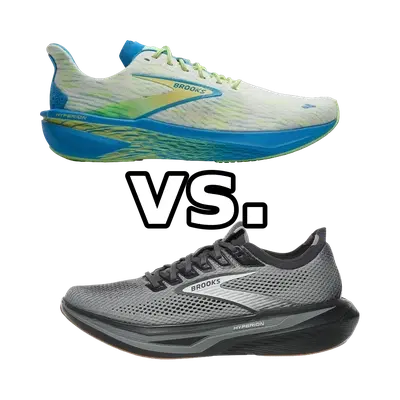
Brooks Hyperion 2 vs Brooks Hyperion GTS 2:
Which to Choose
Verdict
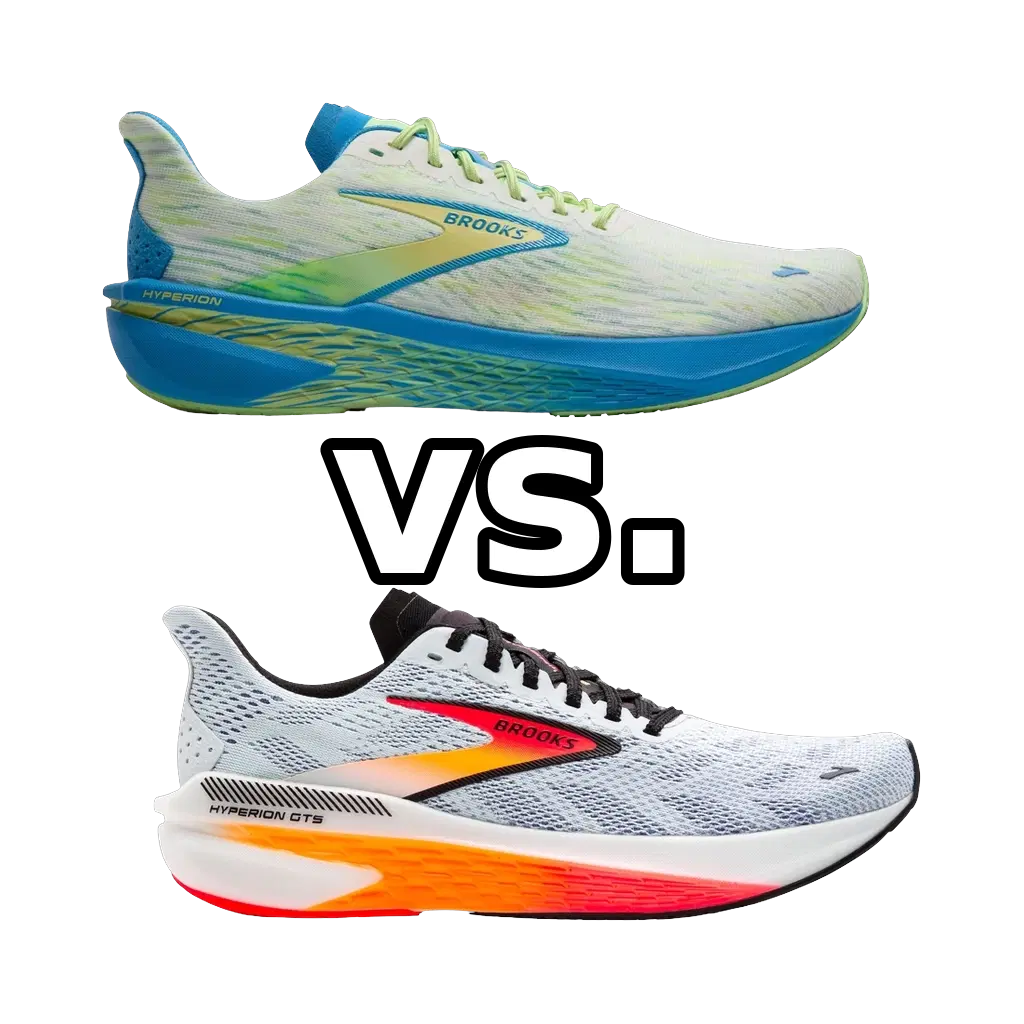
It genuinely comes down to one thing: do you want guidance or not? These are the same shoe at heart — same foam, same ~33mm stack, same 8mm drop, same best distances and ride character — so there's no trade-off in speed or cushioning to agonize over. Neutral runners with a clean stride should take the lighter Hyperion 2; runners who mildly overpronate or want a steadier feel under fatigue should take the GTS 2 and accept the small added weight for its GuideRails.
Pace
5 of 6
Cushioning
3 of 6
Responsiveness
4 of 6
Stability
3 of 6
Drop
8 mm
Support
Neutral
Plate
None
Distances
5K10KHalf
Pace
5 of 6
Cushioning
3 of 6
Responsiveness
4 of 6
Stability
4 of 6
Drop
8 mm
Support
Stable Neutral
Plate
None
Distances
5K10KHalf
At a Glance
Brooks Hyperion 2Brooks Hyperion GTS 2
Who Should Choose Each Shoe
Choose
Brooks Hyperion 2
Choose the Hyperion 2 if you're an efficient neutral runner with a stable stride who wants the lightest, most connected version of this ride for tempo work, intervals, and 5K-to-half racing. If you don't overpronate and dislike anything nudging your foot, the plain Hyperion gives you the same foam and geometry with nothing extra underfoot — and the lowest weight on the start line.
Choose
Brooks Hyperion GTS 2
Choose the Hyperion GTS 2 if you like going fast but your form gets sloppy late in a hard effort, or you mildly overpronate and want a steadier platform without giving up the racy feel. It's the better pick for intermediate and experienced runners who've historically reached for light stability trainers and want that reassurance in a tempo-and-race shoe — the GuideRails stay out of the way until you actually need them, for just a small weight penalty.
Head-to-Head
Underfoot these two are close to indistinguishable: both run on DNA Flash v2, Brooks' nitrogen-infused foam, over roughly the same stack (about 33mm at the heel) with an 8mm drop and no plate in either. That means the same low-slung, honest-feedback ride — lively and springy when you push the pace, a touch firm and impatient at easy jog speeds — and the same sweet spot around the 10K, extending down to the 5K and up to the half. The only structural difference that matters is stability: the plain Hyperion 2 is a true neutral shoe on a narrowish, race-lean platform (stability 3/6), while the GTS 2 wraps GuideRails along the sides to gently check side-to-side motion and mild overpronation without a stiff medial post (stability 4/6). That support costs a little weight — the GTS 2 comes in around 20g (roughly two-thirds of an ounce) heavier than the Hyperion 2's featherweight ~200g in a men's 9 — but the GuideRails only engage when your stride wobbles, so the racing feel is otherwise preserved. Neither shoe is a durable daily cruiser or a soft recovery option; the thin engineered-mesh uppers and modest cushioning on both prioritize speed over all-day comfort and longevity.

© 2026 longrunshoes.ai | All rights reserved.
Use of materials from this site is permitted only with proper attribution and a link to longrunshoes.ai.