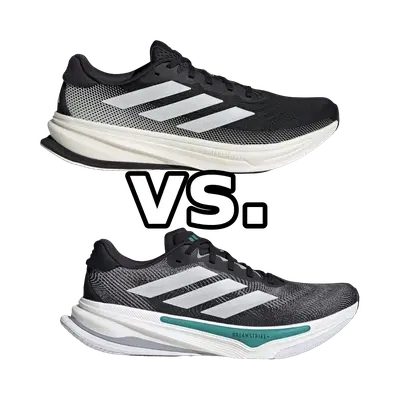
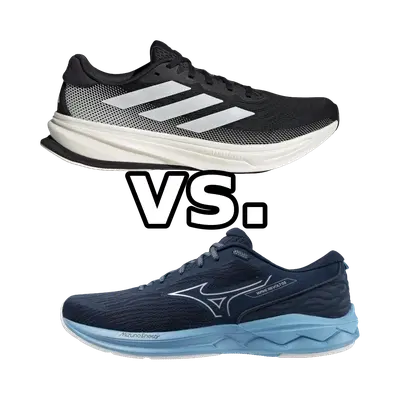
Adidas Supernova Rise 2 vs Mizuno Wave Ultima 16:
Which to Choose
Verdict
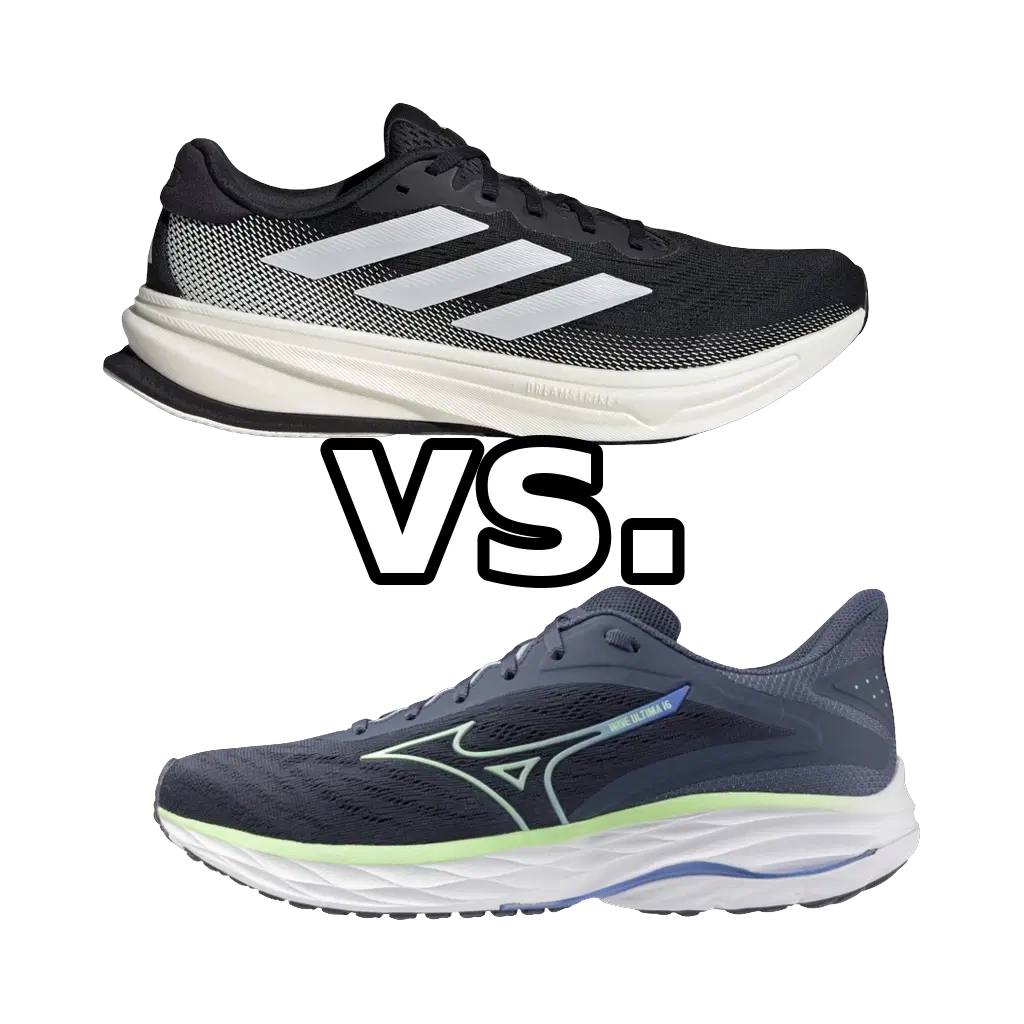
It genuinely comes down to ride feel and fit, not capability — both will handle your daily and long-run mileage from 10K to the marathon equally well. Go Adidas Supernova Rise 2 for a slightly lighter, lower, livelier ride with a bit more rebound; go Mizuno Wave Ultima 16 for a firmer, taller-heeled, more structured and planted feel. Since the specs are otherwise so close, let the deciding factor be which last fits your foot better and whether you prefer a 10mm or 12mm drop underfoot.
Pace
3 of 6
Cushioning
4 of 6
Responsiveness
4 of 6
Stability
4 of 6
Drop
10 mm
Support
Stable Neutral
Plate
Composite
Distances
10KHalfMarathon
Pace
3 of 6
Cushioning
4 of 6
Responsiveness
3 of 6
Stability
4 of 6
Drop
12 mm
Support
Stable Neutral
Plate
Composite
Distances
10KHalfMarathon
At a Glance
Adidas Supernova Rise 2Mizuno Wave Ultima 16
Who Should Choose Each Shoe
Choose
Adidas Supernova Rise 2
Choose the Supernova Rise 2 if you want the slightly more energetic, do-it-all end of this pair — a daily trainer that softens long miles but still has a mild spring when you lift the effort toward 4:45–5:00 min/km. Its lower 10mm drop and marginally lighter build suit runners who like sitting a touch closer to the ground and want one shoe to cover easy days, steady long runs, and the occasional faster stretch without feeling dead.
Choose
Mizuno Wave Ultima 16
Choose the Wave Ultima 16 if you value a firm, controlled, planted ride over bounce, and especially if you're a heel striker who likes a higher 12mm drop and a stable, structured platform underfoot. The Wave plate's tidy, predictable transitions reward runners who settle into one honest tempo and hold it, with the half marathon as its natural home — it's the pick for consistency and reassurance across longer efforts rather than liveliness.
Head-to-Head
On paper these two are close enough that the spec sheet alone won't decide it — same 4/6 cushioning, same 4/6 stability, same stable-neutral platform with no medial post, same intended distances and paces. The differences are real but a matter of degree. Weight is a near wash: the Rise 2 comes in around 274g (9.7 oz) in a men's 9 versus roughly 285g for the Wave Ultima 16, so the Adidas has a slight edge but not one most runners will feel on an easy run. Geometry is where they diverge more clearly. The Rise 2 runs a 10mm drop on a 36mm heel / 26mm forefoot stack, while the Ultima 16 sits a touch taller and steeper at 12mm drop over roughly 38.5mm heel / 26.5mm forefoot — the Mizuno's higher heel and bigger offset give it a more traditional, heel-biased feel, while the Adidas sits marginally closer to the ground. Ride character is the real separator. The Rise 2's Dreamstrike+ TPEE foam with Support Rods is the slightly bouncier, more balanced of the two (responsiveness 4/6) — cushioned without going mushy, with light guidance rather than snap. The Ultima 16's Enerzy foam and signature composite Wave plate are firmer and more controlled (responsiveness 3/6), prioritizing a smooth, tidy, predictable transition and a reassuring sense of platform stability over any pop. Neither is a surge shoe; both want a consistent tempo and both tap out before true race pace. Both use engineered mesh uppers, so the practical fit decision — Adidas versus Mizuno lasts tend to shape differently around the midfoot and heel — is best made by trying them on.
Similar Comparisons
Salomon Spectur 2 vs Mizuno Wave Ultima 16

Adidas Supernova Rise 2 vs Adidas Supernova Solution 2.0

Adidas Supernova Rise 2 vs Adidas Supernova Stride 2

Adidas Supernova Rise 2 vs Adidas Supernova Rise 3
Adidas Supernova Rise 2 vs Mizuno Wave Prodigy 6
Adidas Supernova Rise 2 vs Mizuno Wave Revolt 3
© 2026 longrunshoes.ai | All rights reserved.
Use of materials from this site is permitted only with proper attribution and a link to longrunshoes.ai.