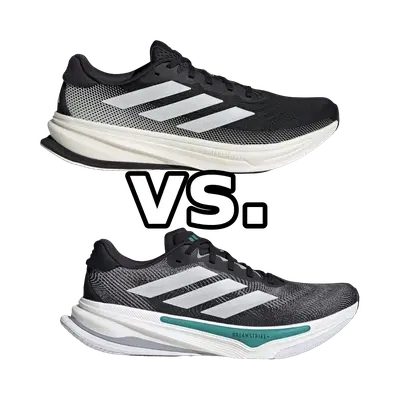
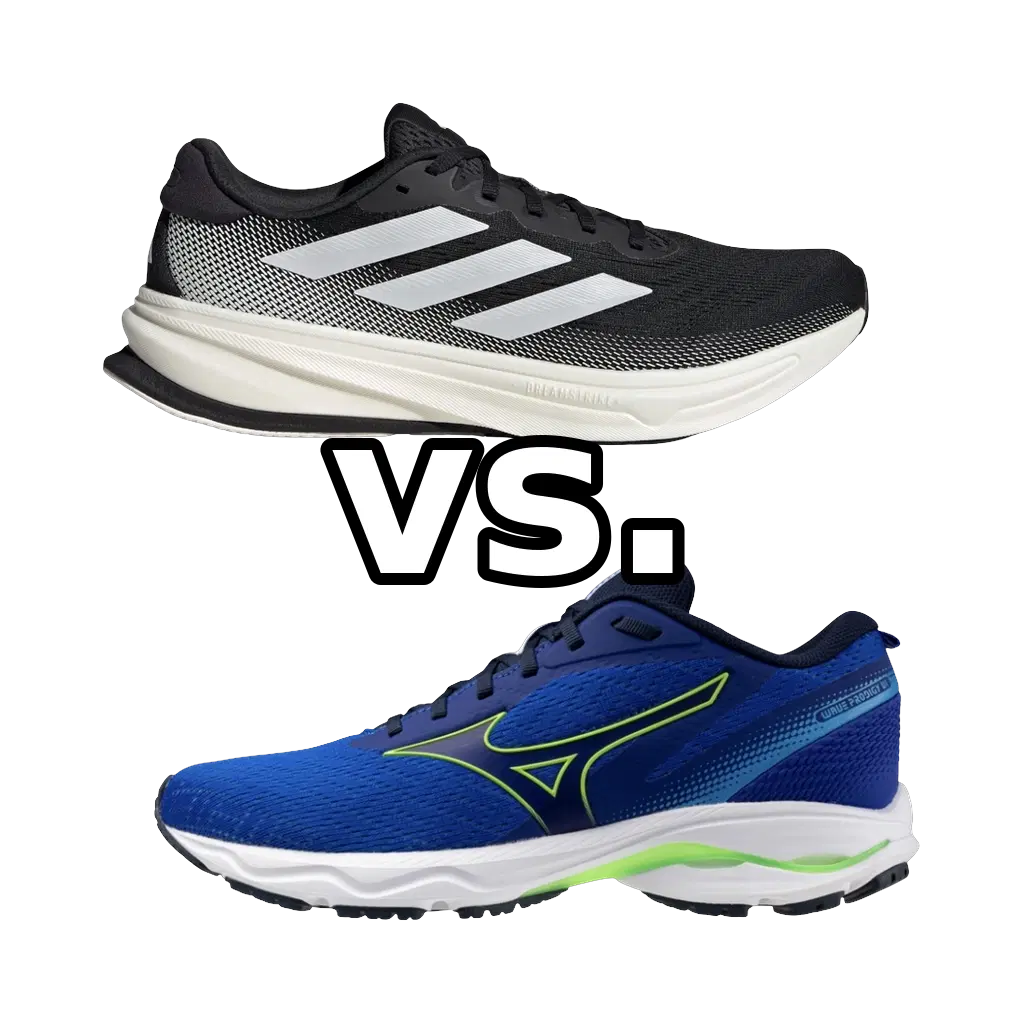
Adidas Supernova Rise 2 vs Mizuno Wave Prodigy 6:
Which to Choose
Verdict
These are genuinely close cousins — same purpose, same cushioning and stability, same distance range — so neither is a mistake. The deciding factor is ride feel and drop: take the Supernova Rise 2 if you want a lower (10mm), lighter, mildly bouncier shoe that's happy to lift toward tempo, and the Wave Prodigy 6 if you want a firmer, higher-drop (12mm), more grounded trainer that stays rock-steady at easy and long-run efforts. Try both on if you can, because fit and the firm-versus-slightly-springy preference will matter more than any spec on the page.
Pace
3 of 6
Cushioning
4 of 6
Responsiveness
4 of 6
Stability
4 of 6
Drop
10 mm
Support
Stable Neutral
Plate
Composite
Distances
10KHalfMarathon
Pace
3 of 6
Cushioning
4 of 6
Responsiveness
3 of 6
Stability
4 of 6
Drop
12 mm
Support
Neutral
Plate
Composite
Distances
10KHalfMarathon
At a Glance
Adidas Supernova Rise 2Mizuno Wave Prodigy 6
Who Should Choose Each Shoe
Choose
Adidas Supernova Rise 2
Choose the Supernova Rise 2 if you're a recreational runner building fitness who wants one trainer that can handle easy long runs but still has a little life when you push toward tempo. Its slightly bouncier Dreamstrike+ foam, lower 10mm drop, and lighter build make it the better pick for runners who dislike a dead, flat ride and want a shoe that feels willing rather than purely protective. The light stable-neutral guidance also suits neutral-to-mildly-overpronating runners who want gentle structure without a medial post.
Choose
Mizuno Wave Prodigy 6
Choose the Wave Prodigy 6 if you're a newer or intermediate runner who prizes a firm, planted, utterly predictable platform for base building and steady miles over any sense of spring. Its 12mm drop and stiffer Enerzy-and-Wave-plate ride reward a smooth, consistent stride and classic heel-to-toe rolling, making it ideal for runners who feel most secure on a grounded shoe and value durable structure over liveliness. It's the stronger call if your mileage is mostly easy and controlled, with the half marathon as your target.
Head-to-Head
On paper these two are strikingly close — identical cushioning (4/6), identical stability (4/6), the same training pace window, and the same best distances of 10K, half, and marathon. Both lean on a composite plate rather than carbon (Adidas's Support Rods, Mizuno's signature Wave plate) for structure and smooth transitions, and both share a 36mm heel stack, so heel-strike protection is near-equivalent. The real separation is in the foam and the geometry. The Supernova Rise 2 uses Dreamstrike+ TPEE foam that reads as balanced and mildly bouncy, earning it a slightly higher responsiveness rating (4/6), while the Prodigy 6's Enerzy foam is firm-leaning and more grounded (3/6) — protective and predictable, but it gives back less pop when you lift the effort. Geometry nudges them apart too: the Supernova runs a 10mm drop over a 36/26mm stack, while the Prodigy sits at a more traditional 12mm drop over 36/24mm, a touch more heel-biased and better suited to committed heel strikers who like a classic rolling feel. The Supernova is also the lighter of the two, which reinforces its marginally livelier character. In practice the Supernova Rise 2 is the more willing shoe when you want to pick up the pace toward tempo (it comes alive around 4:45–5:00 min/km), whereas the Prodigy 6 is the steadier, stiffer platform that excels at controlled, consistent striding with the half as its sweet spot. Adidas also tilts a hair toward stability with its stable-neutral guidance from the Support Rods; Mizuno stays a true neutral shoe whose Wave plate broadens the base to calm wobble without steering you.
Similar Comparisons
Salomon Spectur 2 vs Mizuno Wave Prodigy 6
Adidas Supernova Rise 2 vs Adidas Supernova Solution 2.0
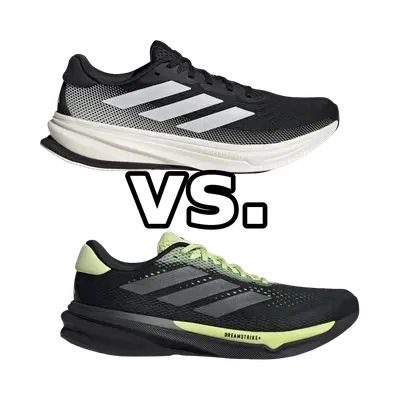
Adidas Supernova Rise 2 vs Adidas Supernova Stride 2
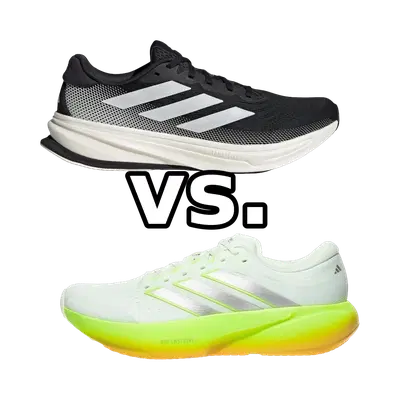
Adidas Supernova Rise 2 vs Adidas Supernova Rise 3
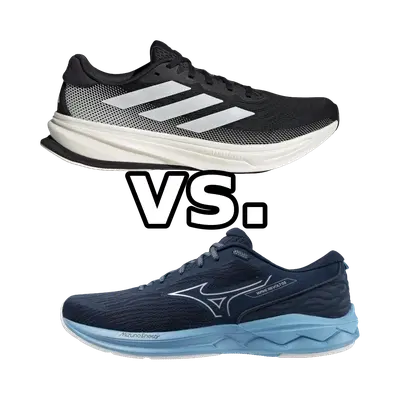
Adidas Supernova Rise 2 vs Mizuno Wave Revolt 3
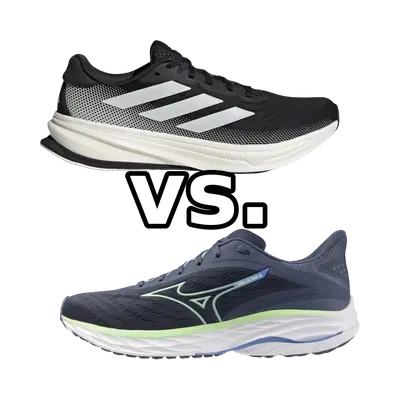
Adidas Supernova Rise 2 vs Mizuno Wave Ultima 16
© 2026 longrunshoes.ai | All rights reserved.
Use of materials from this site is permitted only with proper attribution and a link to longrunshoes.ai.