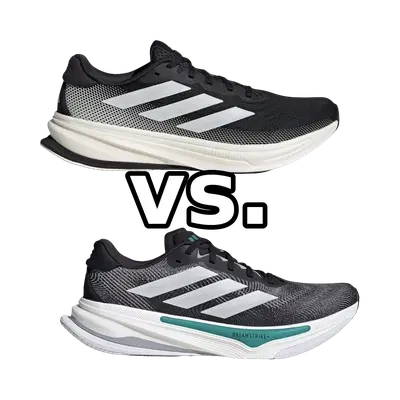
Adidas Supernova Rise 2 vs Adidas Supernova Stride 2:
Which to Choose
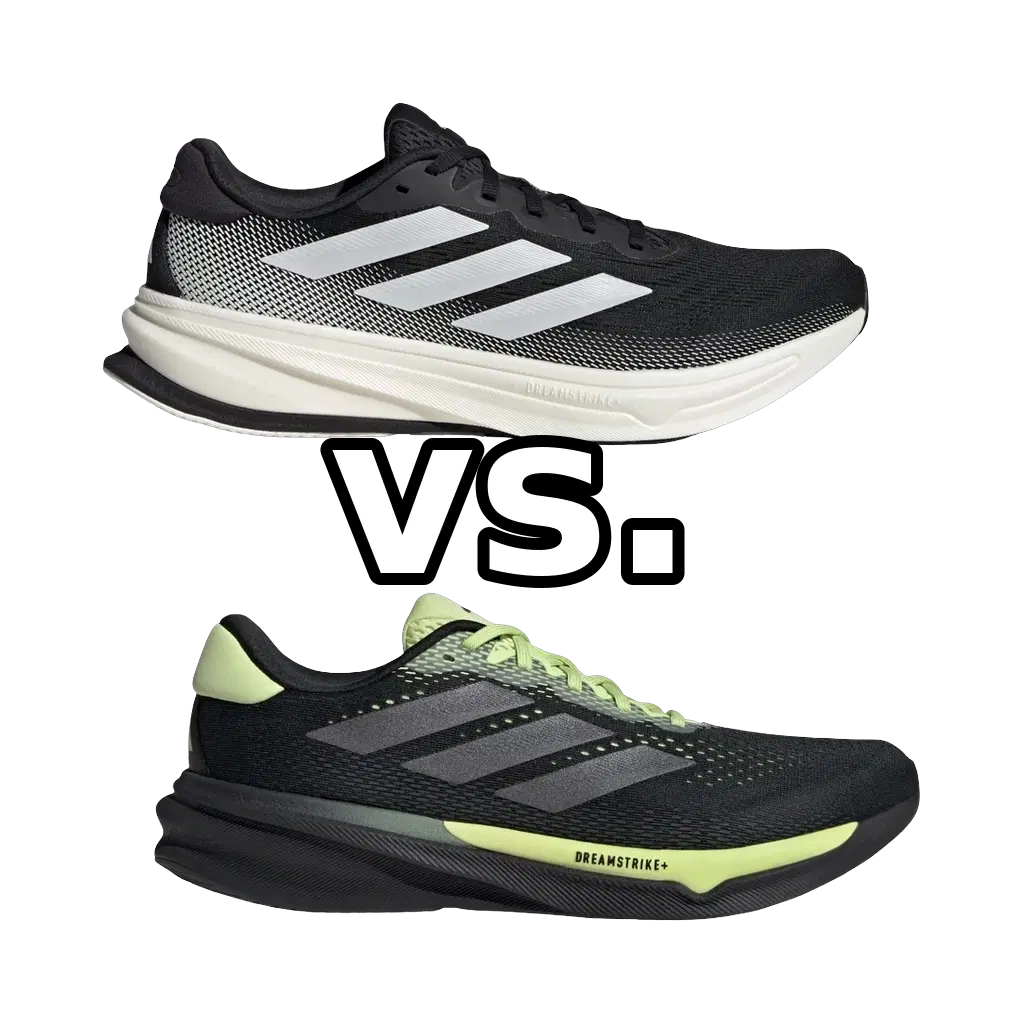
Verdict
Both shoes are competent daily trainers from the same family, and they're close enough that casual runners will feel comfortable in either. But the difference is real: if your goal races include a marathon, or you want a single trainer with a broader pace range and some structural feedback, the Rise 2 is the more versatile choice. If the half marathon is your ceiling and pure cushioning comfort is what you're after, the Stride 2 delivers that in a simpler, softer package — just don't expect it to push you when the pace picks up.
Pace
3 of 6
Cushioning
4 of 6
Responsiveness
4 of 6
Stability
4 of 6
Drop
10 mm
Support
Stable Neutral
Plate
Composite
Distances
10KHalfMarathon
Pace
3 of 6
Cushioning
5 of 6
Responsiveness
3 of 6
Stability
4 of 6
Drop
10 mm
Support
Stable Neutral
Plate
None
Distances
10KHalf
At a Glance
Adidas Supernova Rise 2Adidas Supernova Stride 2
Who Should Choose Each Shoe
Choose
Adidas Supernova Rise 2
The Rise 2 is the better pick for runners whose training spans 10K through marathon distance and who need one daily trainer that can handle the full range of race-prep mileage. Its composite plate and broader pace ceiling also make it the right choice for anyone who wants a hint of responsiveness with their cushioning — a shoe that stays engaging over 30km long runs without turning passive or dead. Neutral-to-mildly-overpronating runners who've found purely cushioned trainers too soft and unstructured will feel more at home here.
Choose
Adidas Supernova Stride 2
The Stride 2 suits runners whose training tops out at the half marathon and who place comfort and cushioning ahead of any performance feel. Beginners, intermediate runners building base fitness, or anyone returning to regular mileage after time off will appreciate the higher cushioning rating and the natural, flexible feel that comes from a plate-free construction. If your priority is a shoe that simply gets out of the way and absorbs road impact on easy and moderate days, this is the cleaner choice.
Head-to-Head
Both shoes share the same Dreamstrike+ foam core, 10mm drop, and stable-neutral platform — no medial post, a wide base, and an engineered mesh upper. The differences are genuine and structural, not cosmetic.
The most important split is the plate. The Rise 2's composite Support Rods — plate-class elements, not a carbon plate — add mild rebound and structural guidance, giving it a responsiveness rating of 4/6. The Stride 2 has no plate at all, scoring 3/6 on responsiveness; it rolls smoothly but won't generate any propulsive spring back. Runners who want even a modest sense of energy return will notice the difference.
Cushioning runs the other way. The Stride 2 rates higher (5/6 vs the Rise 2's 4/6), with a taller heel stack and a ride focused purely on softness and impact absorption. The Rise 2's cushioning is above-average — plush for daily miles — but firmer and better structured, which some runners will prefer on longer runs where very high stacks can feel unstable or mushy.
The pace and distance ceilings diverge meaningfully. The Rise 2 covers 10K through marathon at an optimal range of 5:00–6:00 min/km; the Stride 2 tops out at the half marathon and runs best between 5:15–6:15 min/km. If your training and racing extends to 42.2km, the Rise 2 is the only one of the two built for it. The Stride 2 is a better fit for runners whose longest efforts are half-marathon distance and below.
Ride character reflects these differences clearly. The Rise 2 is balanced and mildly bouncy with smooth, predictable transitions — the Support Rods provide subtle guidance without a snappy pop. The Stride 2 is more planted and passive — a pure rolling ride that soaks up impact without any engagement. Both are comfortable; they just define comfort differently.

© 2026 longrunshoes.ai | All rights reserved.
Use of materials from this site is permitted only with proper attribution and a link to longrunshoes.ai.