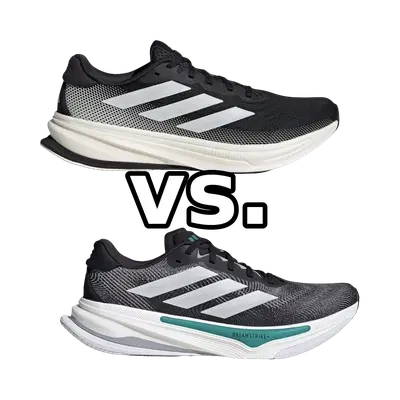
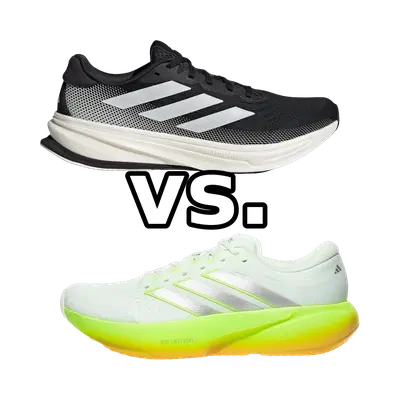
Adidas Supernova Rise 2 vs Adidas Supernova Solution 2.0:
Which to Choose
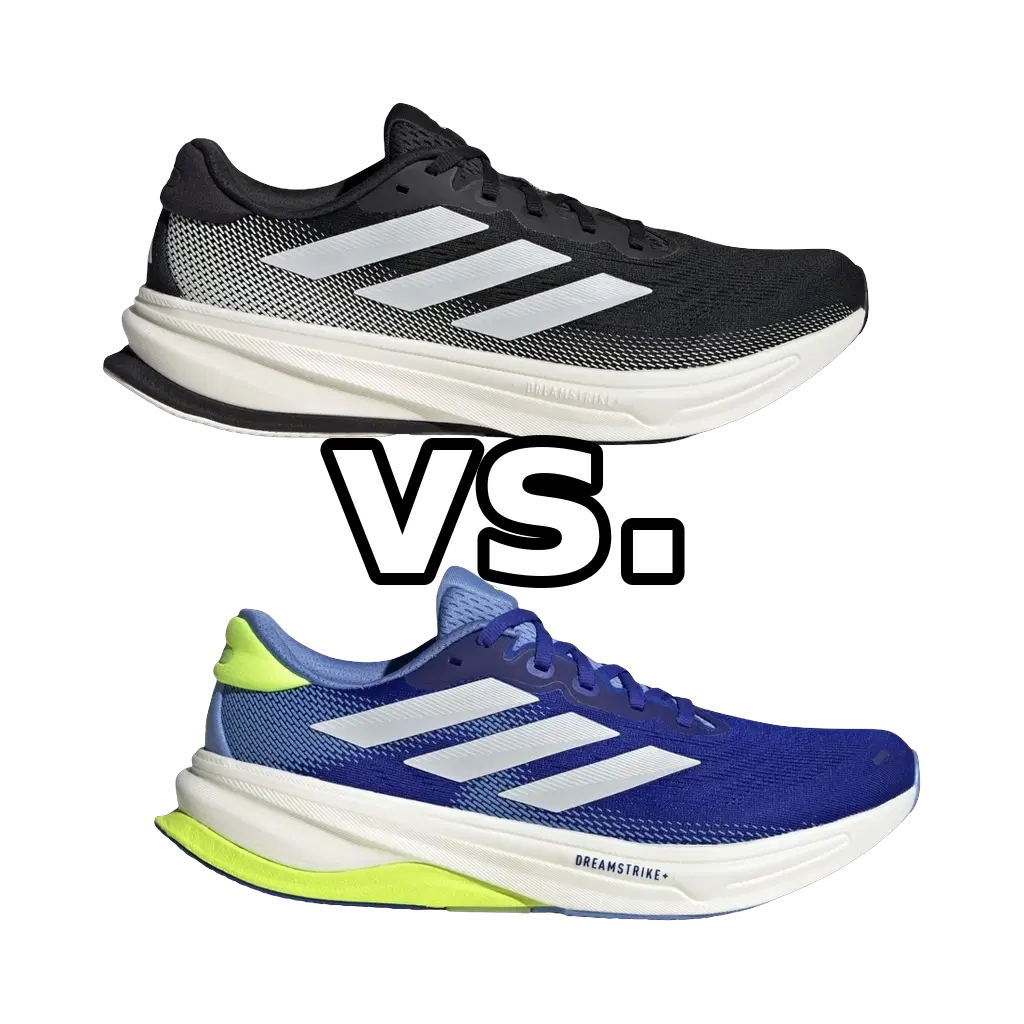
Verdict
This choice comes down to one question: do you overpronate? If not — or if you're only borderline — the Rise 2 gives you a freer, roomier, stable-neutral ride that won't over-engineer your gait. If you do overpronate and want your shoe to actively support that, the Solution 2.0 is the clearer answer, with its glass-fiber rods and medial density doing real work rather than just offering reassurance. Every other variable — stack, drop, foam, pace range, target distance — is essentially the same shoe.
Pace
3 of 6
Cushioning
4 of 6
Responsiveness
4 of 6
Stability
4 of 6
Drop
10 mm
Support
Stable Neutral
Plate
Composite
Distances
10KHalfMarathon
Pace
3 of 6
Cushioning
4 of 6
Responsiveness
4 of 6
Stability
5 of 6
Drop
10 mm
Support
Stability
Plate
Composite
Distances
10KHalfMarathon
At a Glance
Adidas Supernova Rise 2Adidas Supernova Solution 2.0
Who Should Choose Each Shoe
Choose
Adidas Supernova Rise 2
The Rise 2 is the right call for neutral or very mildly overpronating runners who want a dependable, high-mileage daily trainer without the feel of a corrective shoe. It's also a strong pick for runners with wider feet or anyone who finds stability shoes uncomfortably stiff — the roomier fit and stable-neutral ride deliver structure without constraint. If your gait doesn't demand active support and you'd rather have a shoe that simply cushions and guides rather than corrects, this is the better fit.
Choose
Adidas Supernova Solution 2.0
The Solution 2.0 is built for runners who overpronate — even mildly — and want that addressed by their everyday trainer rather than managed through insoles or conscious form adjustments. It's equally suited to beginners building weekly mileage who benefit from a planted, confidence-inspiring platform while their running economy develops. Experienced runners who know they need a stability shoe and want one that stays light and responsive enough for half-marathon and marathon efforts will also find it delivers without feeling like a orthotics-wrapped brick.
Head-to-Head
Start with what they share, because it's substantial: both use Dreamstrike+ foam for a moderately cushioned, lightly springy ride, both run a 10mm drop on a 36/26mm stack, both carry composite guidance rods instead of a propulsive carbon plate, and both are optimized for the same training paces (5:00–6:00 min/km) and distances. If you ran one blindfolded you'd recognize the other instantly.
Where they diverge is stability architecture. The Rise 2 earns a stable-neutral classification — its composite Support Rods add a gentle sense of guidance and structure, but the platform is built for runners whose gait is essentially neutral or only mildly inward-rolling. The Solution 2.0 steps up a full category to true stability, using glass-fiber Support Rods with denser foam on the medial side to deliver active guidance for runners who actually overpronate. The wider, more grounded base of the Solution 2.0 keeps it more planted at all paces, while the Rise 2 feels slightly more agile and less corrective underfoot.
Ride feel reflects this gap. The Rise 2's transitions are smooth and predictable but stop short of feeling locked-in; it rewards runners who don't need their shoe to manage their foot motion. The Solution 2.0 firms up the medial wall and keeps the foot in a more directed path — that's reassuring for overpronators but can register as slightly stiff or constraining for neutral runners who don't need the intervention.
Fit is another real difference: the Rise 2 offers a noticeably roomier, wider toe box that suits runners with broader or square-shaped feet, especially useful during long runs when feet swell. The Solution 2.0 holds the foot more securely across the platform, which complements its stability intent but leaves less room for wider feet.
© 2026 longrunshoes.ai | All rights reserved.
Use of materials from this site is permitted only with proper attribution and a link to longrunshoes.ai.