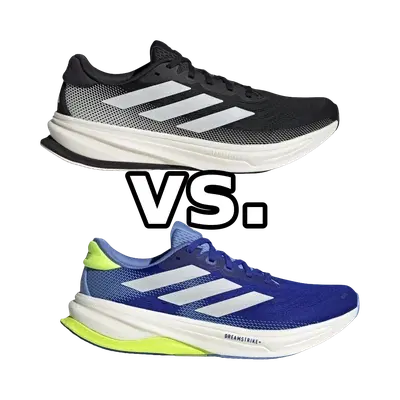
Adidas Supernova Rise 2 vs Adidas Supernova Prima 2:
Which to Choose
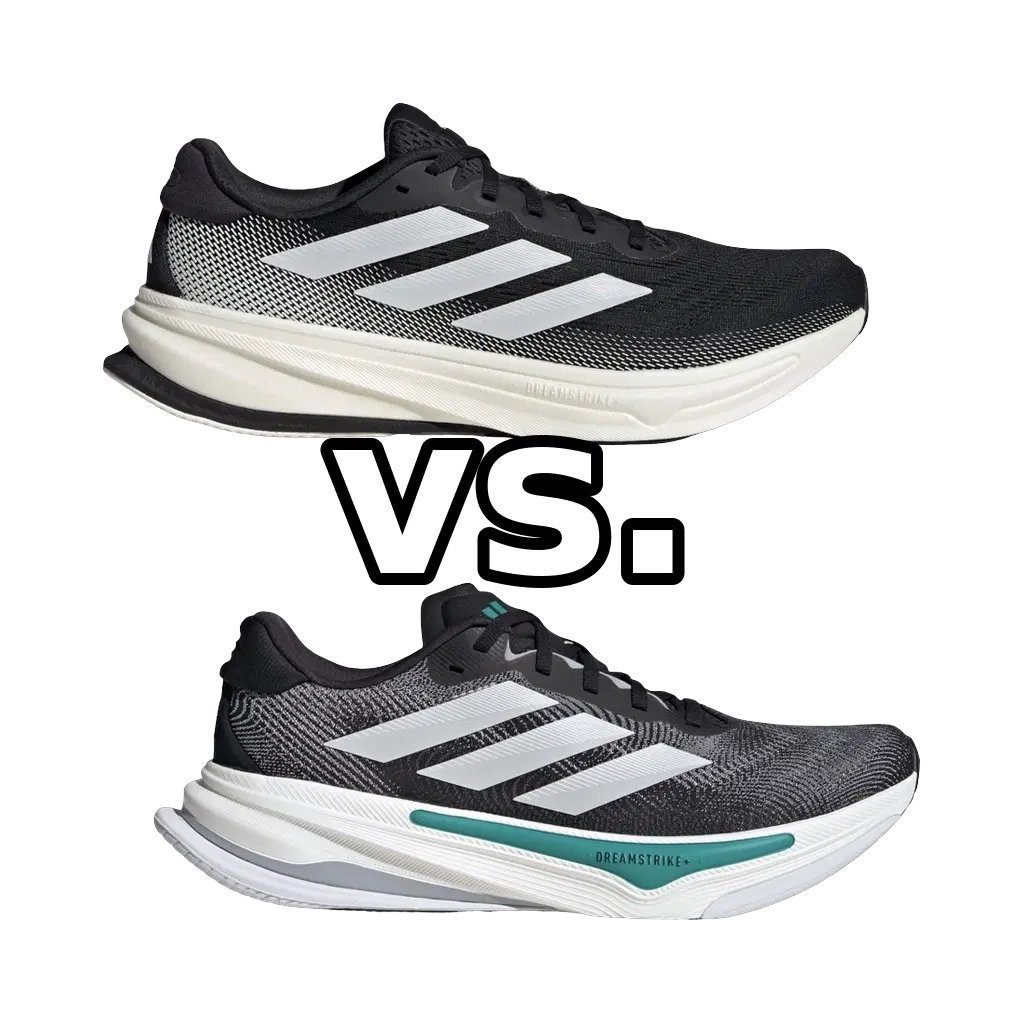
Verdict
Both shoes serve the same runner at the same paces over the same distances, so the choice is genuinely about two variables: drop and cushioning depth. If you want a traditional 10mm heel drop and a midsole that offers mild structural guidance alongside solid cushioning, take the Rise 2. If you want a taller, softer, more protective platform with a slightly lower drop and no plate influence in the ride, take the Prima 2. Neither is a wrong answer — it depends entirely on whether you run better with a bit of structure or a lot of foam.
Pace
3 of 6
Cushioning
4 of 6
Responsiveness
4 of 6
Stability
4 of 6
Drop
10 mm
Support
Stable Neutral
Plate
Composite
Distances
10KHalfMarathon
Pace
3 of 6
Cushioning
5 of 6
Responsiveness
4 of 6
Stability
5 of 6
Drop
8 mm
Support
Stable Neutral
Plate
None
Distances
10KHalfMarathon
At a Glance
Adidas Supernova Rise 2Adidas Supernova Prima 2
Who Should Choose Each Shoe
Choose
Adidas Supernova Rise 2
The Rise 2 is the better fit for runners who prefer a traditional heel-drop feel and want a touch of structured guidance built into their daily trainer — particularly those who find maximally soft shoes feel vague or unsettled. It also suits runners who occasionally push the tempo on easy days: the Support Rods give just enough liveliness to make a moderate progression feel purposeful rather than slogging, without sacrificing the cushioning needed for steady marathon-build mileage.
Choose
Adidas Supernova Prima 2
The Prima 2 is the right call for runners who prioritize cushioning depth above all else — those logging very high weekly mileage, running predominantly on hard pavement, or coming from a background in maximalist trainers who want a planted, enveloping platform. It also suits runners comfortable with a lower drop who want the widest, most forgiving base in this sibling pair, and who have no interest in any plate-derived structure underfoot.
Head-to-Head
The clearest separation between these two shoes is stack height. The Prima 2 runs meaningfully taller — roughly 5mm more in the forefoot and 3mm more in the heel — which translates to a noticeably softer, more protective feel over long miles. On hard pavement or during high-mileage weeks, that extra foam depth is a real advantage for runners who prioritize protection over precision.
Drop is the second concrete dividing line. The Rise 2 sits at a traditional 10mm heel-to-toe offset; the Prima 2 comes in at 8mm. The gap is modest but real — the Rise 2 will feel more immediately familiar to committed heel strikers, while the Prima 2's slightly lower platform encourages a marginally more midfoot-engaged transition over time.
Where the two shoes differ most mechanically is in how they create structure. The Rise 2 embeds composite Support Rods in its midsole — not a carbon plate, but a guiding element that gives the ride a subtle directional feel and a mild sense of rebound. The Prima 2 carries no plate at all; its stability (rated 5/6 versus the Rise 2's 4/6) comes entirely from a wider, more planted base and Dreamstrings TPU cords through the upper. In practice, the Rise 2 feels slightly more alive and on-the-move underfoot, while the Prima 2 is softer and more passive — a cruiser that earns its higher stability rating from sheer platform width rather than embedded structure.
Weight is a minor but real data point: the Rise 2 comes in at 257g and the Prima 2 at 264g — a 7g difference that matters little at training paces but confirms the Prima 2's extra foam is adding some mass. Responsiveness is identical at 4/6 on both, and neither shoe will feel fast — they share the same optimal pace window and both stop well short of race-day snappiness.

© 2026 longrunshoes.ai | All rights reserved.
Use of materials from this site is permitted only with proper attribution and a link to longrunshoes.ai.