
Adidas Adizero Evo SL vs Nike Pegasus Plus 2:
Which to Choose
Verdict
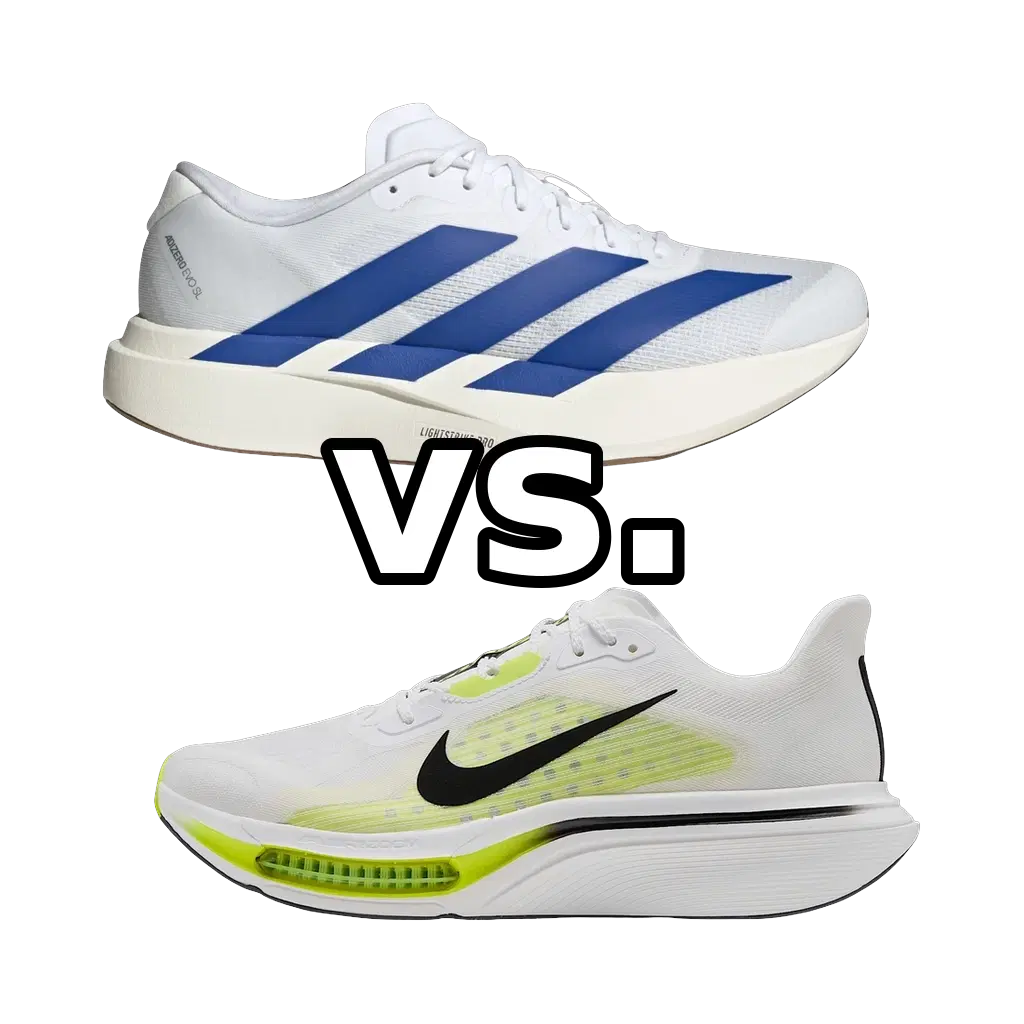
These are genuinely close shoes with the same mission, the same soft-but-tippy-at-slow-paces personality, and the same 5K-to-half wheelhouse — so the decision hinges on fit and feel, not capability. Go with the Adidas Adizero Evo SL for a lower 6mm drop, lighter weight, and a pure foam-driven ride; go with the Nike Pegasus Plus 2 for a higher 10mm drop and the added rocker-and-Air pop at toe-off. Pick the drop and transition style that matches how you run, and you won't go wrong either way.
Pace
5 of 6
Cushioning
5 of 6
Responsiveness
5 of 6
Stability
3 of 6
Drop
6 mm
Support
Neutral
Plate
None
Distances
5K10KHalf
Pace
5 of 6
Cushioning
5 of 6
Responsiveness
5 of 6
Stability
3 of 6
Drop
10 mm
Support
Neutral
Plate
None
Distances
5K10KHalf
At a Glance
Adidas Adizero Evo SLNike Pegasus Plus 2
Who Should Choose Each Shoe
Choose
Adidas Adizero Evo SL
Choose the Evo SL if you're a midfoot or forefoot striker who prefers a low-drop, lightweight shoe and wants speed to come from the foam itself rather than a rocker or an Air unit. It's the better pick for runners chasing the sharpest tempo and interval sessions and racing the shorter end of the 5K-to-half range, especially if you like the connected, close-to-the-ground feel of a 6mm drop and want the lightest shoe underfoot. Runners already comfortable in low-drop speed trainers will feel at home immediately.
Choose
Nike Pegasus Plus 2
Choose the Pegasus Plus 2 if you're a heel or midfoot striker who likes a traditional 10mm drop and wants that extra forefoot snap from the Air Zoom unit and rocker to roll you through toe-off. It's the natural fit for runners coming from mainstream daily trainers who want a faster, livelier shoe for up-tempo daily miles, intervals, and half-marathon efforts without dropping all the way to a low-offset racer. The mild rocker and heel-forward geometry make it the more familiar, easier transition for most everyday runners.
Head-to-Head
Start with the specs, because that's where the daylight is. The Evo SL runs a 6mm drop on a 39mm heel / 33mm forefoot stack and weighs about 224g in a men's US 9; the Pegasus Plus 2 runs a steeper 10mm drop on a 38mm heel / 28mm forefoot stack and weighs roughly 252g in the same size. So the heels sit at virtually the same height, but the Nike ramps down far more aggressively toward the toe while the Adidas keeps more foam under the forefoot — and the Adidas is the noticeably lighter shoe of the two. That 6mm-versus-10mm gap is the headline: the Evo SL's lower offset nudges you toward a midfoot strike and a flatter, quicker roll, while the Pegasus Plus 2's traditional 10mm feel sits more comfortably under heel and midfoot strikers who want that heel-forward cushioning. Underfoot, both lean on soft, springy PEBA-class foam — full-length Lightstrike Pro in the Adidas, full-length ZoomX in the Nike — but they generate rebound differently. The Evo SL is pure foam: no plate, no insert, just the midsole doing the work, which gives a clean, natural, foam-driven bounce that rewards a purposeful footstrike. The Pegasus Plus 2 layers an exposed forefoot Air Zoom unit and a mild rocker on top of its ZoomX, so toe-off has a more mechanical, snappy "pop" and a rolling transition the Adidas doesn't replicate. Both share the same caveat — a tall, soft, neutral platform that feels a touch tippy and unsettled at slow jogging paces and only truly comes alive when you pick it up — so neither is a recovery-day cruiser. Their optimal zones overlap but tilt slightly: the Evo SL is dialed for roughly 3:45–4:30 min/km, the Pegasus Plus 2 for about 4:00–4:45 min/km, making the Adidas the marginally more aggressive, race-leaning of the two, though both hit their technical best around 3:45–4:00 min/km.
Similar Comparisons
Nike Pegasus Plus vs Nike Pegasus Plus 2

Adidas Adizero Evo SL vs Nike Structure 26

Adidas Adizero Evo SL vs Saucony Endorphin Speed 5

Adidas Adizero Evo SL vs Saucony Endorphin Azura

Adidas Adizero Evo SL vs Puma Deviate Pure Nitro

Adidas Adizero Evo SL vs Hoka Mach 7

Adidas Adizero Evo SL vs Adidas Adizero Adios 9
© 2026 longrunshoes.ai | All rights reserved.
Use of materials from this site is permitted only with proper attribution and a link to longrunshoes.ai.