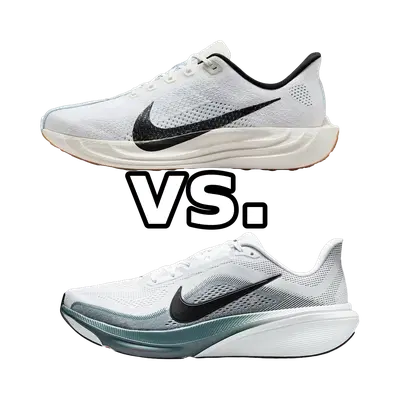
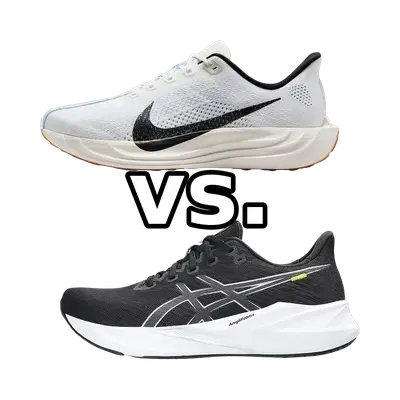
Nike Pegasus Plus vs Nike Pegasus Plus 2:
Which to Choose
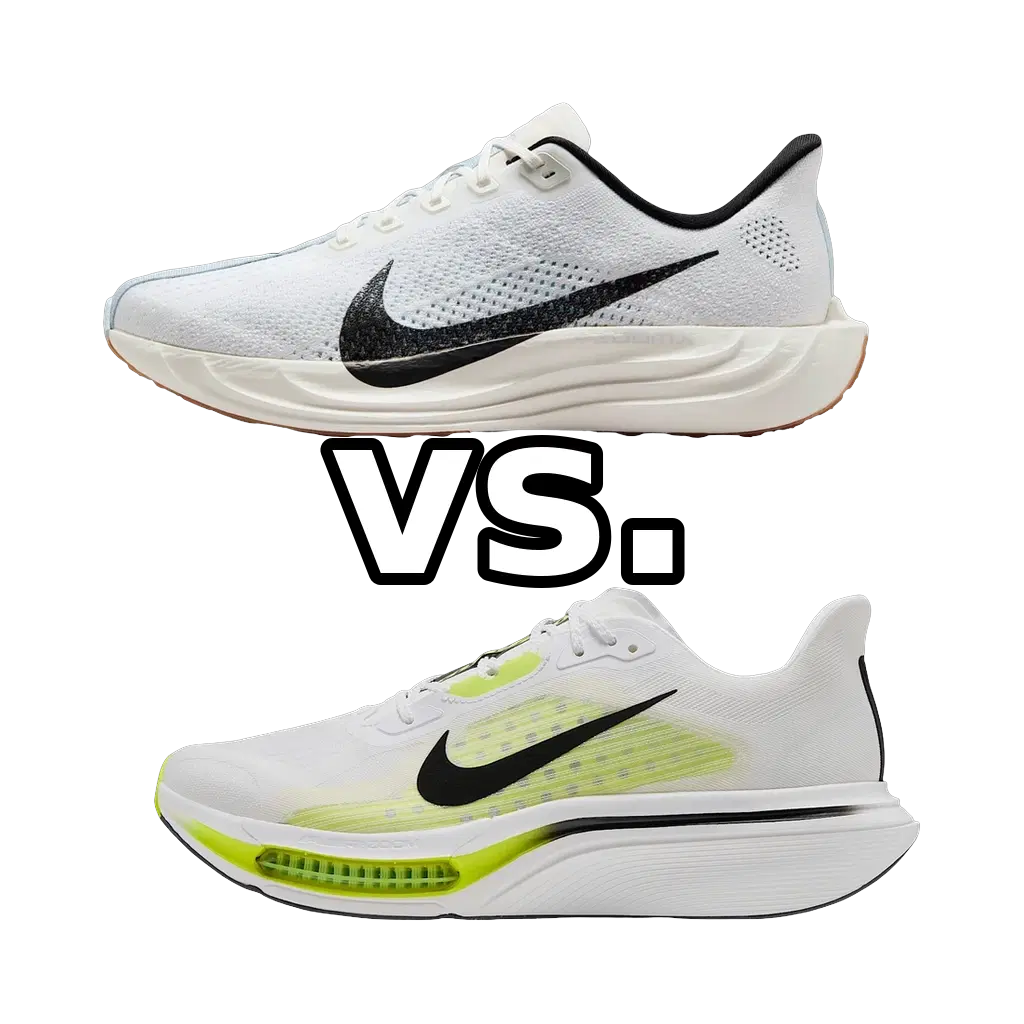
Verdict
If you already own and love the Pegasus Plus and your toebox and toe-off never bothered you, there's no urgent reason to upgrade — it's the same foam, drop, and category, and the original still rides fast and lively. Upgrade to the Plus 2 if you want the roomier forefoot, a bit more stack and protection, and the extra rockered, Air-assisted pop off the front at genuinely quick paces. New buyers with no attachment to version one should just get the Plus 2: it's the same shoe's best ideas, refined.
Pace
4 of 6
Cushioning
4 of 6
Responsiveness
5 of 6
Stability
3 of 6
Drop
10 mm
Support
Neutral
Plate
None
Distances
5K10KHalf
Pace
5 of 6
Cushioning
5 of 6
Responsiveness
5 of 6
Stability
3 of 6
Drop
10 mm
Support
Neutral
Plate
None
Distances
5K10KHalf
At a Glance
Nike Pegasus PlusNike Pegasus Plus 2
Who Should Choose Each Shoe
Choose
Nike Pegasus Plus
Choose the original Pegasus Plus if you prefer a lower, more natural ZoomX ride and don't want a rocker or a forefoot Air unit shaping your toe-off for you — it's the simpler, slightly lighter, more flexible-feeling of the two. It's a strong pick for the runner whose fastest efforts live around 4:15–4:45 min/km and who liked the first Plus's foam-forward character, or for anyone who found the roomier version-2 fit less locked-down than they wanted.
Choose
Nike Pegasus Plus 2
Choose the Pegasus Plus 2 if you're buying new, or if you're a Plus owner whose main gripes were a cramped forefoot or a toe-off that didn't feel quite punchy enough — the roomier fit, taller stack, rocker, and exposed Air Zoom unit directly target both. It's the better match for intermediate-to-experienced runners chasing turnover at genuinely fast paces (around 3:45–4:00 min/km at its best) across intervals, tempos, and 5K-to-half racing, where the rocker and Air unit snap through toe-off most efficiently.
Head-to-Head
Start with what's identical, because most of the shoe is: both run a full-length ZoomX midsole with no plate, both sit at a traditional 10mm drop, both are neutral with no pronation support, and both carry the same moderate-low stability — that tall, soft, fairly narrow platform feels a touch tippy at jogging speeds and comes alive when you push the pace. The meaningful changes are in the forefoot and the stack. The original Plus is the leaner, simpler ride: roughly 244g in a men's US 9 on a 35mm heel / 25mm forefoot stack, with pure ZoomX rebound and a natural, unforced toe-off. The Plus 2 grows the platform to 38mm / 28mm and comes in a touch heavier at about 252g, but spends that stack on two real upgrades — an exposed forefoot Air Zoom unit and a mild rocker — that together give a more pronounced, snappy push-off and a quicker rolling transition. That's reflected in the ratings: the Plus 2 edges ahead on both cushioning (5/6 vs 4/6) and pace (5/6 vs 4/6), and its optimal pace window shifts faster, roughly 4:00–4:45 min/km against the original's 4:30–5:15. The other practical fix is fit: the version-2 forefoot is noticeably roomier, addressing the snug toebox some runners found on the first Plus. Responsiveness is rated equal (5/6) on both, so this isn't a case of the old shoe feeling dead — the original still has genuine ZoomX bounce; the Plus 2 simply layers a more mechanical, rockered snap on top of it.

© 2026 longrunshoes.ai | All rights reserved.
Use of materials from this site is permitted only with proper attribution and a link to longrunshoes.ai.