Nike Pegasus Plus vs Asics Dynablast 5:
Which to Choose
Verdict
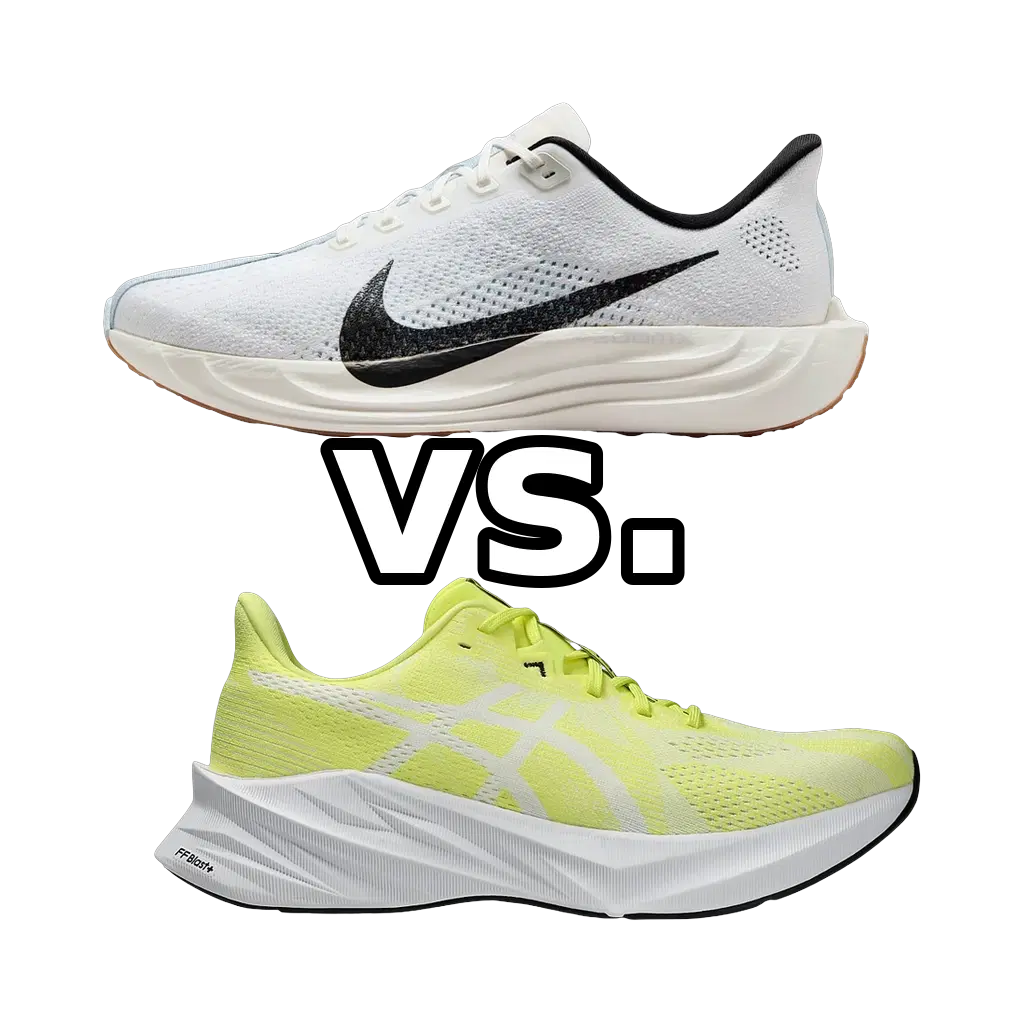
It genuinely depends on foam feel and how much shoe you want under you. Go Pegasus Plus for the lighter, lower, springier ZoomX ride with a higher drop and the sharper response at speed; go Dynablast 5 for the taller, firmer, more grounded FF Blast+ platform with a lower drop and more foam for the longer end of the tempo-and-half range. Both nail the same uptempo-trainer brief — the Nike leans fun and fast, the Asics leans protective and planted.
Pace
4 of 6
Cushioning
4 of 6
Responsiveness
5 of 6
Stability
3 of 6
Drop
10 mm
Support
Neutral
Plate
None
Distances
5K10KHalf
Pace
4 of 6
Cushioning
4 of 6
Responsiveness
4 of 6
Stability
3 of 6
Drop
8 mm
Support
Neutral
Plate
None
Distances
5K10KHalf
At a Glance
Nike Pegasus PlusAsics Dynablast 5
Who Should Choose Each Shoe
Choose
Nike Pegasus Plus
Choose the Pegasus Plus if responsiveness and low weight are your top priorities and you want the springiest ride of the two — a runner doing tempo work and 10K-to-half races who likes to feel the foam rebound when the pace drops. Its 10mm drop and PEBA ZoomX make it a natural fit for heel and midfoot strikers coming from traditional trainers who want that same geometry with far more pop. Just be comfortable with a softer, narrower, slightly less planted platform at easy paces — this shoe is happiest when you're pushing it.
Choose
Asics Dynablast 5
Choose the Dynablast 5 if you want more foam underfoot and a more grounded, controlled feel for your fast days — a runner who values that extra stack height for protection on longer tempo runs and half-marathon efforts, and who prefers a firmer EVA bounce over a soft superfoam. The lower 8mm drop favors those who like to roll through the midfoot and forefoot, and the firmer platform gives a clearer connection to the road for runners who find very soft shoes vague. It's the pick if you'd trade a little weight and snap for a touch more cushion and stability.
Head-to-Head
Both shoes share the same DNA on paper — neutral support, no plate, 5K-to-half focus, and matched 4/6 pace and cushioning ratings — but they get there with different hardware. The Pegasus Plus is the lighter of the two at about 244g versus roughly 264g for the Dynablast 5, and it rides on a lower platform: a heel stack near 33mm and forefoot around 24mm, against the Dynablast's taller 39.4mm heel and 31.8mm forefoot. So despite similar cushioning scores, the Asics actually carries more foam underfoot, which gives it a bit more protection and headroom for longer uptempo efforts, while the Nike sits closer to the road. The bigger divide is the foam itself: the Pegasus Plus uses full-length ZoomX, a PEBA-based superfoam that is soft and genuinely springy, earning its higher 5/6 responsiveness score and rewarding you the harder you run — the trade-off is that its soft, fairly narrow base can feel tippy and less planted at slow speeds. The Dynablast 5's FF Blast+ is an EVA-based blend that is lively but firmer and more controlled, so you keep a clearer sense of the ground; it scores 4/6 for responsiveness — bouncy, but not quite the rebound the ZoomX delivers at speed. Drop also splits them: the Pegasus Plus runs a traditional 10mm heel bias that suits heel and midfoot strikers, while the Dynablast's 8mm offset encourages more of a midfoot-to-forefoot roll. Their pace sweet spots overlap but the Nike's skews a touch quicker (optimal around 4:30–5:15/km) versus the Asics (around 4:45–5:30/km), and both start to feel thin past the half.
Similar Comparisons

Asics Novablast 5 vs Asics Dynablast 5

Nike Pegasus Plus vs Nike Vomero Plus

Asics Dynablast 5 vs Asics Dynablast 6
Nike Pegasus Plus vs Saucony Endorphin Speed 5
Asics Dynablast 5 vs Brooks Hyperion 3

Nike Pegasus Plus vs Nike Pegasus Plus 2
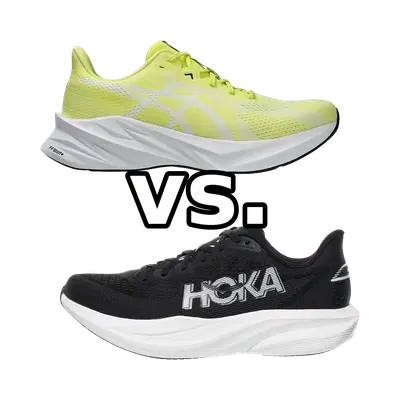
Asics Dynablast 5 vs Hoka Mach 7
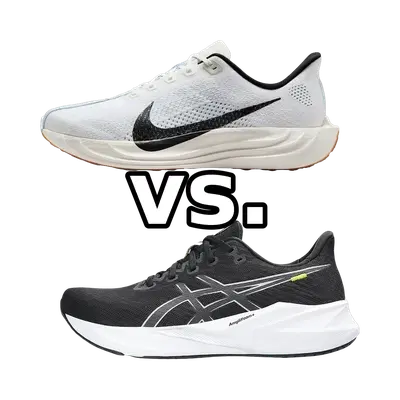
Nike Pegasus Plus vs Asics Versablast 4
© 2026 longrunshoes.ai | All rights reserved.
Use of materials from this site is permitted only with proper attribution and a link to longrunshoes.ai.