
Nike Pegasus Plus vs Asics Versablast 4:
Which to Choose
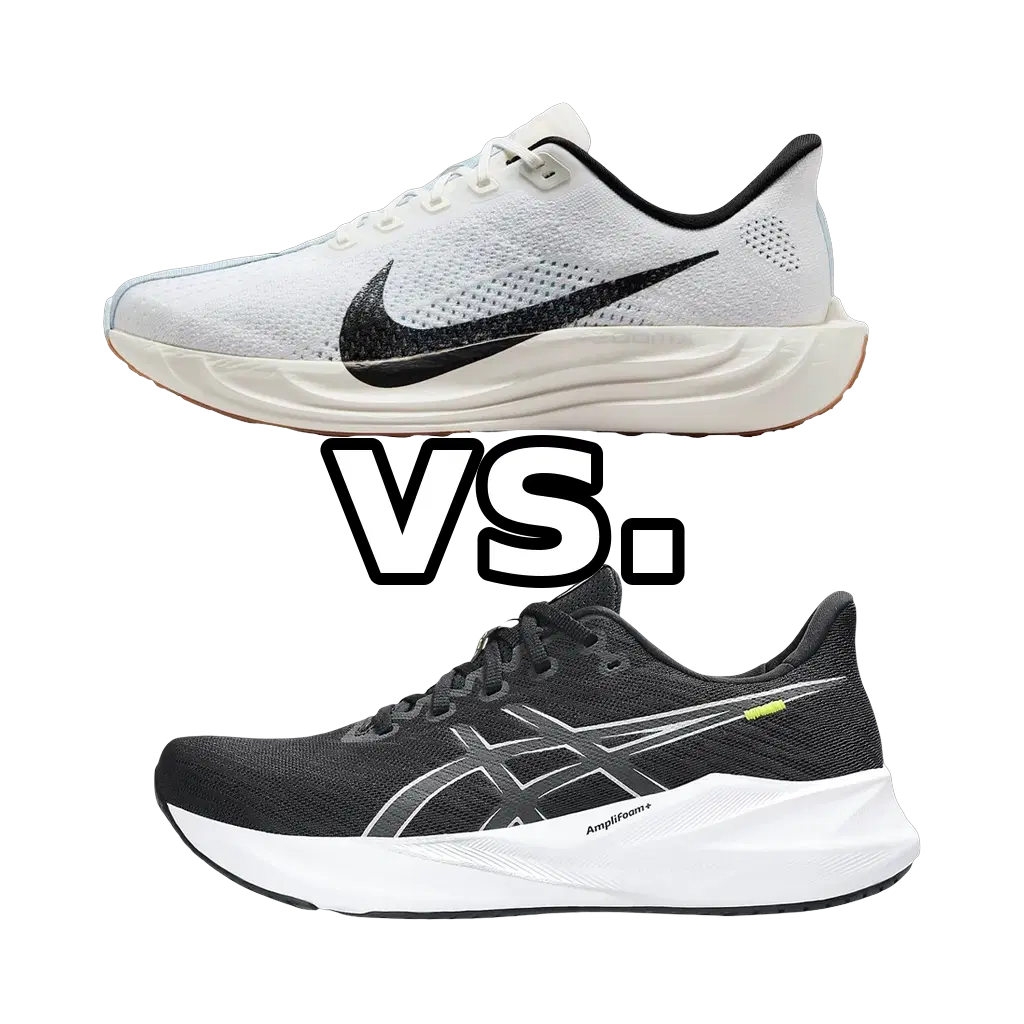
Verdict
It genuinely depends — but on ride character, not on which brand you like. Go Pegasus Plus for the lighter, softer, springier ride that rewards faster running; go Versablast 4 for the firmer, more planted, more versatile feel that holds up better across a full range of paces. If your weeks lean toward tempo and you chase that superfoam bounce, the Nike wins; if you want one grounded, steady trainer for everything from easy miles to the occasional 10K push, the Asics is the smarter call.
Pace
4 of 6
Cushioning
4 of 6
Responsiveness
5 of 6
Stability
3 of 6
Drop
10 mm
Support
Neutral
Plate
None
Distances
5K10KHalf
Pace
4 of 6
Cushioning
4 of 6
Responsiveness
5 of 6
Stability
3 of 6
Drop
8 mm
Support
Neutral
Plate
None
Distances
5K10KHalf
At a Glance
Nike Pegasus PlusAsics Versablast 4
Who Should Choose Each Shoe
Choose
Nike Pegasus Plus
Choose the Pegasus Plus if you want the lighter, livelier, more energetic ride and you spend most of your running time at tempo rather than recovery pace — it's the better pick for the neutral runner doing uptempo long runs, 10K efforts, and shorter road races who prizes a soft, springy PEBA bounce. The 10mm drop makes it a natural fit if you're a heel or midfoot striker coming from traditional Nike trainers, and at around 244g it's the shoe to grab when you want one pair that feels fast without needing a dedicated racer. Just know you're accepting a slightly tippier, less planted feel at slow speeds in exchange for that pop.
Choose
Asics Versablast 4
Choose the Versablast 4 if you value a firmer, more grounded, more consistent ride and want a true one-shoe quiver for brisk daily miles as well as faster work. Its slightly taller stack and firmer FF Blast+ foam give a stable, connected feel at moderate efforts that many recreational and intermediate runners will find more confidence-inspiring than the Pegasus's softer platform, and the 8mm drop is a touch more forgiving across different landing styles. It's the better bet if you run a wider mix of easy and uptempo paces and would rather have steadiness and ground feel than maximum softness, and the extra weight doesn't bother you.
Head-to-Head
On the numbers that matter, these shoes diverge more than their matching 4/6 cushioning and 5/6 responsiveness scores suggest. The Pegasus Plus is the lighter shoe at about 244g, built on a full-length ZoomX midsole — a PEBA-based superfoam that measures genuinely soft and delivers a springy, almost race-day rebound. The Versablast 4 is noticeably heavier at around 288g and rides on Asics' FF Blast+ foam, which lands firmer underfoot and trades some of that pillowy pop for a more planted, connected feel. Stack heights reinforce the split: the Pegasus sits lower at roughly 33mm heel / 23.6mm forefoot, while the Versablast is taller at 36.1mm / 26.7mm — so despite being the heavier shoe, the Asics actually gives you a hair more foam under the foot, just in a firmer compound. Drop is the other clean difference: the Pegasus runs a traditional 10mm heel bias that suits heel and midfoot strikers, while the Versablast's 8mm is slightly more versatile and encourages a touch more midfoot landing. In ride terms, the Pegasus feels softer, bouncier, and more rewarding the harder you run it, at the cost of feeling tippy and less grounded on a slow jog; the Versablast feels firmer and more stable at moderate efforts, keeps better ground contact, but doesn't have quite the same soft, lively bounce when you really lean in. Neither has a plate, both wear breathable engineered mesh uppers, and both are neutral shoes with no real pronation control — so this isn't a stability-versus-support decision, it's a soft-and-light versus firm-and-planted one.



© 2026 longrunshoes.ai | All rights reserved.
Use of materials from this site is permitted only with proper attribution and a link to longrunshoes.ai.