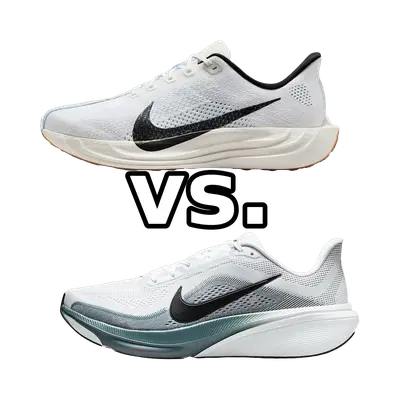
Nike Pegasus Plus vs Brooks Hyperion 3:
Which to Choose
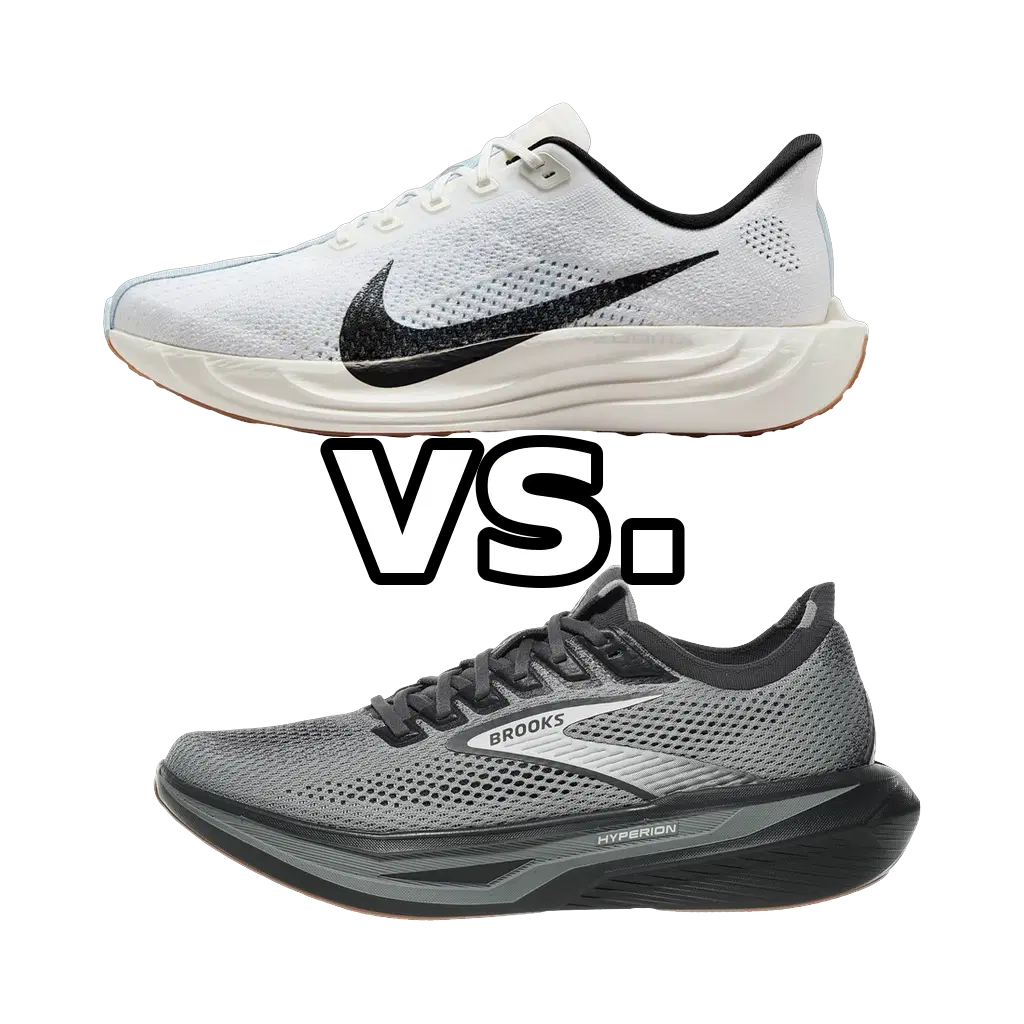
Verdict
These two are close enough that neither is a mistake for a lightweight 5K-to-half trainer — so decide on foam feel and drop, not pedigree. Go Pegasus Plus for a soft, springy, speed-loving ZoomX ride with a higher 10 mm drop; go Hyperion 3 for a firmer, crisper, more grounded ride that holds up better across varied paces at a lower 8 mm drop. If you still can't split them, try both on: the Nike runs on a narrower, softer, taller platform, so your preference for planted-and-firm versus soft-and-lively will settle it faster than any spec sheet.
Pace
4 of 6
Cushioning
4 of 6
Responsiveness
5 of 6
Stability
3 of 6
Drop
10 mm
Support
Neutral
Plate
None
Distances
5K10KHalf
Pace
4 of 6
Cushioning
4 of 6
Responsiveness
4 of 6
Stability
3 of 6
Drop
8 mm
Support
Neutral
Plate
None
Distances
5K10KHalf
At a Glance
Nike Pegasus PlusBrooks Hyperion 3
Who Should Choose Each Shoe
Choose
Nike Pegasus Plus
Choose the Pegasus Plus if you want the most energetic, bouncy ride of the two and you spend most of your miles at tempo or faster — the ZoomX foam genuinely earns its keep when you lean into a quicker cadence, and the 10 mm drop suits heel and midfoot strikers who like a traditional heel bias. It's the better pick for a neutral runner chasing fast 5K–10K efforts who prioritizes soft, springy rebound and doesn't mind a slightly tippy, less-planted feel at slow speeds.
Choose
Brooks Hyperion 3
Choose the Hyperion 3 if you want one shoe that stays composed and predictable across a wider mix of paces, from honest daily mileage to tempo work, and you prefer a firmer, more grounded, midfoot-friendly ride over a soft and bouncy one. Its lower 8 mm drop and crisp DNA Flash v2 reward a rolling stride, making it the stronger choice for improving runners who value a planted, controlled platform — just know the thin forefoot means you'll feel the road, so it's less forgiving on very long, slow, tired-leg efforts.
Head-to-Head
Start with the specs, because they're closer than the brand gap suggests. The Pegasus Plus weighs about 238 g in a men's US 9 on a 34 mm heel / 24 mm forefoot stack and a 10 mm drop; the Hyperion 3 comes in around 241–244 g on a 36 mm heel / 25 mm forefoot stack with Brooks' listed 8 mm drop. So weight is effectively a wash — both are true lightweight trainers — and the stack numbers are within a couple of millimeters, with the Hyperion carrying a hair more foam underfoot. The two real spec differences are drop (Nike's traditional 10 mm heel bias versus Brooks' lower 8 mm nominal offset, though the Hyperion's actual geometry runs higher than its label) and, more importantly, the foam itself. The Pegasus Plus runs a full-length slab of ZoomX, Nike's PEBA-based superfoam, which feels soft, bouncy, and lively — it stores and returns energy eagerly and is genuinely fun the harder you run it, but that tall, soft, fairly narrow platform can feel tippy and less grounded at easy shuffle paces. The Hyperion 3's DNA Flash v2 is a nitrogen-infused supercritical EVA that reads moderately firm rather than pillowy: it's snappy and quick, rewards a rolling midfoot strike, and stays honest and planted, but that thin 25 mm forefoot transmits noticeable ground feel and can turn harsh on tired legs or long, slow jogs. Both are neutral with no stability structure and no plate, so neither corrects overpronation, and both rely purely on foam rather than a plate for their pop. In short: same mission, same weight class, same best distances — the Pegasus is the softer, springier, more energetic ride that prefers speed, while the Hyperion is the firmer, crisper, more connected ride that feels more controlled across a wider range of paces.
Similar Comparisons
Brooks Hyperion 2 vs Brooks Hyperion 3
Nike Pegasus Plus vs Nike Vomero Plus
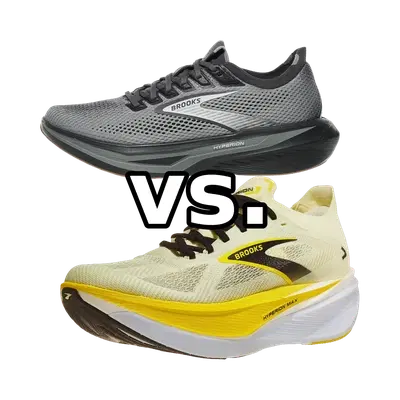
Brooks Hyperion 3 vs Brooks Hyperion Max 3
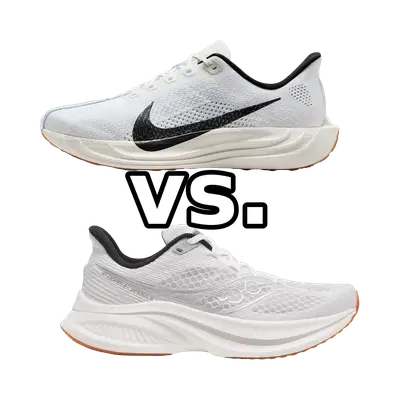
Nike Pegasus Plus vs Saucony Endorphin Speed 5
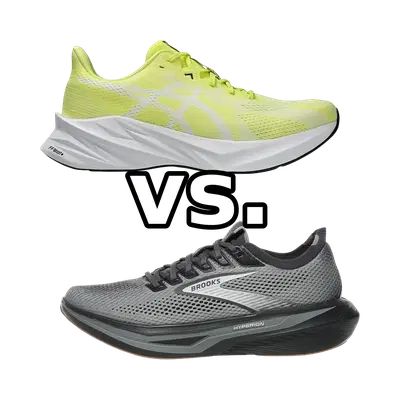
Asics Dynablast 5 vs Brooks Hyperion 3
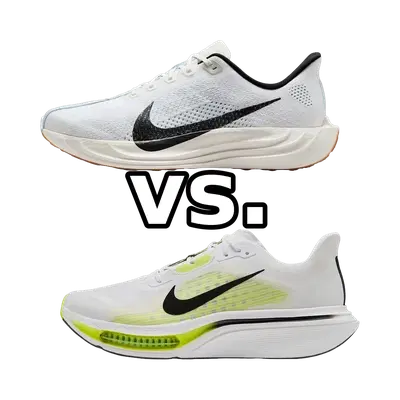
Nike Pegasus Plus vs Nike Pegasus Plus 2
Brooks Hyperion 3 vs Hoka Mach 7
Nike Pegasus Plus vs Asics Versablast 4
© 2026 longrunshoes.ai | All rights reserved.
Use of materials from this site is permitted only with proper attribution and a link to longrunshoes.ai.