
Nike Pegasus 42 vs Nike Structure 26:
Which to Choose
Verdict
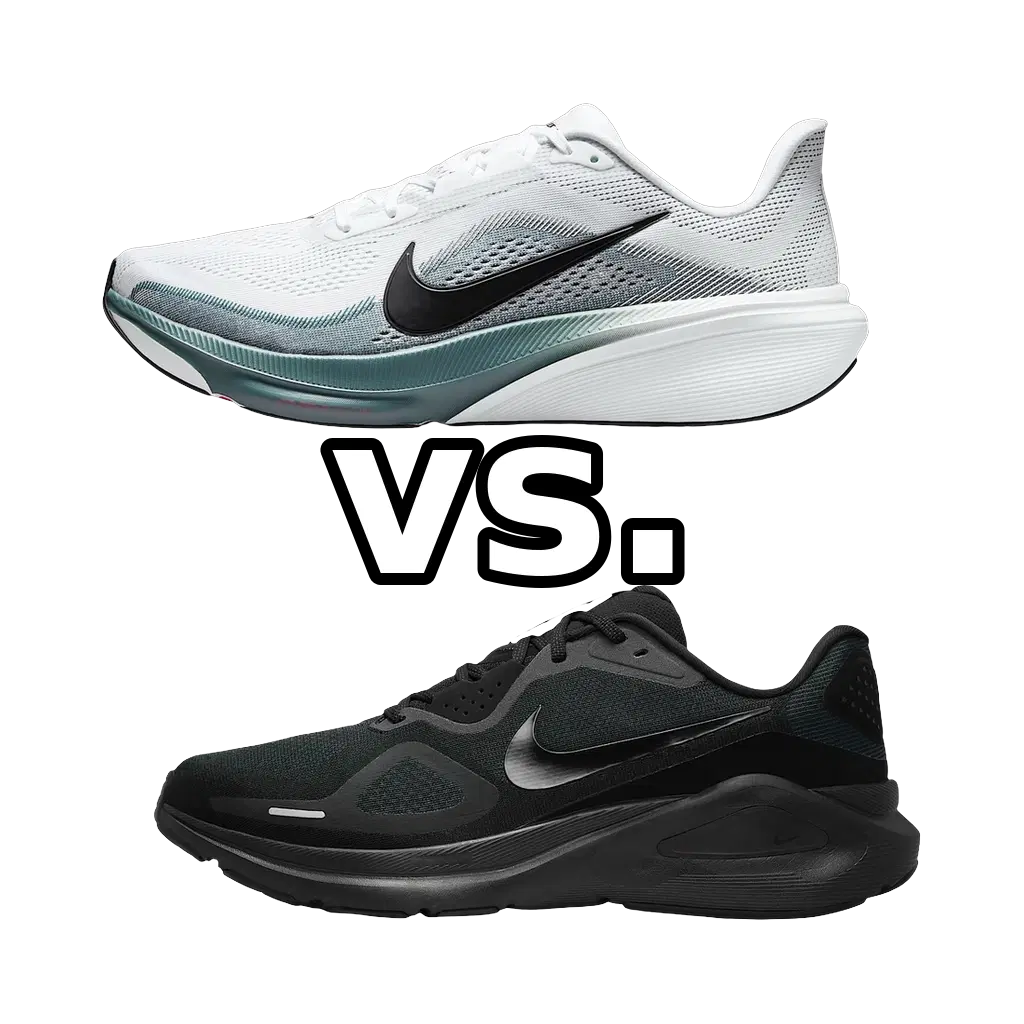
It comes down to your gait and what you want from the ride. If you run neutral and value versatility, a little more liveliness, and a slightly lighter shoe, the Pegasus 42 is the more flexible everyday choice. If you want guidance and a planted, controlled platform for steady mileage, the Structure 26 is purpose-built for exactly that — just don't expect either one to feel fast when you push the pace.
Pace
4 of 6
Cushioning
4 of 6
Responsiveness
4 of 6
Stability
4 of 6
Drop
10 mm
Support
Neutral
Plate
None
Distances
10KHalfMarathon
Pace
3 of 6
Cushioning
4 of 6
Responsiveness
4 of 6
Stability
5 of 6
Drop
10 mm
Support
Stability
Plate
None
Distances
10KHalfMarathon
At a Glance
Nike Pegasus 42Nike Structure 26
Who Should Choose Each Shoe
Choose
Nike Pegasus 42
Choose the Pegasus 42 if you're a neutral runner who wants a single trainer to handle easy days, steady runs, long runs, and the occasional faster effort without thinking twice. It's the better pick for beginners who don't know their gait yet, for runners who don't need pronation correction, and for anyone who wants that slightly livelier Air Zoom feel and a bit more speed range from a daily workhorse.
Choose
Nike Structure 26
Choose the Structure 26 if you're a mild overpronator or a heel striker who wants your foot guided and held on line through long training miles. It's for runners who prioritize a planted, secure, controlled feel over any sense of pop or quickness — if you've found neutral shoes let your ankles roll in or you simply run steadier and more comfortably with support underfoot, the guide rails here do that job without feeling corrective or stiff.
Head-to-Head
On paper these two are close: identical 10mm drops, near-identical stack heights (the Pegasus at 37/27mm heel/forefoot, the Structure at 38/28mm), and the same full-length ReactX midsole giving both a firm, composed, settled ride rather than a plush or bouncy one. The two meaningful differences are support and liveliness. The Pegasus is a neutral shoe with no pronation hardware, and it adds a full-length curved Air Zoom air unit that injects a subtle hint of energy when you lift the pace — it's grounded, but it has a touch more life and a slightly broader speed range, working comfortably down to about 4:30–4:45 min/km. The Structure is a true stability trainer: it drops the air unit in favor of ReactX foam alone and adds dual guide rails that quietly correct wobble without the harshness of a rigid medial post, so the ride feels more planted and controlled but also more one-paced, happiest in the 4:45–5:15 min/km training zone. Weight tilts toward the Pegasus too, 286g versus 298g in a men's US 9 — not a huge gap, but you feel the Structure's extra mass and firmer, guidance-first character when you try to accelerate. Both are honest about being trainers, not racers; neither has a plate and neither rewards hard surges.
Similar Comparisons

Nike Structure 25 vs Nike Structure 26
Brooks Ghost 17 vs Nike Pegasus 42

Adidas Adizero Evo SL vs Nike Structure 26

Hoka Clifton 10 vs Nike Pegasus 42

Nike Structure 26 vs Nike Structure Plus
Asics Novablast 6 vs Nike Pegasus 42

Puma ForeverRun Nitro 2 vs Nike Structure 26
Nike Pegasus Premium vs Nike Pegasus 42
© 2026 longrunshoes.ai | All rights reserved.
Use of materials from this site is permitted only with proper attribution and a link to longrunshoes.ai.