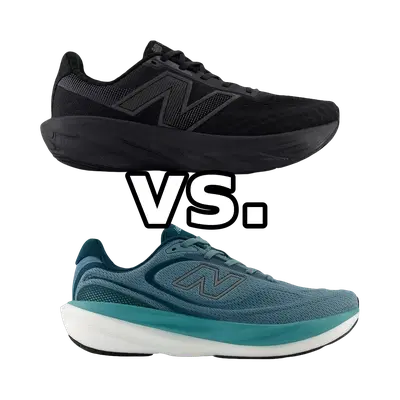
New Balance Fresh Foam X 1080v14 vs Hoka Bondi 9:
Which to Choose
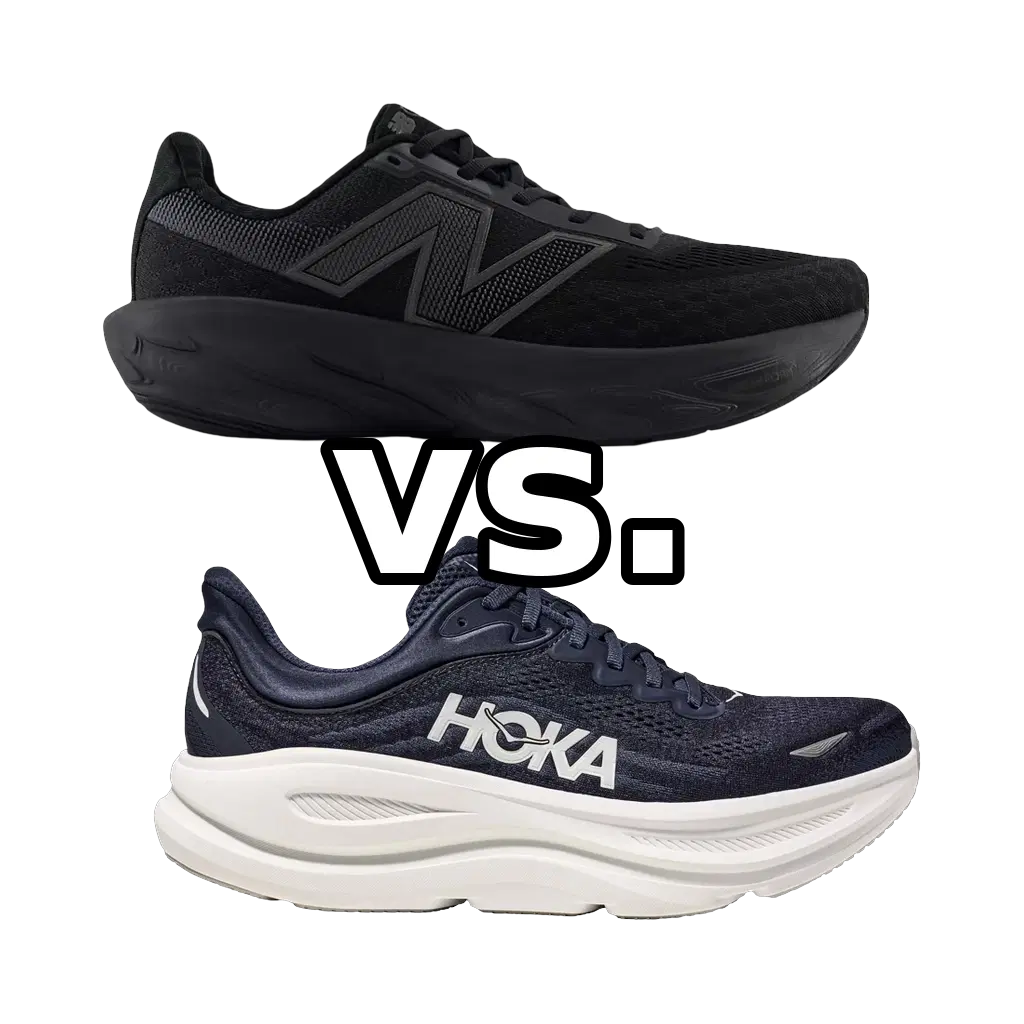
Verdict
It comes down to range versus raw cushion, not weight, since the two are nearly identical on the scale. If you want one shoe that does easy days and long runs but can also handle steadier efforts and the marathon, take the 1080v14. If you want the softest, tallest, most stable landing possible for recovery and slow aerobic miles and don't care about pace at all, the Bondi 9 is the more specialized tool.
Pace
3 of 6
Cushioning
5 of 6
Responsiveness
3 of 6
Stability
4 of 6
Drop
6 mm
Support
Neutral
Plate
None
Distances
10KHalfMarathon
Pace
2 of 6
Cushioning
6 of 6
Responsiveness
3 of 6
Stability
5 of 6
Drop
5 mm
Support
Stable Neutral
Plate
None
Distances
10KHalf
At a Glance
New Balance Fresh Foam X 1080v14Hoka Bondi 9
Who Should Choose Each Shoe
Choose
New Balance Fresh Foam X 1080v14
Choose the Fresh Foam X 1080v14 if you want one plush daily trainer that can stretch from easy miles up through steady long runs and marathon-pace work without feeling out of its depth. It's the better pick for neutral runners who log varied mileage, want cushioning that still keeps up when they occasionally push the pace, and prefer a slightly lower, marginally more responsive ride over maximum stack height.
Choose
Hoka Bondi 9
Choose the Bondi 9 if protection and a planted, stable landing are the whole point — recovery days, long slow distance, and standing-around comfort. It's the stronger option for heavier runners, those building volume who want the most forgiving, sidewall-supported platform available, and anyone whose legs simply want to be cushioned rather than asked to turn over quickly; just don't expect it to come alive when you speed up.
Head-to-Head
Start with the surprise: these shoes weigh almost exactly the same, about 298g for the 1080v14 and 297g for the Bondi 9 in a men's sample, so weight is not the deciding factor many assume it is. Where they genuinely diverge is geometry and intent. The Bondi 9 is the more extreme cushion shoe, riding on a 43mm heel / 38mm forefoot stack of supercritical EVA, versus the 1080v14's lower 38mm heel / 32mm forefoot of Fresh Foam X — that's a noticeably taller, more protective platform under the Hoka. Drops are close (5mm Bondi, 6mm 1080), so transitions feel similar in that respect, but the Bondi leans harder into "plush and planted": a wider, sidewall-supported base and a pronounced forward rocker give it a stable-neutral, roll-you-along feel that's steadier underfoot, while the 1080v14 is a touch livelier and more responsive despite its own soft, forgiving ride. The clearest practical split is pace range. The 1080v14 stays composed into steadier efforts — its sweet spot runs through the 4:45–5:30 min/km range and it genuinely holds up over the full marathon — whereas the Bondi 9 is happiest at relaxed aerobic paces around 5:45–6:45 min/km and starts to feel heavy and dead much past 5:30, which is why its best distances cap at easy 10K and half-marathon-length long runs. Neither has a plate, both prioritize comfort over snap, and both will feel vague if you try to race them.
Similar Comparisons
Hoka Bondi 9 vs Nike Vomero Plus
New Balance Fresh Foam X 1080v14 vs Mizuno Wave Serene
Hoka Bondi 9 vs Asics Gel-Nimbus 28
New Balance Fresh Foam X 1080v14 vs Hoka Clifton 10
Hoka Bondi 9 vs Saucony Paramount Max
New Balance Fresh Foam X 1080v14 vs Brooks Glycerin 23
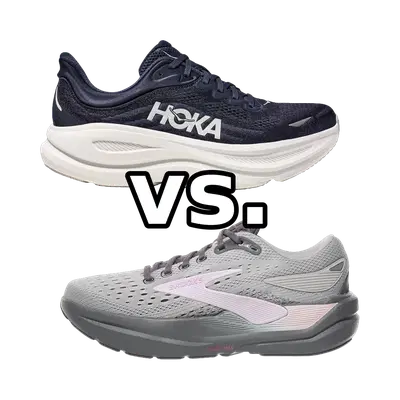
Hoka Bondi 9 vs Brooks Ghost Max 3
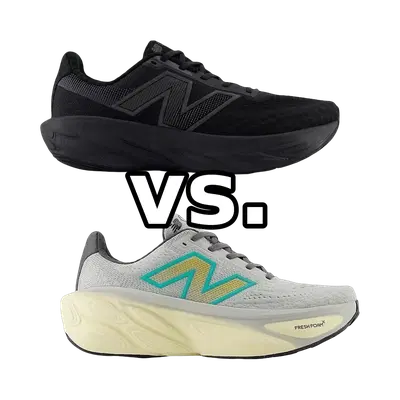
New Balance Fresh Foam X 1080v14 vs New Balance Foam X More v5
© 2026 longrunshoes.ai | All rights reserved.
Use of materials from this site is permitted only with proper attribution and a link to longrunshoes.ai.