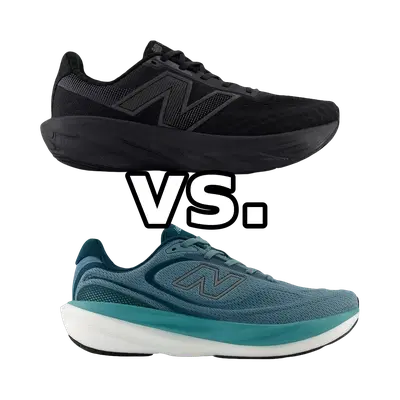
New Balance Fresh Foam X 1080v14 vs New Balance Foam X More v5:
Which to Choose
Verdict
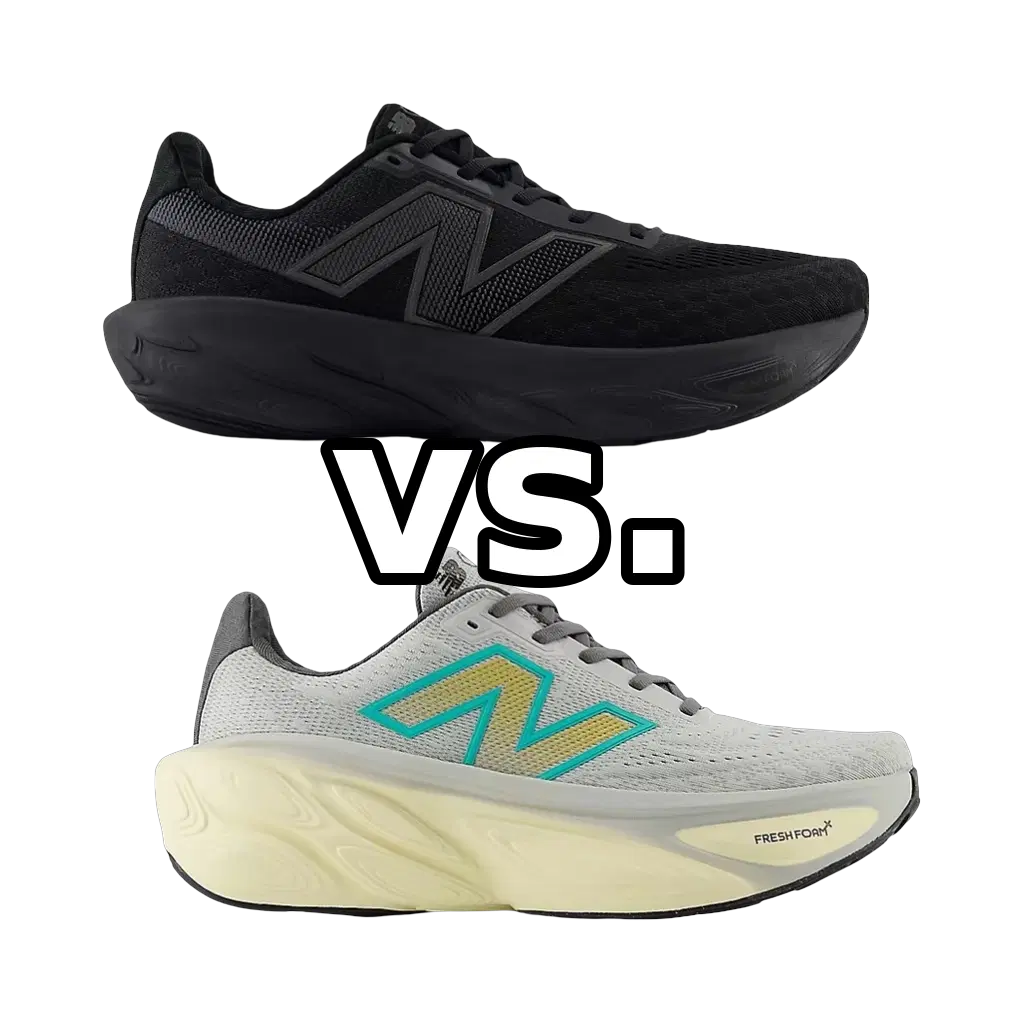
It genuinely depends — but on a clear axis, not a coin flip. Go with the 1080v14 as the more versatile, slightly lighter all-rounder that handles 10K to marathon and adapts across paces; go with the More v5 when you want the most cushioning New Balance offers and your running is squarely slow, long, and protection-first. If you only run one kind of mile, the More v5's maximal stack wins for pure long-run comfort; if you want range from a single pair, the 1080v14 is the smarter buy.
Pace
3 of 6
Cushioning
5 of 6
Responsiveness
3 of 6
Stability
4 of 6
Drop
6 mm
Support
Neutral
Plate
None
Distances
10KHalfMarathon
Pace
3 of 6
Cushioning
6 of 6
Responsiveness
3 of 6
Stability
4 of 6
Drop
4 mm
Support
Neutral
Plate
None
Distances
HalfMarathon
At a Glance
New Balance Fresh Foam X 1080v14New Balance Foam X More v5
Who Should Choose Each Shoe
Choose
New Balance Fresh Foam X 1080v14
Choose the 1080v14 if you want one shoe that does nearly everything — steady daily miles, long runs, and the occasional faster 10K or half effort — without feeling like a dedicated recovery slipper. Its lower, lighter, 6mm-drop build suits both beginners building mileage and experienced neutral runners who want plush comfort that still transitions willingly when they decide to pick it up. It's the pick when versatility across distances and paces matters more than absolute maximum cushioning.
Choose
New Balance Foam X More v5
Choose the More v5 if your priority is maximum protection for long, easy kilometers and marathon training, especially on recovery days or when your legs need every bit of impact absorption they can get. Its taller stack and lower 4mm drop favor runners who settle into a sustainable long-run rhythm rather than chasing pace, and who prefer a deeply cushioned, grounded platform over nimbleness. If your typical effort sits in the 5:00–6:30 min/km range and you value softness above all, this is the one.
Head-to-Head
These two are more alike than most cross-model comparisons: same brand, same Fresh Foam X compound, both neutral, both plateless, and both scoring identically for pace, responsiveness, and stability. The honest headline is that neither is springy — both cushion more than they propel, reward a steady rhythm, and go vague if you try to sharpen the pace. The real separation is stack and geometry. The 1080v14 sits on a roughly 38mm heel / 32mm forefoot platform with a 6mm drop and weighs about 298g (10.5 oz), giving it a cushioned-but-still-manageable feel with smooth, unhurried transitions. The More v5 piles on considerably more foam — about 44mm heel / 40mm forefoot — drops the offset to 4mm, and weighs roughly 312g (11 oz), making it one of the plushest, most protective rides New Balance builds. That extra stack is the whole point: the More v5 isolates you from the road better on long efforts, but the taller platform and lower drop give it a more grounded, midfoot-leaning stride that can feel slightly ponderous at very slow shuffling paces, while the lower, lighter 1080 stays more adaptable across paces and strike patterns. Use case follows directly: the 1080's effective range reaches a bit quicker (down to around 4:45 min/km) and it genuinely covers 10K through the marathon, whereas the More v5's comfort zone is slower and squarely long-run and marathon territory, where maximum protection outweighs any desire for snap.
Similar Comparisons
New Balance Foam X More v5 vs Mizuno Wave Sky 9
New Balance Fresh Foam X 1080v14 vs Mizuno Wave Serene
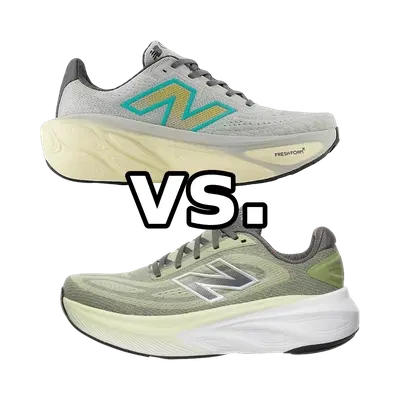
New Balance Foam X More v5 vs New Balance Foam X More v6
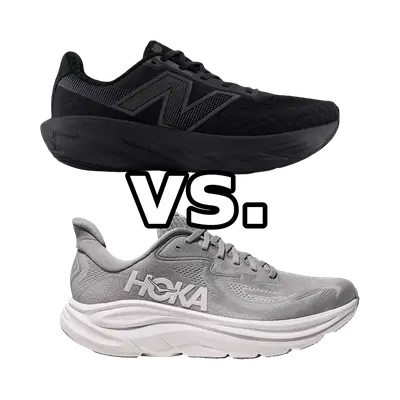
New Balance Fresh Foam X 1080v14 vs Hoka Clifton 10
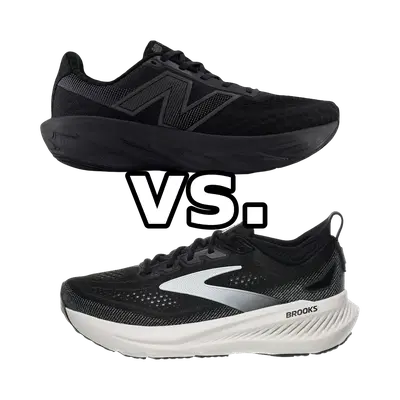
New Balance Fresh Foam X 1080v14 vs Brooks Glycerin 23
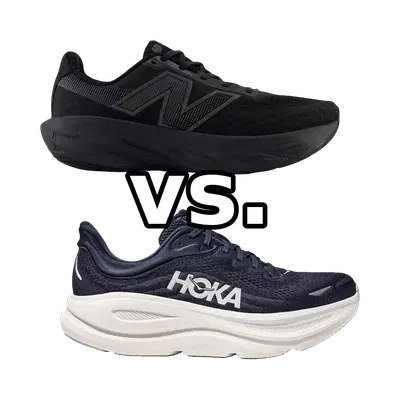
New Balance Fresh Foam X 1080v14 vs Hoka Bondi 9
© 2026 longrunshoes.ai | All rights reserved.
Use of materials from this site is permitted only with proper attribution and a link to longrunshoes.ai.