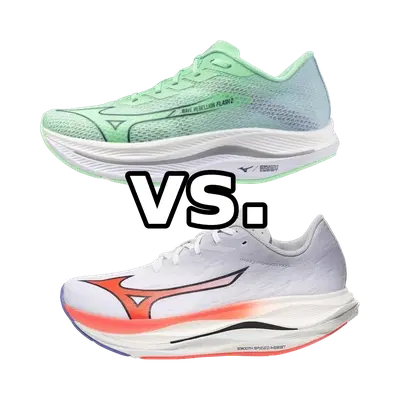
Mizuno Wave Rebellion Flash 3 vs New Balance FuelCell SuperComp Rebel:
Which to Choose
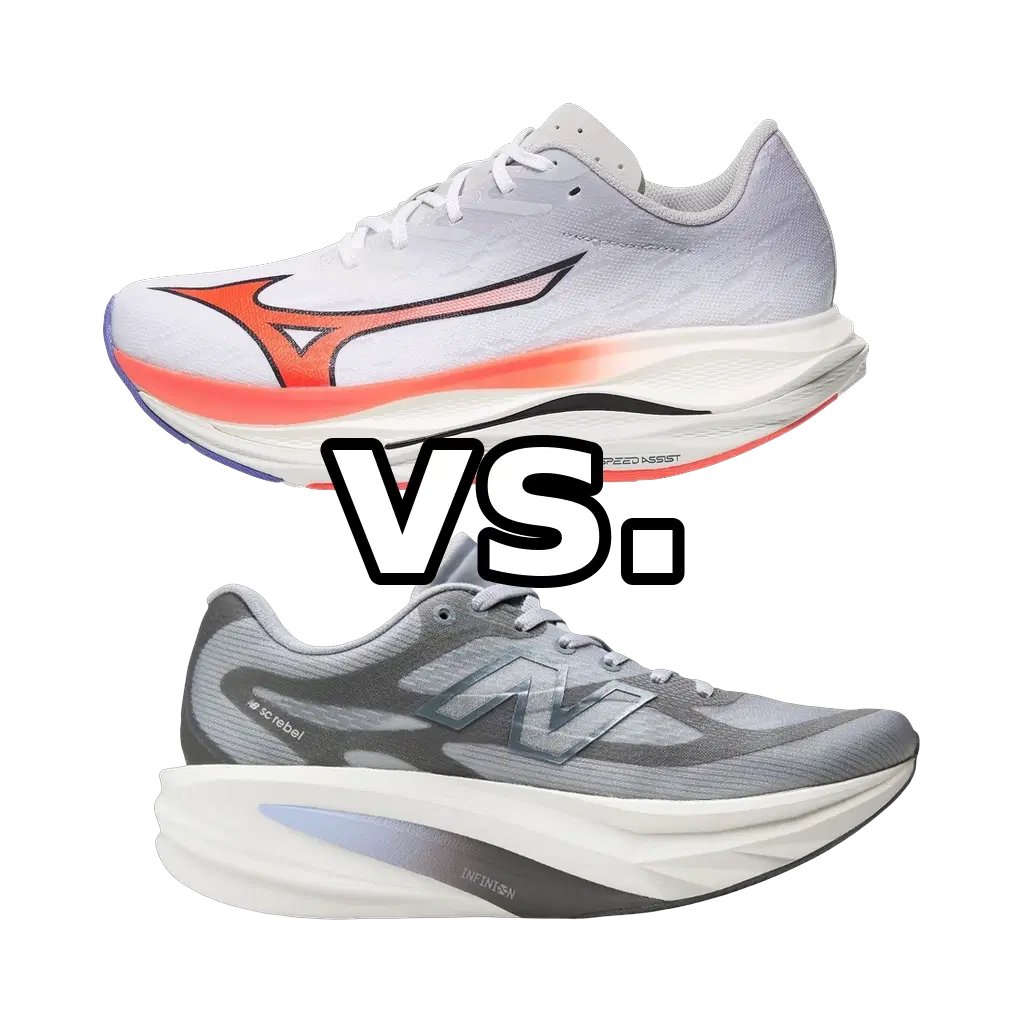
Verdict
These are genuinely close relatives, so pick by geometry and intended distance, not by a feature gap. Go with the Mizuno if you want a half-marathon-leaning shoe with a steeper 7mm drop and an aggressive rockered, plate-driven snap; go with the New Balance if you want the lighter, lower, 4mm super-trainer that races just as happily at 5K as at the half. Both are tempo-and-race tools for forefoot-oriented runners — neither is the choice for easy recovery miles or anyone needing pronation support.
Pace
5 of 6
Cushioning
5 of 6
Responsiveness
5 of 6
Stability
3 of 6
Drop
7 mm
Support
Neutral
Plate
Composite
Distances
10KHalf
Pace
5 of 6
Cushioning
5 of 6
Responsiveness
5 of 6
Stability
3 of 6
Drop
4 mm
Support
Neutral
Plate
Composite
Distances
5K10KHalf
At a Glance
Mizuno Wave Rebellion Flash 3New Balance FuelCell SuperComp Rebel
Who Should Choose Each Shoe
Choose
Mizuno Wave Rebellion Flash 3
Choose the Mizuno Wave Rebellion Flash 3 if the half marathon is your target distance and you want a shoe that actively pitches you forward — a committed midfoot/forefoot runner who likes a pronounced rocker and a firmer, more directed snap at tempo and race pace. The 7mm drop and aggressive heel geometry suit runners who want the shoe to do some of the driving for them over 10K-to-half efforts, and who don't mind a slightly heavier, warmer shoe in exchange for that sculpted ride.
Choose
New Balance FuelCell SuperComp Rebel
Choose the New Balance FuelCell SuperComp Rebel if you want the lighter, more versatile super-trainer and your racing spans from 5K up to the half. Its low 4mm drop and 207g weight reward efficient, confident forefoot runners who prefer a soft, bouncy foam ride with a gentle propulsive kick over an aggressive rocker, and who value a shoe that stays sharp at the shorter, faster end where the Mizuno starts to feel like too much shoe.
Head-to-Head
On paper these shoes are near-twins — identical pace, cushioning, responsiveness, and stability ratings, both neutral, both with a tall, lively platform that feels slightly tippy at a jog and only settles once you press the pace. The real differences are geometry and weight. The Rebel is the lighter and lower shoe: 207g in a men's US 9 against the Mizuno's 244g, with a low 4mm drop that sits you near-level and nudges you onto the midfoot or forefoot. The Flash 3 runs a steeper 7mm drop and leans harder on geometry for propulsion — its aggressive rockered heel bevel almost tips you into the next stride at tempo, a more sculpted, forward-pitched ride than the Rebel's flatter stance. Underfoot, Mizuno layers Enerzy XP (TPEE) over an Enerzy NXT EVA base with a glass-fiber-reinforced nylon Wave plate running the length of the shoe, while New Balance uses supercritical Infinion (A-TPU) — the same compound as its SC Elite racer — with only a partial carbon-infused plate under the forefoot for a gentler toe-off kick. That plate difference shows up in the ride: the Mizuno's full Wave plate and rocker give a snappier, more aggressive, more directed transition, whereas the Rebel feels more like a soft, bouncy foam ride with a propulsive nudge rather than a hard snap. Their distance range differs too — both shine at 10K and the half (the half is the Mizuno's sweet spot, 10K the Rebel's), but the lighter, lower Rebel also stays composed at 5K, where the Flash 3 isn't really aimed.
Similar Comparisons

Hoka Mach X 2 vs New Balance FuelCell SuperComp Rebel
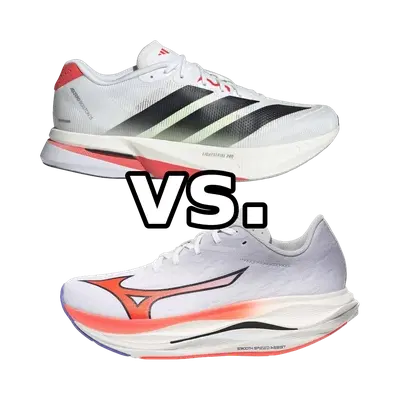
Adidas Adizero Boston 13 vs Mizuno Wave Rebellion Flash 3
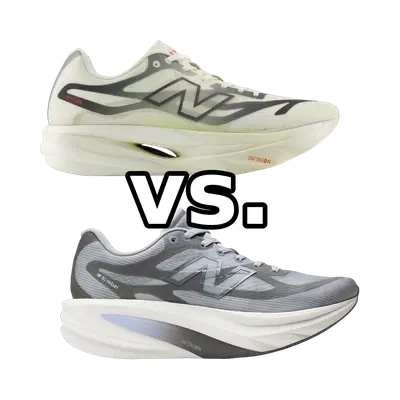
New Balance FuelCell SuperComp Elite v6 vs New Balance FuelCell SuperComp Rebel
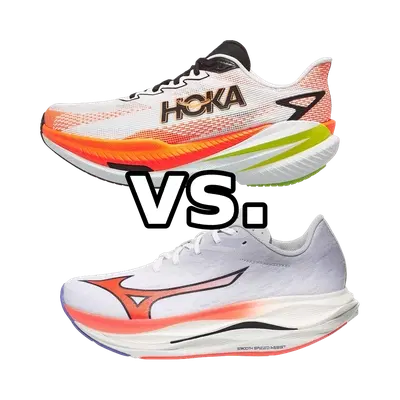
Hoka Mach X 3 vs Mizuno Wave Rebellion Flash 3
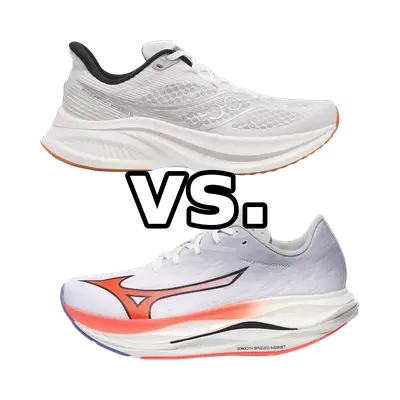
Saucony Endorphin Speed 5 vs Mizuno Wave Rebellion Flash 3
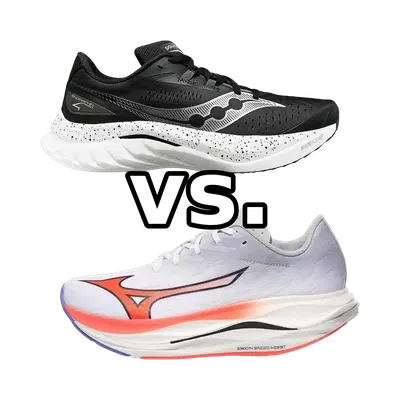
Saucony Endorphin Speed 4 vs Mizuno Wave Rebellion Flash 3
© 2026 longrunshoes.ai | All rights reserved.
Use of materials from this site is permitted only with proper attribution and a link to longrunshoes.ai.