
Adidas Adizero Boston 13 vs Mizuno Wave Rebellion Flash 3:
Which to Choose
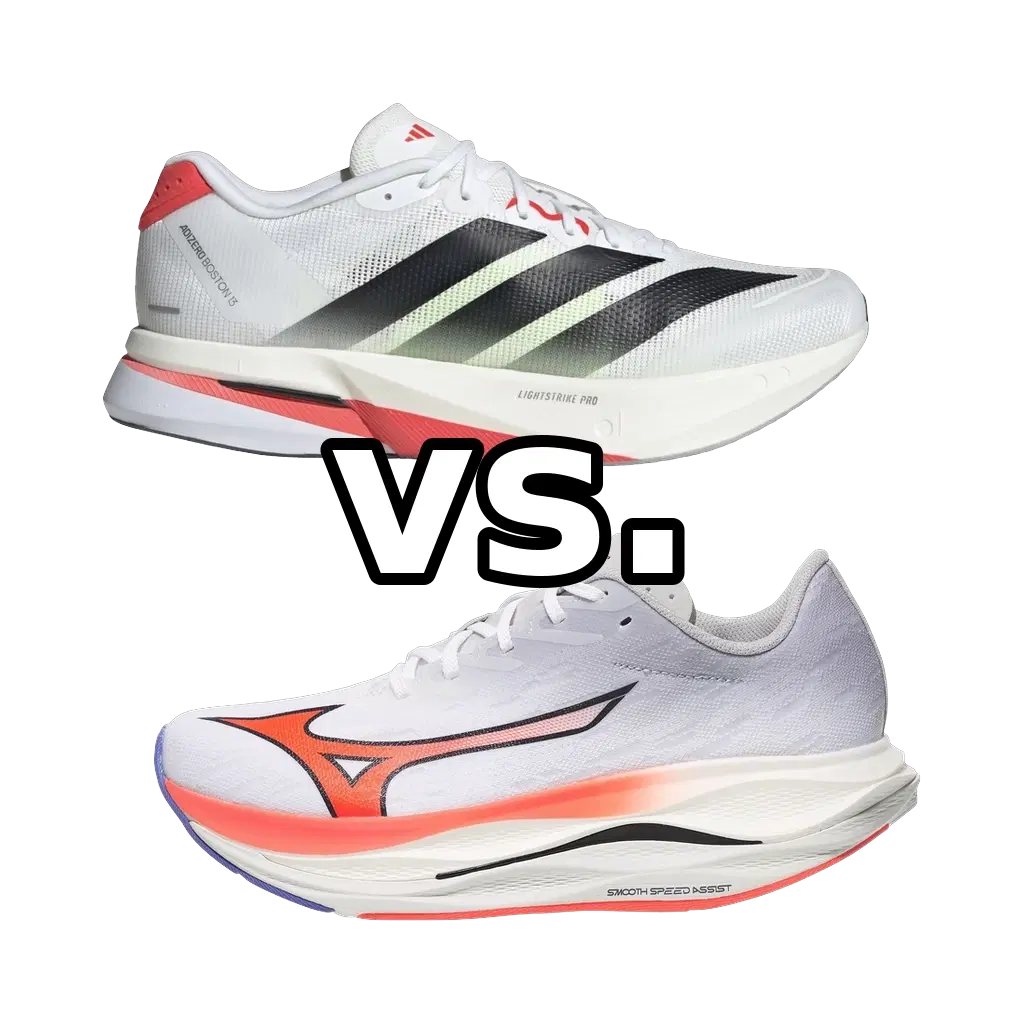
Verdict
It depends on your range and your footstrike. The Boston 13 is the more versatile, more stable choice and the one to buy if you want a single shoe that covers everything up to the marathon. The Flash 3 is the more specialized speed tool — pick it only if you're a committed midfoot/forefoot striker who wants its aggressive rocker for 10K-to-half efforts and won't be leaning on it for slow long runs, where its tall, tippy platform works against you.
Pace
5 of 6
Cushioning
5 of 6
Responsiveness
5 of 6
Stability
4 of 6
Drop
6 mm
Support
Neutral
Plate
Composite
Distances
10KHalfMarathon
Pace
5 of 6
Cushioning
5 of 6
Responsiveness
5 of 6
Stability
3 of 6
Drop
7 mm
Support
Neutral
Plate
Composite
Distances
10KHalf
At a Glance
Adidas Adizero Boston 13Mizuno Wave Rebellion Flash 3
Who Should Choose Each Shoe
Choose
Adidas Adizero Boston 13
Choose the Boston 13 if you want one versatile shoe that handles tempo days, marathon-pace long runs, and race day across the full 10K-to-marathon range. It's the safer pick for runners who value a steadier, more planted platform — including those who aren't strictly midfoot strikers — and who want cushioning that can protect them deep into a marathon without going mushy. If your training rotates between fast workouts and long efforts and you don't want to think about whether the shoe can go the distance, this is the more forgiving, do-everything option.
Choose
Mizuno Wave Rebellion Flash 3
Choose the Wave Rebellion Flash 3 if you're a confident midfoot or forefoot striker who wants a snappier, more aggressive rocker that actively throws you forward at tempo and interval effort. Its taller 40mm heel stack and pronounced heel bevel reward a purposeful, forward-leaning style over 10K and half-marathon distances, and it's marginally lighter on the foot. It's the better match for a runner who prioritizes that tipping-point rocker sensation and race-day snap over long-run versatility and low-speed stability.
Head-to-Head
On paper these two look like twins: pace 5/6, cushioning 5/6, responsiveness 5/6, neutral support, and a composite plate driving each ride. But the construction and geometry pull them in different directions. The Boston 13 pairs a PEBA-class Lightstrike Pro top layer with a firmer Lightstrike 2.0 carrier and glass-fiber EnergyRods, giving a planted, roll-forward transition; the Flash 3 layers Enerzy XP (a TPEE super-foam) over an Enerzy NXT EVA base with a glass-fiber-reinforced nylon Wave plate, and leans hard on an aggressive rockered heel bevel that almost tips you into the next stride once you're at tempo. Weight is close, with the Flash 3 slightly lighter at 244g (men's US 9) versus roughly 255g for the Boston, and drop is nearly identical — 6mm for the Boston, 7mm for the Flash 3. The clearest divergence is stability: the Boston rates 4/6 thanks to a moderately wide base and firm bottom layer, while the Flash 3 sits at 3/6, its tall 40mm heel stack and exaggerated rocker geometry making it feel slightly tippy and unsettled at jogging pace and strongly favoring midfoot and forefoot strikers. That geometry also shapes range: the Boston genuinely covers 10K through the half and marathon, with the half-to-marathon window as its sweet spot, whereas the Flash 3 shines over 10K and the half — the half is its ceiling — and is explicitly not the tool for slow long runs. Both come alive around 3:40–4:15 min/km and feel busy or stiff when you slow down.
Similar Comparisons
Mizuno Wave Rebellion Flash 2 vs Mizuno Wave Rebellion Flash 3
Adidas Adizero Boston 13 vs Nike Vomero Plus
Hoka Mach X 3 vs Mizuno Wave Rebellion Flash 3

Adidas Adizero Boston 13 vs Saucony Endorphin Speed 5
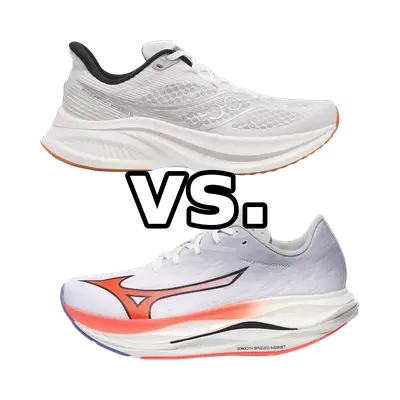
Saucony Endorphin Speed 5 vs Mizuno Wave Rebellion Flash 3
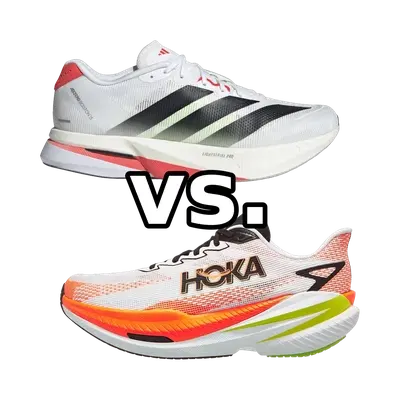
Adidas Adizero Boston 13 vs Hoka Mach X 3
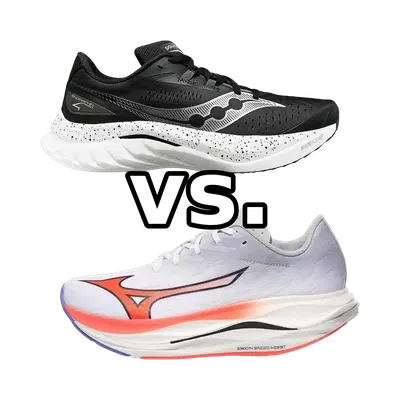
Saucony Endorphin Speed 4 vs Mizuno Wave Rebellion Flash 3
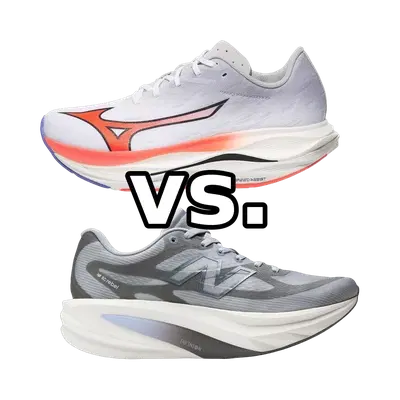
Mizuno Wave Rebellion Flash 3 vs New Balance FuelCell SuperComp Rebel
© 2026 longrunshoes.ai | All rights reserved.
Use of materials from this site is permitted only with proper attribution and a link to longrunshoes.ai.