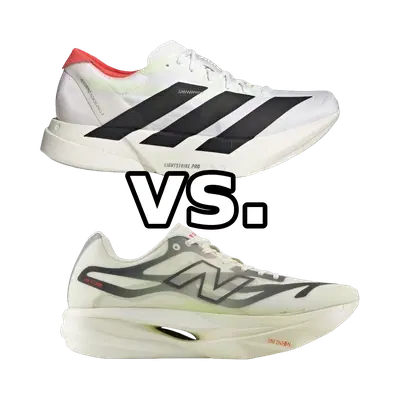
New Balance FuelCell SuperComp Elite v6 vs New Balance FuelCell SuperComp Rebel:
Which to Choose
Verdict
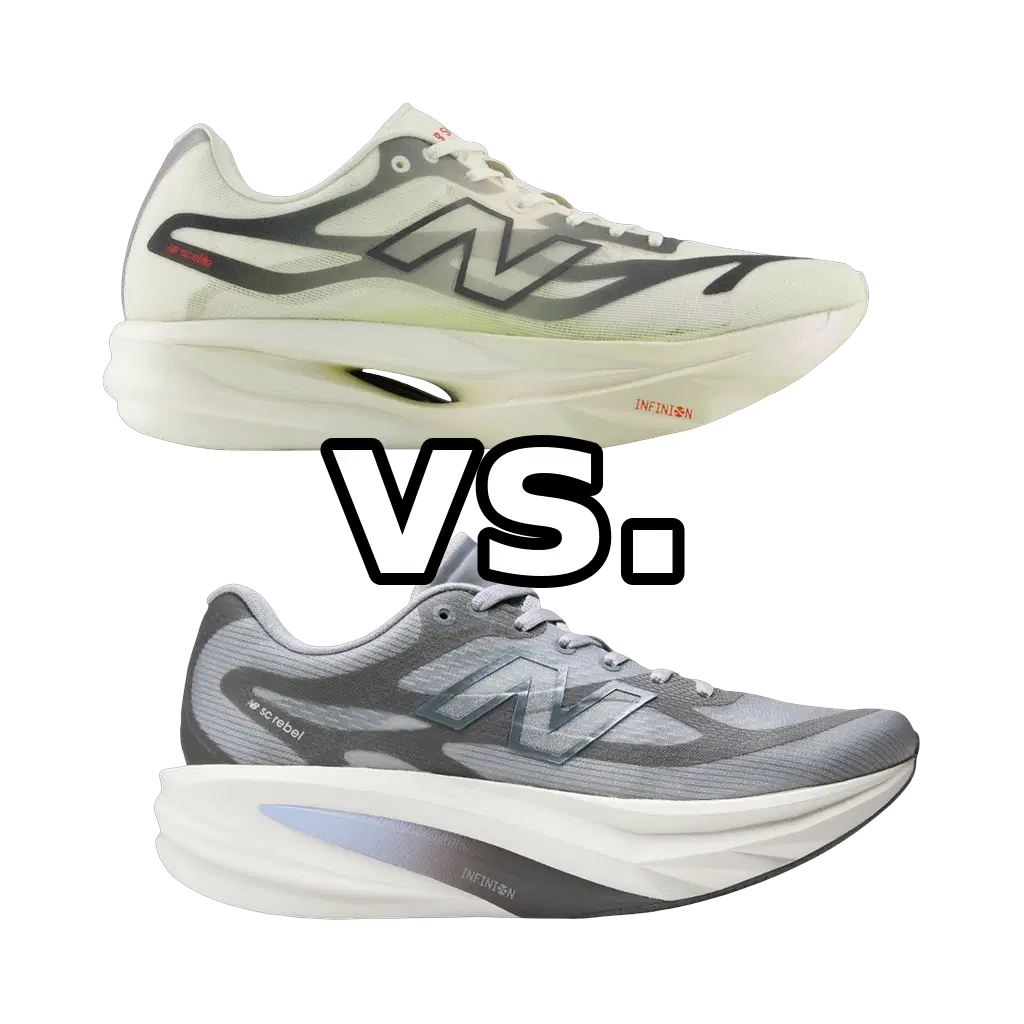
It depends on how specialized you need the shoe to be. If race day and chasing a half or marathon PR is the point, the Elite v6 is the sharper, lighter, more aggressive tool with its full-length carbon plate and 8 mm drop. If you want one shoe to carry your fast training and short-distance racing, the Rebel's softer ride, 4 mm drop, and partial-plate versatility make it the smarter everyday-speed choice.
Pace
6 of 6
Cushioning
5 of 6
Responsiveness
6 of 6
Stability
2 of 6
Drop
8 mm
Support
Neutral
Plate
Carbon
Distances
10KHalfMarathon
Pace
5 of 6
Cushioning
5 of 6
Responsiveness
5 of 6
Stability
3 of 6
Drop
4 mm
Support
Neutral
Plate
Composite
Distances
5K10KHalf
At a Glance
New Balance FuelCell SuperComp Elite v6New Balance FuelCell SuperComp Rebel
Who Should Choose Each Shoe
Choose
New Balance FuelCell SuperComp Elite v6
Choose the SuperComp Elite v6 if you're an experienced, efficient runner lining up for a 10K, half, or marathon PR and want the hardest, most propulsive foam-and-carbon return available in this family. It rewards runners who can genuinely hold the 2:55–3:15 min/km end of the range and want the lightest, most aggressive geometry on race day — and it's the pick if you already run with a dedicated carbon racer and know you like a firm, driven ride rather than a soft one.
Choose
New Balance FuelCell SuperComp Rebel
Choose the SuperComp Rebel if you want one versatile fast shoe for tempo runs, uptempo workouts, and the occasional 5K-to-half race without owning a separate racer. Its lower 4 mm drop, softer and bouncier platform, and slightly more forgiving base suit intermediate-to-advanced runners who train at tempo paces and value do-it-all range over flat-out marathon speed. It's the better call if a true full-length carbon racer feels too stiff or unsettled for the mixed training you actually do most weeks.
Head-to-Head
The clearest split is the plate and the intent behind it. The Elite v6 runs a full-length carbon Energy ARC plate with a midfoot cutout and a pronounced propulsive rocker, so it loads up and snaps forward hard once you're at race pace — New Balance tunes it for roughly 2:55–3:30 min/km. The Rebel uses only a partial, carbon-infused Energy Arc plate under the forefoot, a composite setup rather than a true racing plate, giving a gentler kick at toe-off and a happier home around 4:00–4:45 min/km tempo efforts. Foam feel diverges too: the Elite reads firm-and-lively and well-protected without much give, while the Rebel's taller, softer platform compresses eagerly and springs back with more obvious bounce. Geometry is where the numbers tell the story — both sit near a 40 mm heel, but the Elite's 40/32 build yields an aggressive 8 mm drop that the exposed forefoot plate makes feel even racier, whereas the Rebel's 40/36 build produces a low, near-level 4 mm drop that nudges you onto your midfoot. The Elite is also lighter, at about 190 g (men's US 9.5) versus roughly 218 g for the Rebel at the same size, reinforcing its race-day priority. Stability is modest on both since each is a neutral, tall platform that feels tippy when you dawdle, though the Rebel's slightly wider, softer base (3/6) is marginally more forgiving than the Elite's narrow, cutout racing chassis (2/6). On range, the Elite stretches from the 10K through the full marathon with the half as its sweet spot, while the Rebel genuinely shines from 5K to the half — peaking at 10K tempo and race efforts — and starts asking more of your stability than it returns beyond that.
Similar Comparisons
Hoka Mach X 2 vs New Balance FuelCell SuperComp Rebel
New Balance FuelCell SuperComp Elite v5 vs New Balance FuelCell SuperComp Elite v6
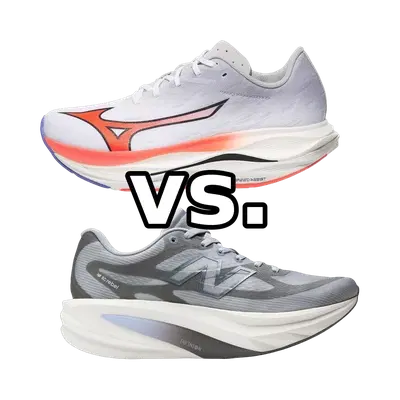
Mizuno Wave Rebellion Flash 3 vs New Balance FuelCell SuperComp Rebel

Nike Vaporfly 4 vs New Balance FuelCell SuperComp Elite v6

Nike Alphafly 3 vs New Balance FuelCell SuperComp Elite v6
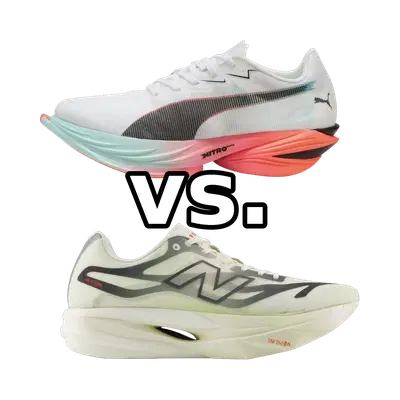
Puma Fast-R Nitro Elite 3 vs New Balance FuelCell SuperComp Elite v6
© 2026 longrunshoes.ai | All rights reserved.
Use of materials from this site is permitted only with proper attribution and a link to longrunshoes.ai.