
New Balance FuelCell SuperComp Elite v5 vs New Balance FuelCell SuperComp Elite v6:
Which to Choose
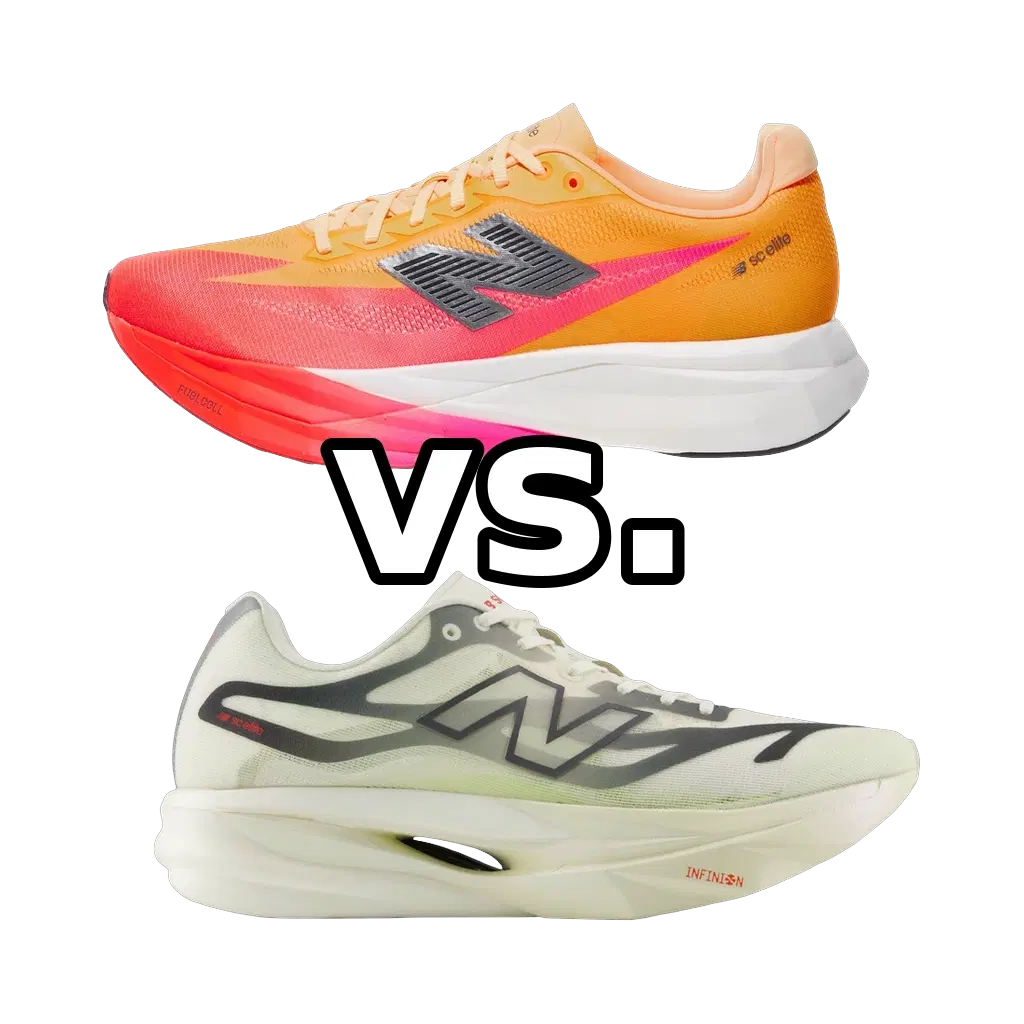
Verdict
These are closely related racers, so the choice comes down to ride character and race distance rather than any gap in ability. Go v6 for the lighter, firmer, snappier ride, the lower drop and the broader 10K-to-marathon range with a half-marathon bias; go v5 if you want the slightly softer, marathon-focused feel and the more structured, roomier upper. For an existing v5 owner, this isn't a mandatory upgrade — keep racing the v5 if it's working for you, and move to the v6 specifically if you want a firmer, more responsive forefoot, a lighter shoe and a sharper edge at shorter race distances.
Pace
6 of 6
Cushioning
5 of 6
Responsiveness
6 of 6
Stability
2 of 6
Drop
10 mm
Support
Neutral
Plate
Carbon
Distances
HalfMarathon
Pace
6 of 6
Cushioning
5 of 6
Responsiveness
6 of 6
Stability
2 of 6
Drop
8 mm
Support
Neutral
Plate
Carbon
Distances
10KHalfMarathon
At a Glance
New Balance FuelCell SuperComp Elite v5New Balance FuelCell SuperComp Elite v6
Who Should Choose Each Shoe
Choose
New Balance FuelCell SuperComp Elite v5
Choose the v5 if your target race is the full marathon and you favour a slightly softer, more cushioned feel underfoot for those long, sustained efforts — its PEBA foam and marathon-tuned geometry are built for exactly that. It's also the better pick if you want a bit more room and structure up top, since its woven mesh upper and semi-gusseted tongue give a roomier toebox and a more secure, durable hold than the v6's gossamer upper. And if you already own a v5 that still has life in it, you have a fully capable marathon racer — there's no urgent reason to replace it unless you specifically want what the v6 changes.
Choose
New Balance FuelCell SuperComp Elite v6
Choose the v6 if you want the sharper, more responsive version of this platform and race across a wider span — from the 10K up through the half and marathon — with the half as your sweet spot. Its firmer, snappier Infinion forefoot, lower 8mm drop, taller forefoot stack and lighter weight make it feel faster and more propulsive, ideal for a runner who holds a genuinely quick pace and wants every bit of return from the foam-and-plate package. It's also the natural upgrade for a v5 owner who found the old ride a little soft or who wants a more aggressive, speed-first shoe — just accept that the ultra-thin upper trades some durability for that race-day lightness.
Head-to-Head
On paper these two look almost identical: both score pace 6/6, cushioning 5/6, responsiveness 6/6 and stability 2/6, both are neutral, and both run a full-length carbon plate. The differences are in the details that matter for a racer. The biggest is the foam — the v5 uses a 100% PEBA FuelCell midsole, while the v6 switches to New Balance's new "Infinion" supercritical TPEE/A-TPU blend. That change makes the v6's forefoot noticeably firmer and snappier, with quick rebound and a more insistent push-off, where the v5's PEBA feels a touch more giving underfoot. The stack also grows and reshapes: the v5 sits at 39mm heel / 29mm forefoot (about a 10mm drop), while the v6 goes taller and lower-drop at 40mm heel / 32mm forefoot (an 8mm drop), putting more foam under the forefoot and a flatter, more aggressive rocker beneath you. Both scoop out the midsole for weight and rebound — the v5 via Energy Arc voids, the v6 via a pronounced central midfoot cutout that leaves you running on two rails of foam and adds a little ground feel through the middle of the stride. The v6 is also the lighter shoe, and its upper is a big part of that: the v5's woven nylon/polyester mesh with a semi-gusseted tongue and a relatively roomy toebox gives way to an ultra-thin FANTOMFIT mesh on the v6 that prioritizes race-day weight and breathability over structure and long-term durability. In use, the v5's sweet spot is the marathon, with the half as a strong second; the v6 broadens the range down to the 10K and shifts its sweet spot to the half, making it feel the sharper, more speed-biased of the two. Neither is remotely a daily trainer — both feel like too much shoe at easy effort and reward a confident, efficient footstrike.
Similar Comparisons

Adidas Adizero Adios Pro 4 vs New Balance FuelCell SuperComp Elite v6
New Balance FuelCell SuperComp Elite v4 vs New Balance FuelCell SuperComp Elite v5

Nike Vaporfly 4 vs New Balance FuelCell SuperComp Elite v6
Puma Deviate Nitro Elite 3 vs New Balance FuelCell SuperComp Elite v5

Nike Alphafly 3 vs New Balance FuelCell SuperComp Elite v6
Saucony Endorphin Pro 4 vs New Balance FuelCell SuperComp Elite v5
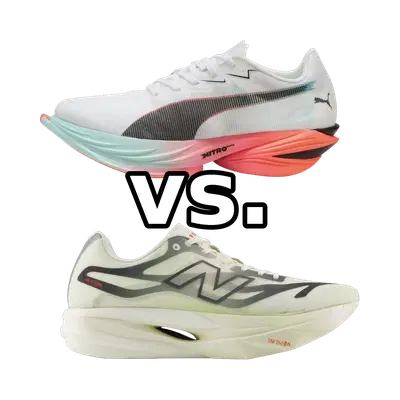
Puma Fast-R Nitro Elite 3 vs New Balance FuelCell SuperComp Elite v6
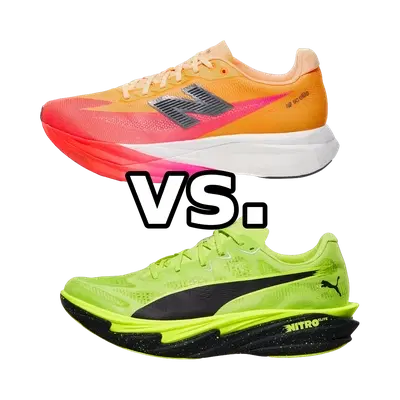
New Balance FuelCell SuperComp Elite v5 vs Puma Deviate Nitro Elite 4
© 2026 longrunshoes.ai | All rights reserved.
Use of materials from this site is permitted only with proper attribution and a link to longrunshoes.ai.