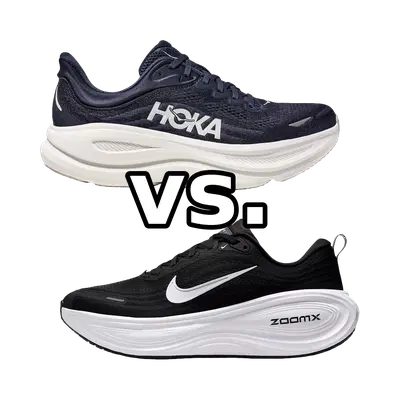
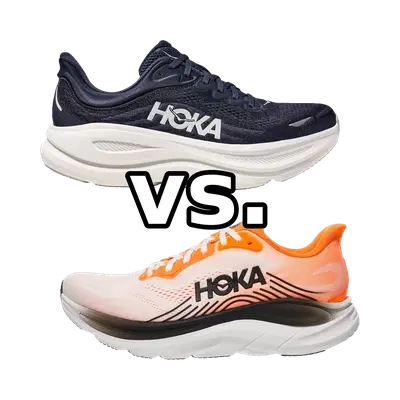
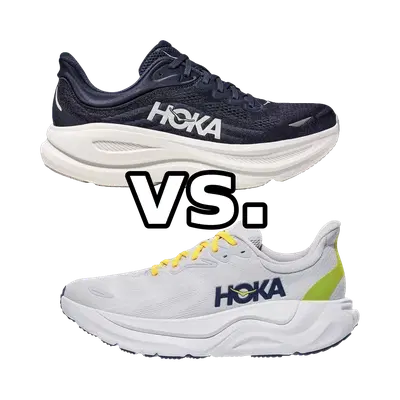
Hoka Bondi 9 vs Hoka Gaviota 6:
Which to Choose
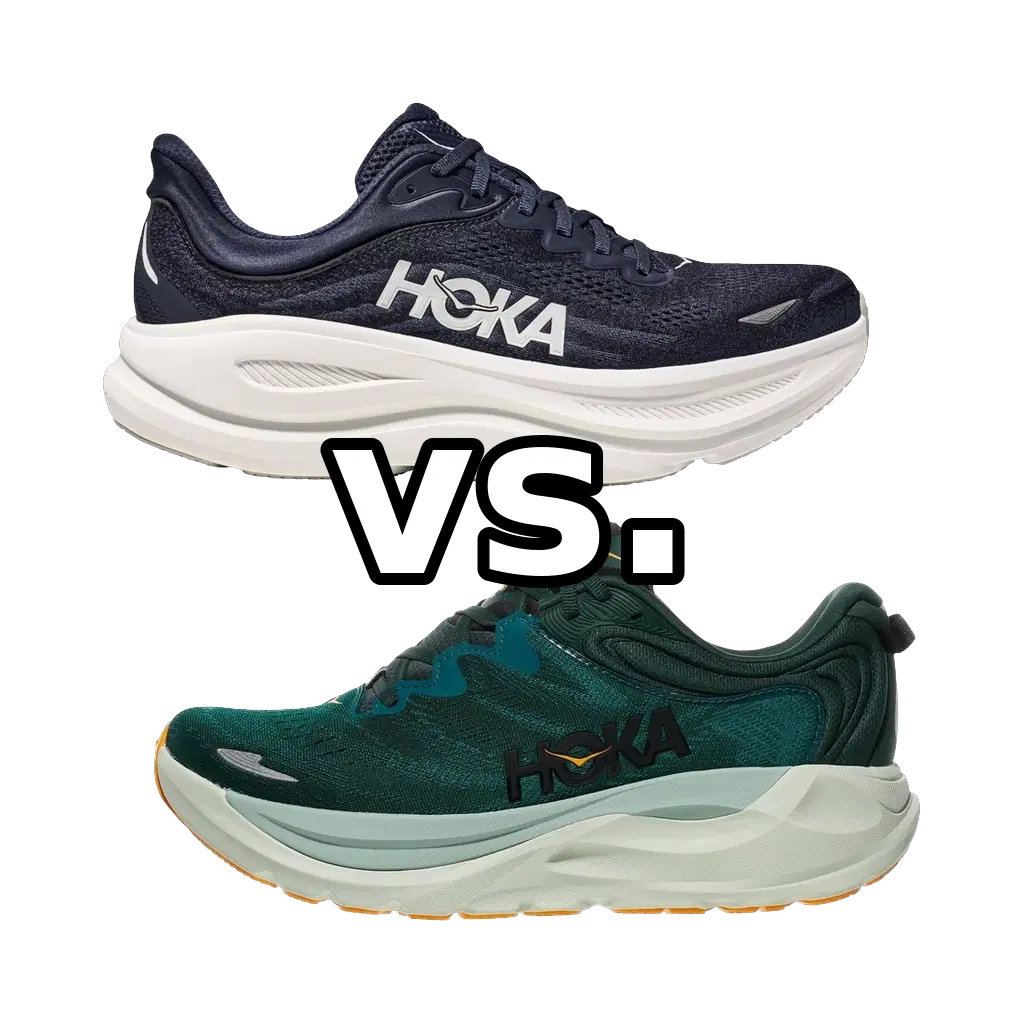
Verdict
It comes down to one thing: whether you need pronation control. If your stride is neutral and you just want the most cushioned, forgiving easy-mile trainer, the Bondi 9 is the clear call. If your foot rolls in, or you want a firm, structured, guided platform for steady training, the Gaviota 6 is worth the firmer, lower-rebound ride. Both are easy/long-run shoes, not speed tools — so let your gait, not your goal pace, decide.
Pace
2 of 6
Cushioning
6 of 6
Responsiveness
3 of 6
Stability
5 of 6
Drop
5 mm
Support
Stable Neutral
Plate
None
Distances
10KHalf
Pace
3 of 6
Cushioning
4 of 6
Responsiveness
2 of 6
Stability
6 of 6
Drop
7 mm
Support
Stability
Plate
None
Distances
10KHalf
At a Glance
Hoka Bondi 9Hoka Gaviota 6
Who Should Choose Each Shoe
Choose
Hoka Bondi 9
Choose the Bondi 9 if you're a neutral or mildly stable runner who wants the softest, most protective landing Hoka makes for easy days, recovery runs, and long slow distance. It's the better pick for beginners building volume and heavier runners who want a forgiving, deeply cushioned ride and don't need their gait actively corrected. Just accept that it's the heavier of the two and goes muted when you push the pace past easy aerobic effort.
Choose
Hoka Gaviota 6
Choose the Gaviota 6 if you overpronate or simply want maximum guidance underfoot — the H-Frame and wide base keep you tracking straight even when form gets sloppy late in a run. It's ideal for runners returning from injury, those who value a planted, supportive base for steady daily training and long walks, and anyone who prefers a firmer, more controlled ride over a plush one. It's the lighter shoe here, but its dated CMEVA gives back less energy, so don't expect bounce.
Head-to-Head
The clearest split is support type and foam. The Bondi 9 is stable-neutral: it leans on a wide, sidewall-supported platform and supercritical-EVA midsole to feel planted, but it does nothing to actively correct your gait. The Gaviota 6 is a dedicated stability shoe, using an embedded H-Frame structure to resist overpronation, and its full-length CMEVA is the older, firmer, lower-rebound foam — controlled and honest rather than soft or springy. That carries straight into ride feel: the Bondi lands plush and deep and soaks up impact (cushioning 6/6), while the Gaviota is firmer and more guided (cushioning 4/6), rewarding consistent moderate efforts over any attempt to accelerate. Neither has a plate and both use a rockered geometry for smooth transitions, so the forward roll feels familiar across the two. On the hard numbers, the Bondi is the taller, more maximal shoe (42 mm heel / 37 mm forefoot, 5 mm drop) and, perhaps counterintuitively, the heavier one at 297 g in a men's US 9 versus 283 g for the Gaviota, whose 7 mm drop sits on a lower stack. Both run on the roomy, breathable side through an engineered mesh upper, with the Gaviota in particular running wide. Bottom line: the Bondi maximizes soft, forgiving cushioning for a neutral foot; the Gaviota trades some of that plushness for genuine pronation control.
© 2026 longrunshoes.ai | All rights reserved.
Use of materials from this site is permitted only with proper attribution and a link to longrunshoes.ai.