Adidas Adizero Boston 13 vs Adidas Adizero Evo SL:
Which to Choose
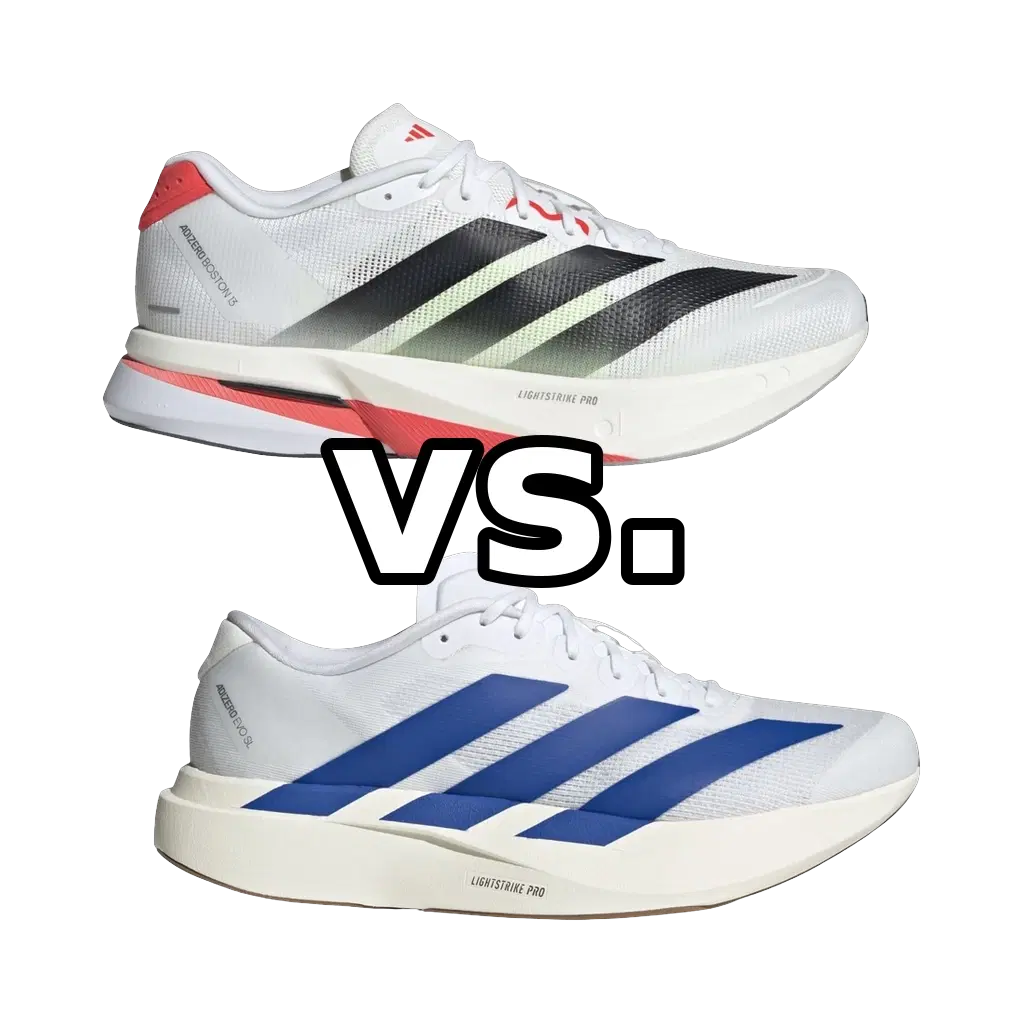
Verdict
It comes down to distance and ride preference. If you're racing and training longer — half to full marathon — and want a firmer, more structured, more durable platform with plate-like propulsion, the Boston 13 is the smarter buy. If your sweet spot is 5K to 10K and you want the lighter, softer, more playful foam-only ride, the Evo SL wins. Same family, same intent — the Boston has more range and structure, the Evo SL has less weight and more bounce.
Pace
5 of 6
Cushioning
5 of 6
Responsiveness
5 of 6
Stability
4 of 6
Drop
6 mm
Support
Neutral
Plate
Composite
Distances
10KHalfMarathon
Pace
5 of 6
Cushioning
5 of 6
Responsiveness
5 of 6
Stability
3 of 6
Drop
6 mm
Support
Neutral
Plate
None
Distances
5K10KHalf
At a Glance
Adidas Adizero Boston 13Adidas Adizero Evo SL
Who Should Choose Each Shoe
Choose
Adidas Adizero Boston 13
Choose the Boston 13 if your training points at the half and full marathon and you want one shoe that can handle long tempo efforts, marathon-pace work, and a race day without feeling fragile. The composite EnergyRods, firmer dual-density base, and steadier platform make it the better pick for runners who want propulsion with a planted, guided transition — and for those who log enough miles that durability matters. It's ideal for an intermediate-to-experienced runner who wants a do-it-all fast trainer rather than a narrow short-distance tool.
Choose
Adidas Adizero Evo SL
Choose the Evo SL if your focus is shorter and faster — 5K to 10K intervals and tempo sessions, with the half as your upper limit — and you want the lightest, bounciest ride of the two. At around 224g on a soft full-length Lightstrike Pro stack, it rewards runners who prefer foam-driven rebound and an unrestricted, plate-free feel over the more structured roll of a rods-based shoe. It's the better match for a runner who prioritizes low weight and snappy turnover and doesn't need marathon-day range or maximum longevity from the shoe.
Head-to-Head
Underfoot, these shoes share a lot — both run on a PEBA-class Lightstrike Pro top layer, both sit at a 6mm drop, both come alive once you pick up the pace and feel a little busy or unsettled at a slow jog, and both are tuned for roughly the same 3:45–4:30 min/km training-and-racing zone. The differences start in the midsole construction. The Boston 13 layers soft Lightstrike Pro over a firmer Lightstrike 2.0 carrier and threads glass-fiber composite EnergyRods through it, which gives it a more planted, propulsive, roll-forward transition and a firmer, more guided feel; its above-average stability (4/6) and wider, firmer base make it the steadier platform. The Evo SL skips the rods entirely and runs full-length Lightstrike Pro, so its rebound comes purely from the foam — it's softer, bouncier, and a touch more playful, but also less stable (3/6) on that tall, soft stack. On the numbers, the Evo SL is both lighter and taller: it comes in around 224g with a 39mm/33mm stack, while the Boston 13 is around 260g on a 37mm/30mm stack — so the Evo SL feels nimbler and more cushioned at the same time, while the Boston feels more substantial and connected to the ground. That structure also shapes their range: the Boston 13 genuinely stretches from 10K through the half to the full marathon, with the half-to-marathon as its sweet spot, whereas the Evo SL is happiest from 5K to the half with the 10K as its home base. Durability leans to the Boston too — its firmer Lightstrike 2.0 base and Continental outsole give it more structure for high-mileage training, while the Evo SL carries the typical lifespan limits of an all-soft-foam speed shoe.
Similar Comparisons
Adidas Adizero Evo SL vs Asics Magic Speed 4
Adidas Adizero Boston 13 vs Nike Vomero Plus
Adidas Adizero Evo SL vs Nike Structure 26
Adidas Adizero Boston 13 vs Saucony Endorphin Speed 5
Adidas Adizero Evo SL vs Saucony Endorphin Speed 5
Adidas Adizero Boston 13 vs Hoka Mach X 3
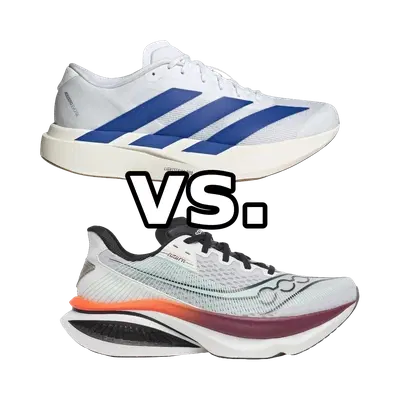
Adidas Adizero Evo SL vs Saucony Endorphin Azura
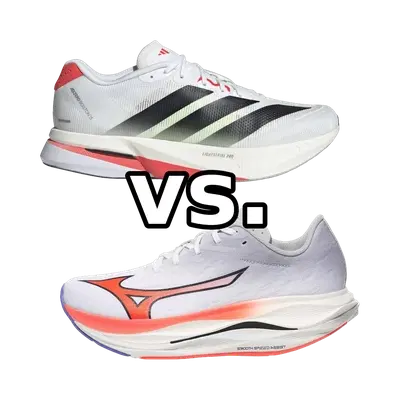
Adidas Adizero Boston 13 vs Mizuno Wave Rebellion Flash 3
© 2026 longrunshoes.ai | All rights reserved.
Use of materials from this site is permitted only with proper attribution and a link to longrunshoes.ai.